


The secret life of the anthrax agent Bacillus anthracis: bacteriophage-mediated ecological adaptations
- PMID: 19672290
- PMCID: PMC2716549
- DOI: 10.1371/journal.pone.0006532
The secret life of the anthrax agent Bacillus anthracis: bacteriophage-mediated ecological adaptations
Abstract
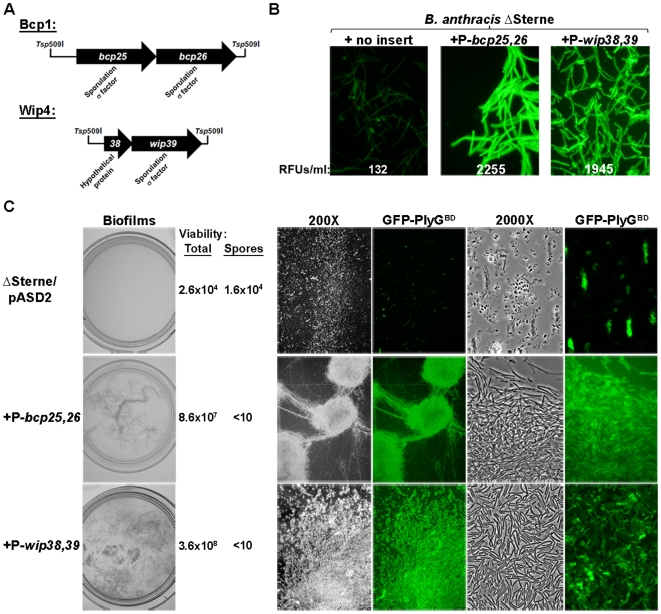
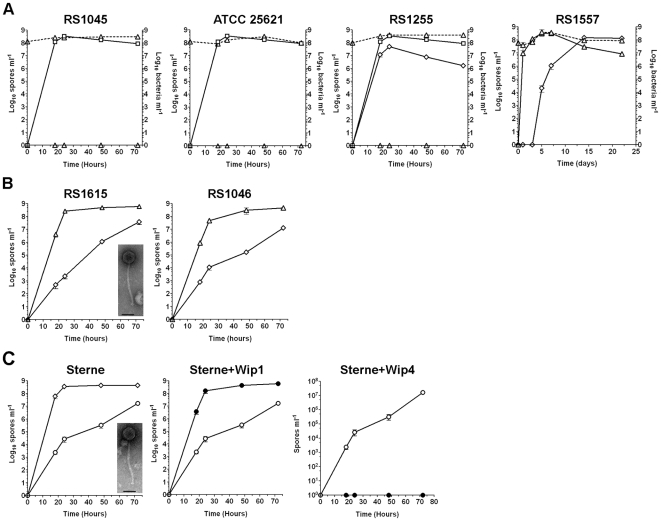
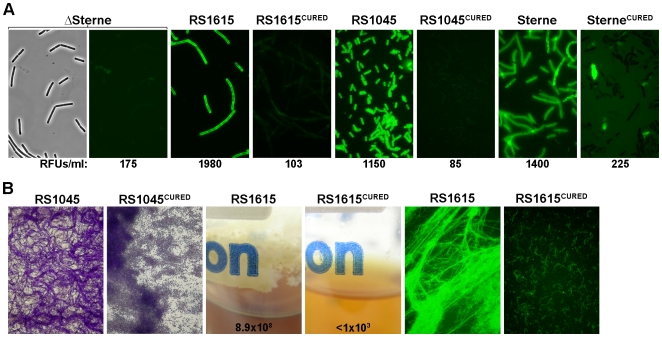
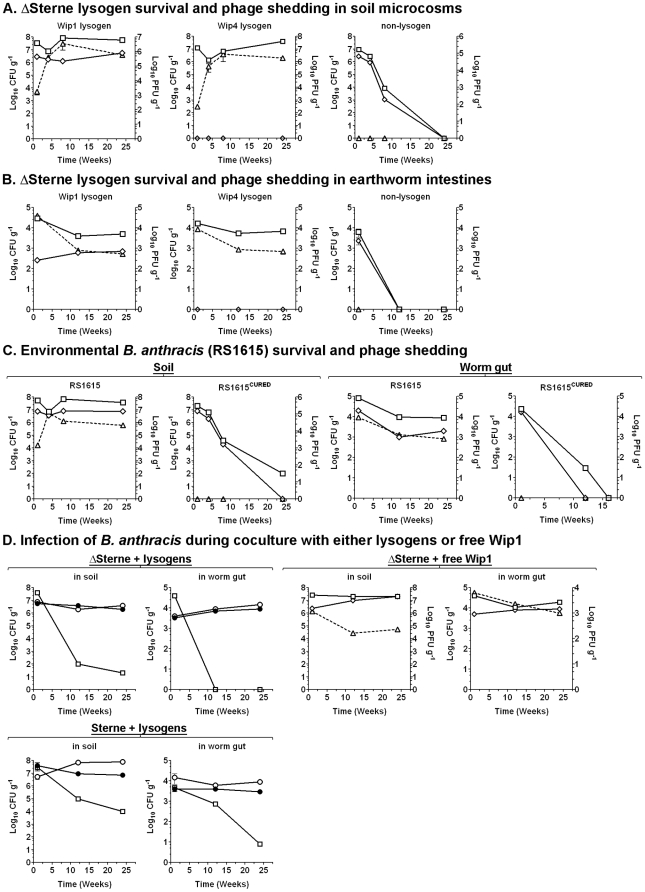
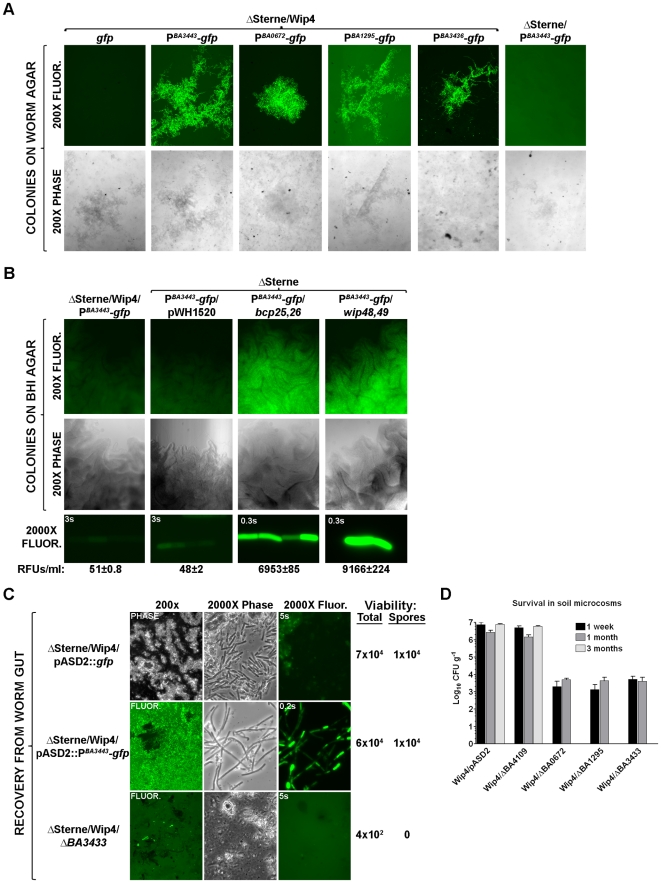
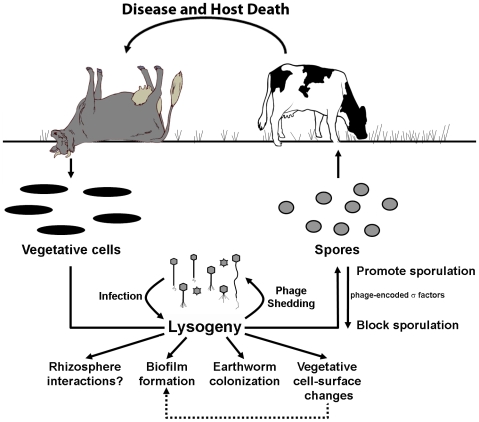
Ecological and genetic factors that govern the occurrence and persistence of anthrax reservoirs in the environment are obscure. A central tenet, based on limited and often conflicting studies, has long held that growing or vegetative forms of Bacillus anthracis survive poorly outside the mammalian host and must sporulate to survive in the environment. Here, we present evidence of a more dynamic lifecycle, whereby interactions with bacterial viruses, or bacteriophages, elicit phenotypic alterations in B. anthracis and the emergence of infected derivatives, or lysogens, with dramatically altered survival capabilities. Using both laboratory and environmental B. anthracis strains, we show that lysogeny can block or promote sporulation depending on the phage, induce exopolysaccharide expression and biofilm formation, and enable the long-term colonization of both an artificial soil environment and the intestinal tract of the invertebrate redworm, Eisenia fetida. All of the B. anthracis lysogens existed in a pseudolysogenic-like state in both the soil and worm gut, shedding phages that could in turn infect non-lysogenic B. anthracis recipients and confer survival phenotypes in those environments. Finally, the mechanism behind several phenotypic changes was found to require phage-encoded bacterial sigma factors and the expression of at least one host-encoded protein predicted to be involved in the colonization of invertebrate intestines. The results here demonstrate that during its environmental phase, bacteriophages provide B. anthracis with alternatives to sporulation that involve the activation of soil-survival and endosymbiotic capabilities.
Conflict of interest statement
Figures
References
-
- Turnbull PC. Introduction: anthrax history, disease and ecology. Curr Top Microbiol Immunol. 2002;271:1–19. - PubMed
-
- Bouzianas DG. Potential biological targets of Bacillus anthracis in anti-infective approaches against the threat of bioterrorism. Expert Rev Anti Infect Ther. 2007;5:665–684. - PubMed
-
- Passalacqua KD, Bergman NH. Bacillus anthracis: interactions with the host and establishment of inhalational anthrax. Future Microbiol. 2006;1:397–415. - PubMed
-
- Fouet A, Mock M. Regulatory networks for virulence and persistence of Bacillus anthracis. Curr Opin Microbiol. 2006;9:160–166. - PubMed
-
- Blackburn JK, McNyset KM, Curtis A, Hugh-Jones ME. Modeling the geographic distribution of Bacillus anthracis, the causative agent of anthrax disease, for the contiguous United States using predictive ecological [corrected] niche modeling. Am J Trop Med Hyg. 2007;77:1103–1110. - PubMed
Publication types
MeSH terms
Substances
Grants and funding
LinkOut - more resources
Full Text Sources
Other Literature Sources
