


Skin-resident T cells: the ups and downs of on site immunity
- PMID: 19675575
- PMCID: PMC2922675
- DOI: 10.1038/jid.2009.247
Skin-resident T cells: the ups and downs of on site immunity
Abstract
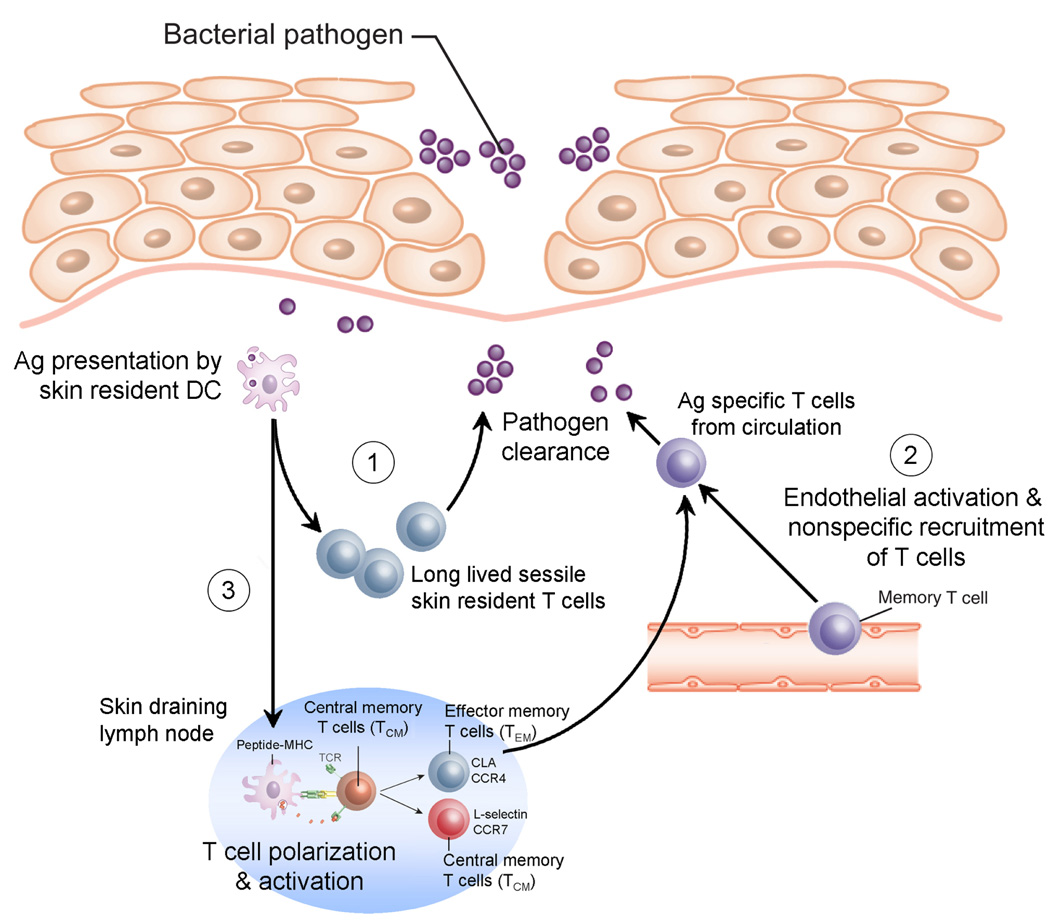
The cutaneous surface of a normal adult individual contains approximately 20 billion T cells, nearly twice the number present in the entire circulation. Recent studies have shown a role for these cells in both normal immunity and in inflammatory skin diseases such as psoriasis. Regulatory T cells protect against autoimmune reactions to self antigens and assist in the resolution of cutaneous inflammation. However, they can also shield tumors from immune detection, allow latent infections to persist and can dysfunction under the conditions present in inflammatory skin diseases. Th17 T cells protect organisms against extracellular pathogens but also have a key role in the pathogenesis of psoriasis. Evidence suggests that effector memory T cells produced during immune reactions survive and persist long term within the skin, providing local and rapid protection against pathogen reexposure. This review summarizes the current understanding of how skin-resident T cells contribute to normal and aberrant immunity in the skin.
Figures

References
-
- Aarvak T, Chabaud M, Miossec P, Natvig JB. IL-17 Is Produced by Some Proinflammatory Th1/Th0 Cells But Not by Th2 Cells. J Immunol. 1999;162:1246–1251. - PubMed
-
- Baecher-Allan C, Anderson DE. Regulatory cells and human cancer. Seminars in cancer biology. 2006;16:98–105. - PubMed
-
- Baecher-Allan C, Viglietta V, Hafler DA. Inhibition of human CD4(+)CD25(+high) regulatory T cell function. J Immunol. 2002;169:6210–6217. - PubMed
Publication types
MeSH terms
Substances
Grants and funding
LinkOut - more resources
Full Text Sources
Other Literature Sources
