


A comparative neuroanatomical study of the red nucleus of the cat, macaque and human
- PMID: 19675676
- PMCID: PMC2722087
- DOI: 10.1371/journal.pone.0006623
A comparative neuroanatomical study of the red nucleus of the cat, macaque and human
Abstract
Background: The human red nucleus (Nr) is comparatively less well-studied than that of cats or monkeys. Given the functional importance of reticular and midbrain structures in control of movement and locomotion as well as from an evolutionary perspective, we investigated the nature and extent of any differences in Nr projections to the olivary complex in quadrupedal and bipedal species. Using neuroanatomical tract-tracing techniques we developed a "neural sheet" hypothesis allowing us to propose how rubro-olivary relations differ among the three species.
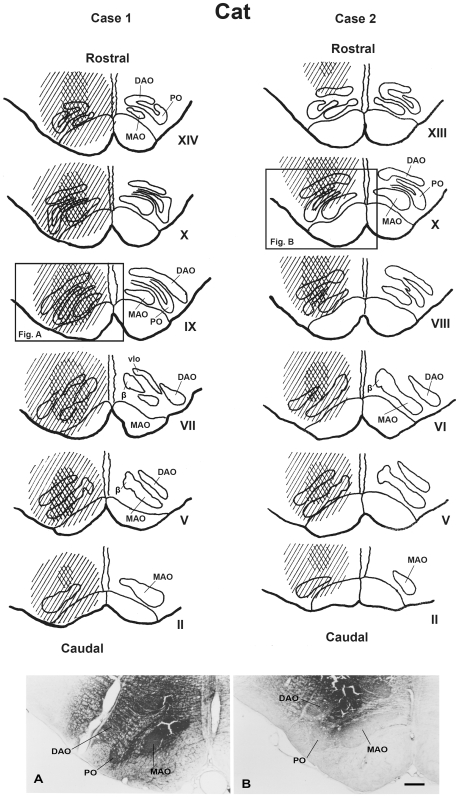
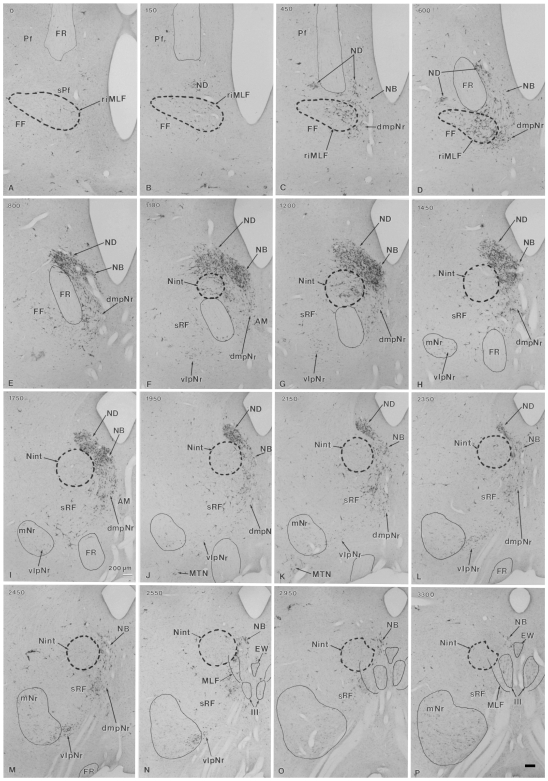
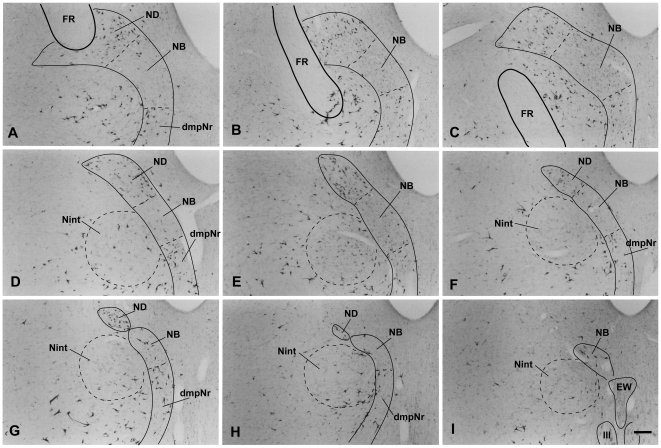
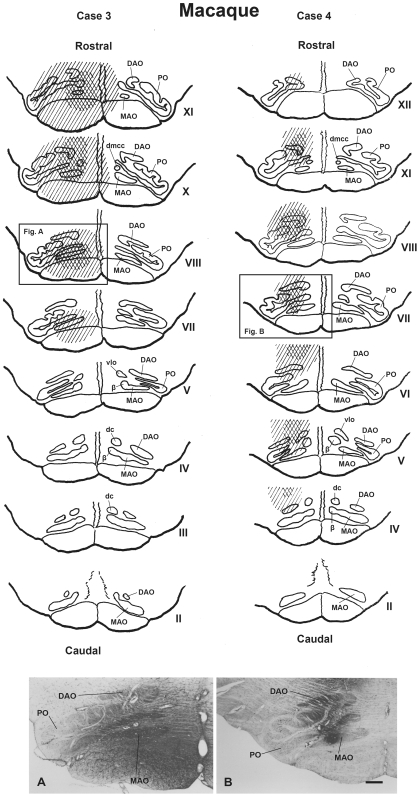
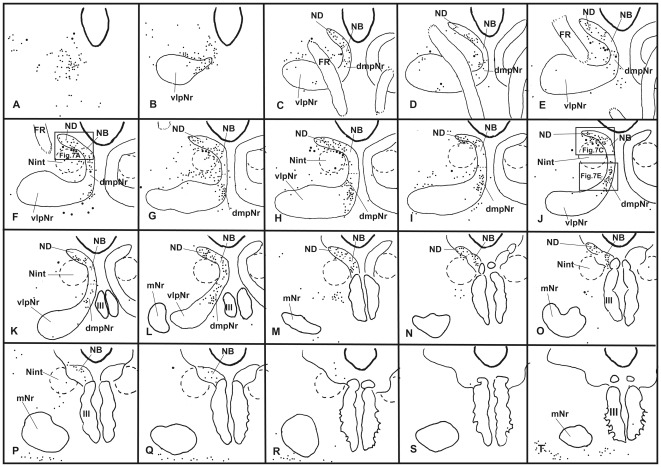
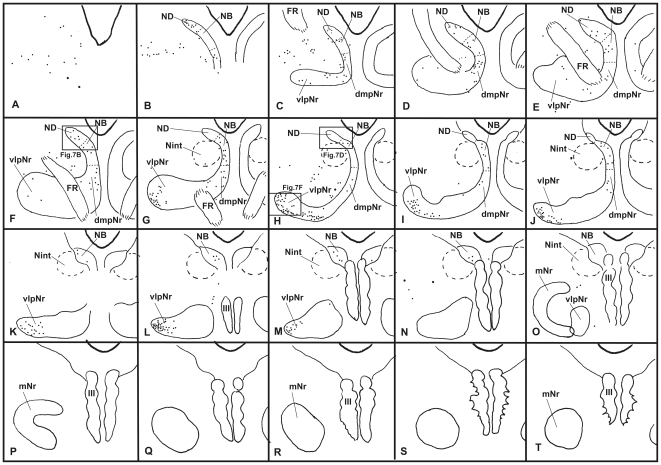
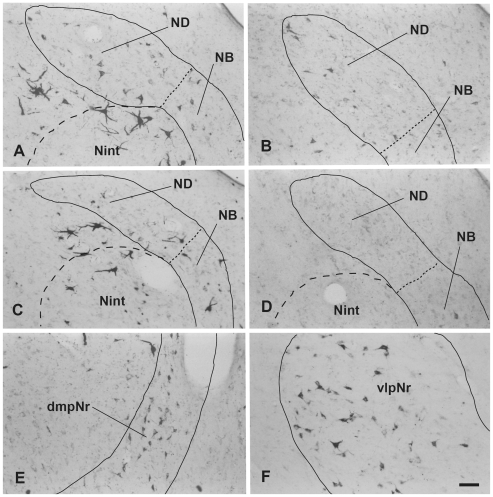
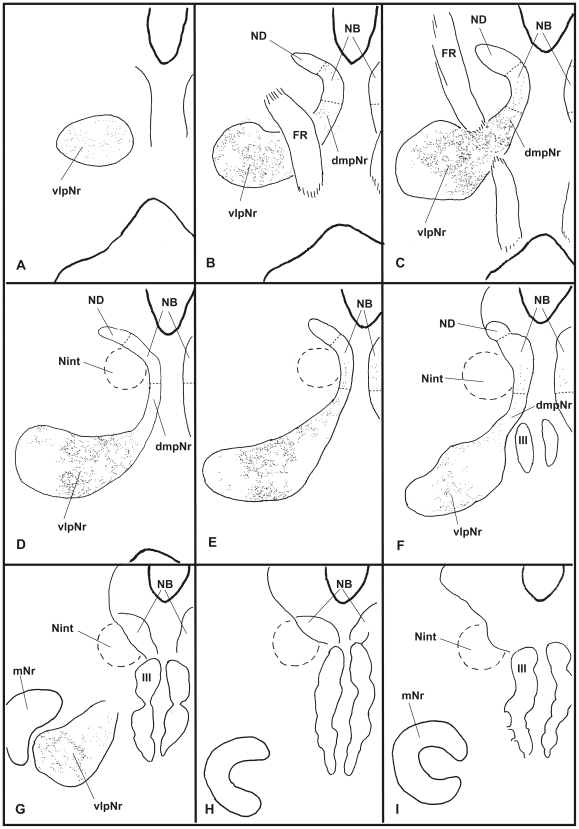
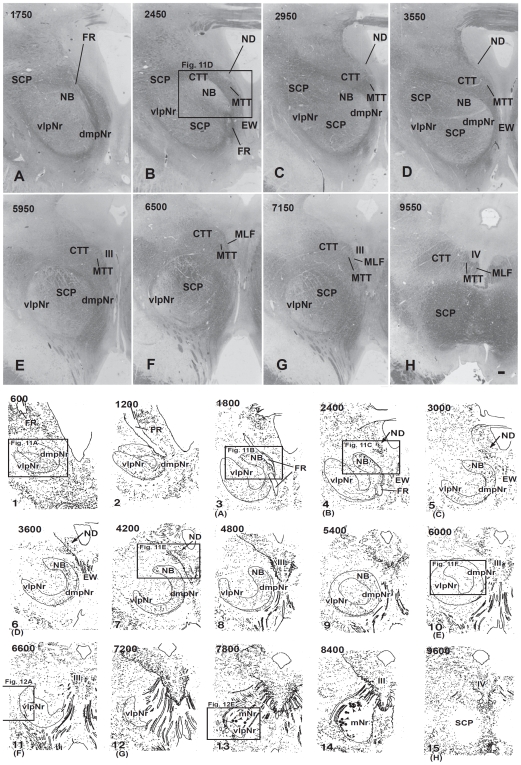
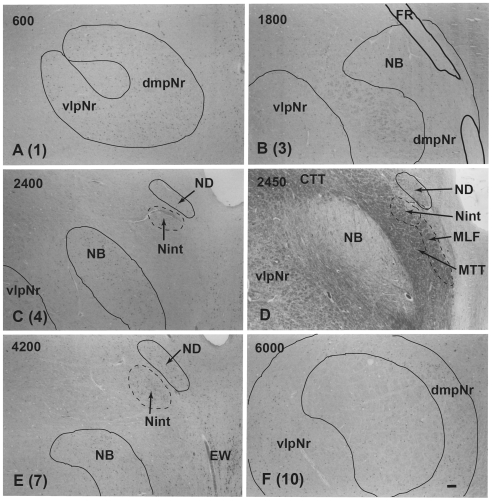
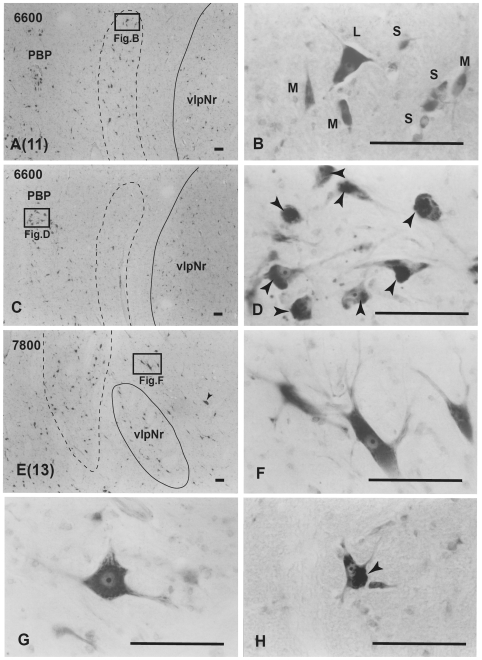
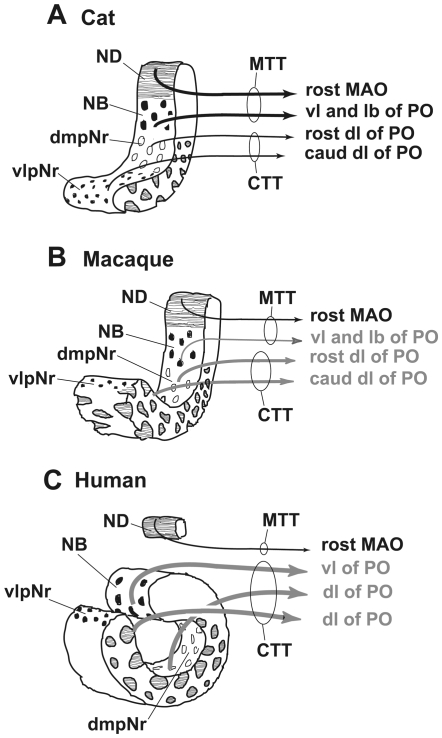
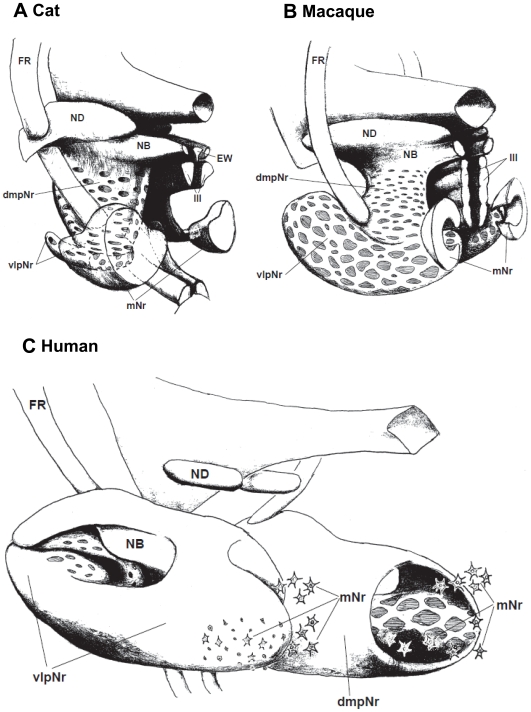
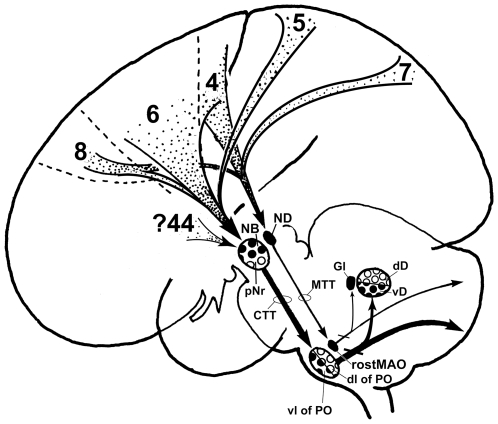
Methods and findings: Wheat germ agglutinin-horseradish peroxidase staining supports findings that the cat's nucleus accessories medialis of Bechtrew (NB) projects mainly to the lateral bend of the principal olive. We clarified boundaries among nucleus of Darkschewitsch (ND), NB and parvicellular red nucleus (pNr) of the cat's neural sheet. The macaque's ND-medial accessory olivary projection is rostro-caudally organized and the dorsomedial and ventrolateral parts of the macaque's pNr may project to the principal olive's rostral and caudal dorsal lamella; in cat it projects as well to pNr. Myelin- and Nissl-stained sections show that a well-developed dorsomedial part of the human Nr consists of densely packed cells, deriving small myelinated fibers that continue into the medial central tegmental tract.
Conclusions: Based on these findings we suggest there are distinct bipedal-quadrupedal differences for Nr projections to the olivary complex. We propose the Nr of cats and monkeys comprise the ND, NB and pNr in a zonal sheet-like structure, retaining clear nuclear boundaries and an isolated, well-developed mNr. The human NB may be distinguished from its more specialised ND (ND lies alongside a well-developed pNr) in the human central gray. Phylogenetically, the NB may have been translocated into a roll-shaped Nr in the reticular formation, the dorsomedial portion of which might correspond to the cat's and monkey's NB.
Conflict of interest statement
Figures
References
-
- Ogawa T. The tractus tegmenti medialis and its connection with the inferior olive in the cat. J Comp Neurol. 1939;70:19–36.
-
- Mannen H. A dendro-cyto-myeloarchitectonic atlas of cat's brain. 1988. Tokyo: Iwanami Shoten.
-
- Onodera S. Olivary projections from the mesodiencephalic structures in the cat studied by means of axonal transport of horseradish peroxidase and tritiated amino acids. J Comp Neurol. 1984;227:37–49. - PubMed
-
- Drew T, Jiang W, Kabiy B, Lavoie S. Role of the motor cortex in the control of visually triggered gait modifications. Can J Physiol Parmacol. 1996;74:426–442. - PubMed
-
- Lavoie S, Drew T. Discharge characteristics of neurons in the red nucleus during voluntary gait modifications: a comparison with the motor cortex. J Neurophysiol. 2002;88:1791–1814. - PubMed
Publication types
MeSH terms
LinkOut - more resources
Full Text Sources
Miscellaneous
