


Insulin resistance and endothelial dysfunction: Are epoxyeicosatrienoic acids the link?
- PMID: 19675820
- PMCID: PMC2722460
Insulin resistance and endothelial dysfunction: Are epoxyeicosatrienoic acids the link?
Abstract
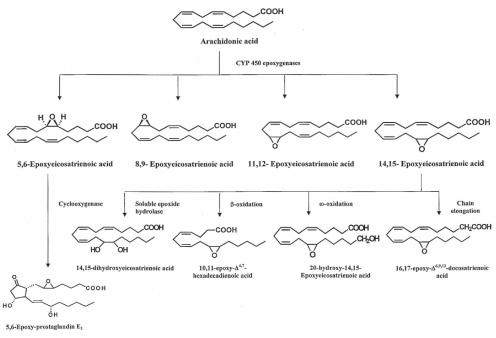
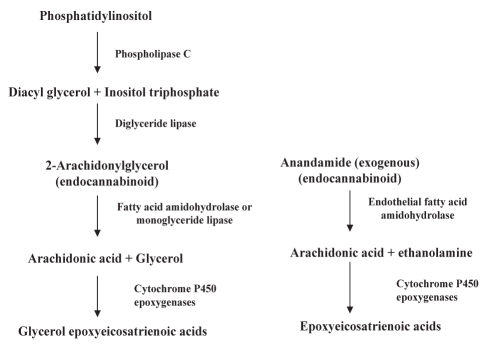
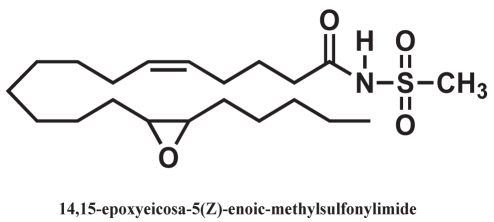
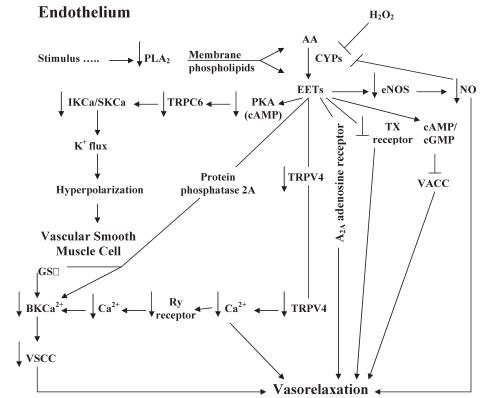
Epoxyeicosatrienoic acids (EETs), the cytochrome P450 epoxygenase metabolites of arachidonic acid, are potent vasodilators and are believed to be the endothelium-derived hyperpolarizing factor in a number of vascular beds. In addition, EETs may play a role in the secretion and action of insulin and the metabolism of carbohydrates and lipids. Pharmacological manipulation of EETs may be a useful therapeutic approach for disease states such as hypertension, diabetes mellitus and the metabolic syndrome. EET mimetics and antagonists and drugs that increase EET synthesis or decrease their degradation are currently under investigation. The cellular mechanism of action of EETs appears to be complex and is being intensively studied by a number of investigators. In the present article, EET production, metabolism, isomerism and vasodilatory effects will be reviewed and potential mechanisms of action discussed. The role of EETs in insulin secretion and sensitivity and their implication in diabetes mellitus and the metabolic syndrome will also be reviewed. Drugs affecting EET bioavailability and action may be promising agents to use to treat hypertension/insulin resistance. The effects of these agents in experimental vascular disorders will also be discussed.
Keywords: Endothelium; Epoxyeicosatrienoic acids; Insulin; Soluble epoxide hydrolase; Vasodilation.
Figures
References
-
- Jansson PA. Endothelial dysfunction in insulin resistance and type 2 diabetes. J Intern Med. 2007;262:173–83. - PubMed
-
- Muniyappa R, Quon MJ. Insulin action and insulin resistance in vascular endothelium. Curr Opin Clin Nutr Metab Care. 2007;10:523–30. - PubMed
-
- Campbell WB, Gauthier KM. What is new in endothelium-derived hyperpolarizing factors? Curr Opin Nephrol Hypertens. 2002;11:177–83. - PubMed
-
- Campbell WB, Falck JR. Arachidonic acid metabolites as endothelium-derived hyperpolarizing factors. Hypertension. 2007;49:590–6. - PubMed
-
- Halcox JP, Narayanan S, Cramer-Joyce L, Mincemoyer R, Quyyumi AA. Characterization of endothelium-derived hyperpolarizing factor in the human forearm microcirculation. Am J Physiol Heart Circ Physiol. 2001;280:H2470–7. - PubMed
LinkOut - more resources
Full Text Sources
Other Literature Sources