


Yoga decreases kyphosis in senior women and men with adult-onset hyperkyphosis: results of a randomized controlled trial
- PMID: 19682114
- PMCID: PMC3700806
- DOI: 10.1111/j.1532-5415.2009.02391.x
Yoga decreases kyphosis in senior women and men with adult-onset hyperkyphosis: results of a randomized controlled trial
Abstract
Objectives: To assess whether a specifically designed yoga intervention can reduce hyperkyphosis.
Design: A 6-month, two-group, randomized, controlled, single-masked trial.
Setting: Community research unit.
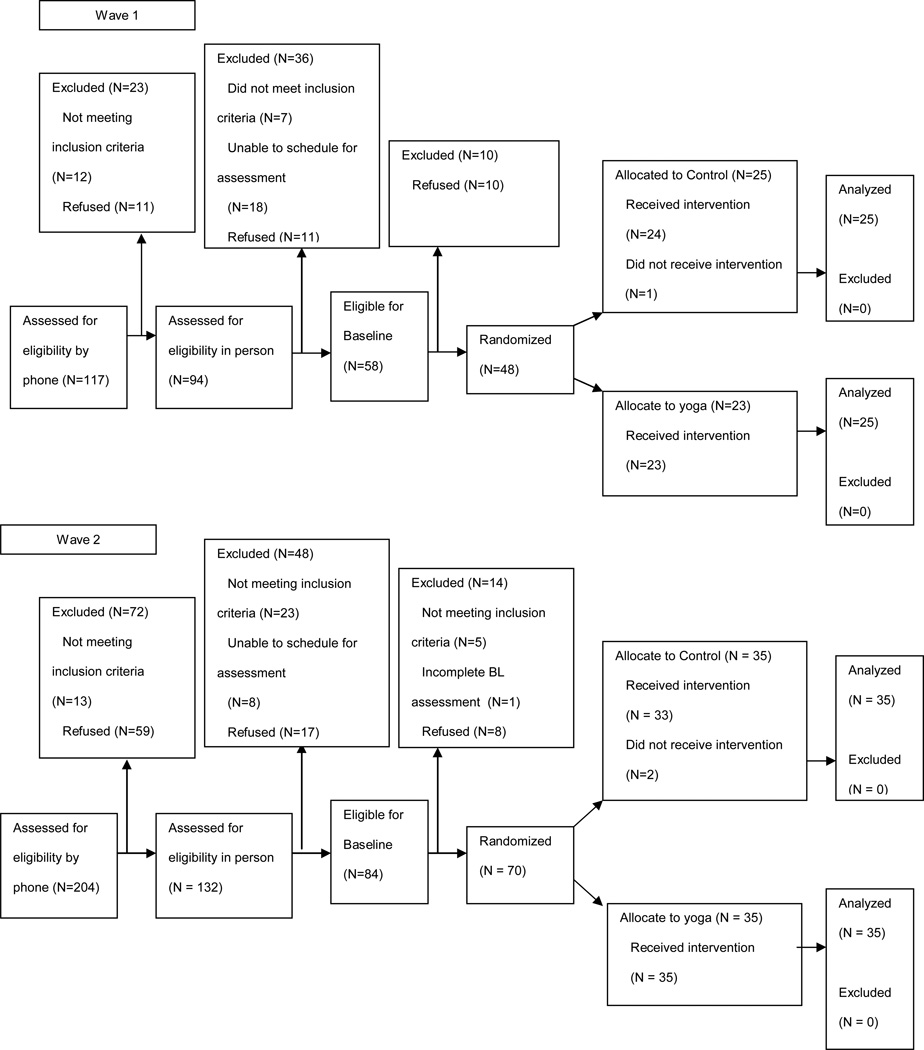
Participants: One hundred eighteen women and men aged 60 and older with a kyphosis angle of 40 degrees or greater. Major exclusions were serious medical comorbidity, use of assistive device, inability to hear or see adequately for participation, and inability to pass a physical safety screen.
Intervention: The active treatment group attended hour-long yoga classes 3 days per week for 24 weeks. The control group attended a monthly luncheon and seminar and received mailings.
Measurements: Primary outcomes were change (baseline to 6 months) in Debrunner kyphometer-assessed kyphosis angle, standing height, timed chair stands, functional reach, and walking speed. Secondary outcomes were change in kyphosis index, flexicurve kyphosis angle, Rancho Bernardo Blocks posture assessment, and health-related quality of life (HRQOL).
Results: Compared with control participants, participants randomized to yoga experienced a 4.4% improvement in flexicurve kyphosis angle (P=.006) and a 5% improvement in kyphosis index (P=.004). The intervention did not result in statistically significant improvement in Debrunner kyphometer angle, measured physical performance, or self-assessed HRQOL (each P>.1).
Conclusion: The decrease in flexicurve kyphosis angle in the yoga treatment group shows that hyperkyphosis is remediable, a critical first step in the pathway to treating or preventing this condition. Larger, more-definitive studies of yoga or other interventions for hyperkyphosis should be considered. Targeting individuals with more-malleable spines and using longitudinally precise measures of kyphosis could strengthen the treatment effect.
Conflict of interest statement
Figures
References
-
- Fon GT, Pitt MJ, Thies AC. Thoracic kyphosis: Range in normal subjects. Am J Roentgenol. 1980;134:979–983. - PubMed
-
- Voutsinas SA, MacEwan GD. Saggital profiles of the spine. Clin Orthop. 1986;210:235–242. - PubMed
-
- O'Neill TW, Felsenberg D, Varlow J, et al. The prevalence of vertebral deformity in european men and women: The European Vertebral Osteoporosis Study. J Bone Miner Res. 1996;11:1010–1018. - PubMed
-
- Davies KM, Stegman MR, Heaney RP, et al. Prevalence and severity of vertebral fracture: The Saunders County Bone Quality Study. Osteoporos Int. 1996;6:106–165. - PubMed
-
- Melton LJ, III, Lane AW, Cooper C, et al. Prevalence and incidence of vertebral deformities. Osteoporos Int. 1993;3:113–119. - PubMed
Publication types
MeSH terms
Grants and funding
LinkOut - more resources
Full Text Sources
