


Computer-delivered, parent-involvement intervention to prevent substance use among adolescent girls
- PMID: 19682490
- PMCID: PMC2783411
- DOI: 10.1016/j.ypmed.2009.08.001
Computer-delivered, parent-involvement intervention to prevent substance use among adolescent girls
Abstract
Objective: To test a computer-delivered program for preventing substance use among adolescent girls.
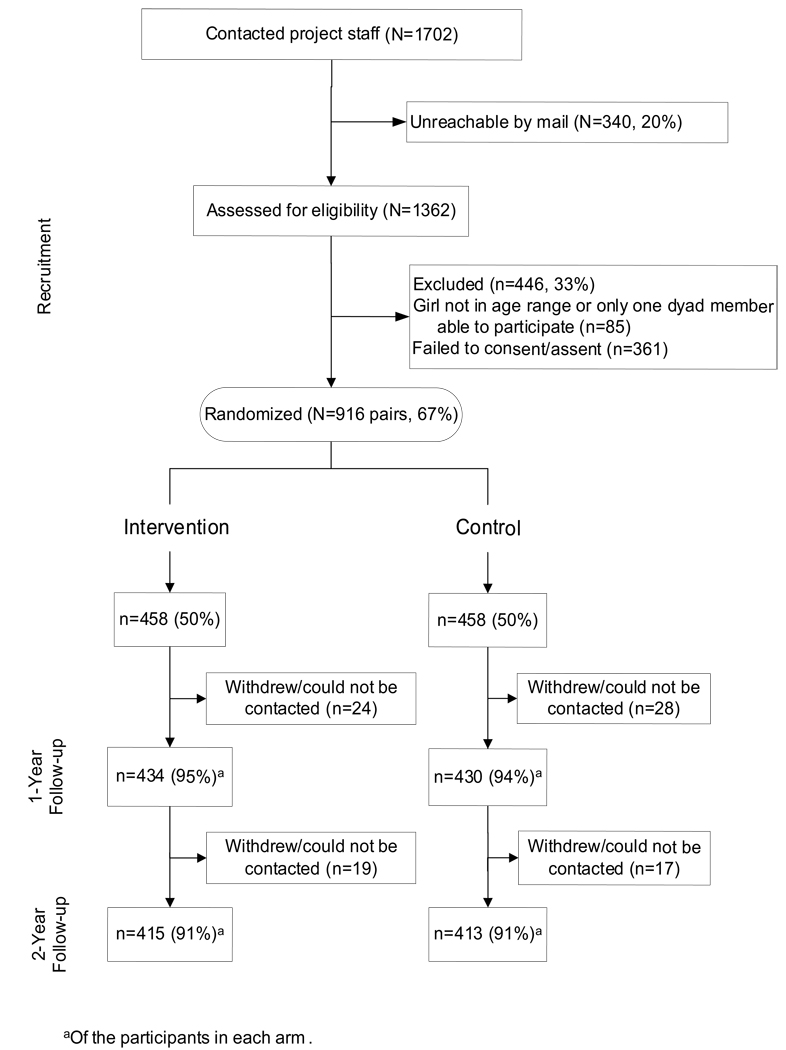
Methods: Randomly, 916 girls aged 12.76+/-1.0 years and their mothers were assigned to an intervention arm or to a test-only control arm. Intervention-arm dyads engaged in exercises to improve the mother-daughter relationship, build girls' substance use prevention skills, and reduce associated risk factors. Study outcomes were girls' and mothers' substance use and mediator variables related to girls' substance use risk and protective factors. The study was conducted between September 2006 and February 2009 with participants from greater New York City, including southern Connecticut and eastern New Jersey.
Results: At 2-year follow-up and relative to control-arm girls, intervention-arm girls reported lower relevant risk factors and higher protective factors as well as less past 30-day use of alcohol (p<0.006), marijuana (p<0.016), illicit prescription drugs (p<0.03), and inhalants (p<0.024). Intervention-arm mothers showed more positive 2-year outcomes than control-arm mothers on variables linked with reduced risks of substance use among their daughters, and mothers reported lower rates of weekly alcohol consumption (p<0.0001).
Conclusions: A computer-delivered prevention program for adolescent girls and their mothers was effective in changing girls' risk and protective factors and girls' and mothers' substance use behavior.
Figures
References
-
- Armsden GC, Greenberg MT. The Inventory of Parent and Peer Attachment: individual differences and their relationship to psychological well-being in adolescence. J Youth Adolesc. 1987;16:427–454. - PubMed
-
- Austin AM, Macgowan MJ, Wagner EF. Effective family-based interventions for adolescents with substance use problems: a systematic review. Res Soc Work Pract. 2005;15:67–83.
-
- Bellis JM, Grimley DM, Alexander LR. Feasibility of a tailored intervention targeting STD-related behaviors. Am J Health Behav. 2002;26:378–385. - PubMed
-
- Botvin G, Griffin KW. Life Skills Training: empirical findings and future directions. J Prim Prev. 2004;25:211–232.
Publication types
MeSH terms
Grants and funding
LinkOut - more resources
Full Text Sources
Medical
Miscellaneous
