


Partial carotid ligation is a model of acutely induced disturbed flow, leading to rapid endothelial dysfunction and atherosclerosis
- PMID: 19684185
- PMCID: PMC2770764
- DOI: 10.1152/ajpheart.00510.2009
Partial carotid ligation is a model of acutely induced disturbed flow, leading to rapid endothelial dysfunction and atherosclerosis
Abstract
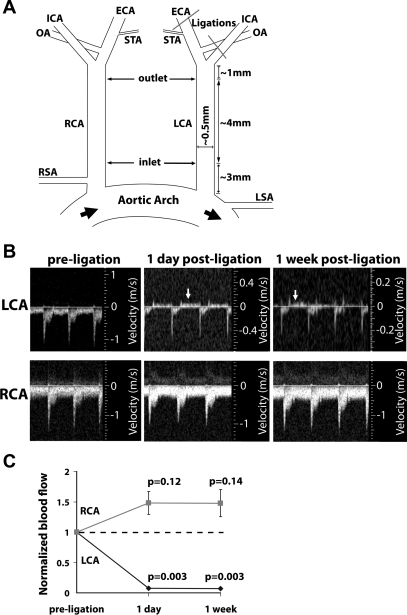
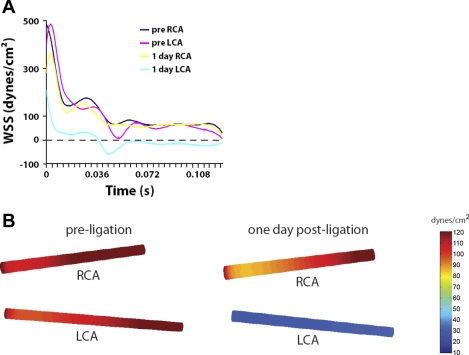
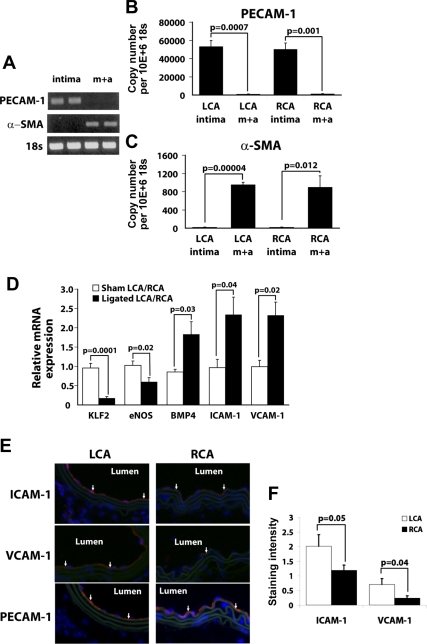
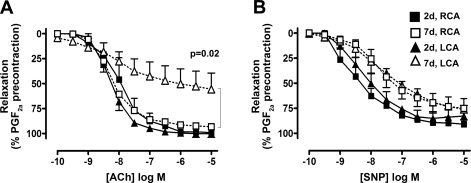
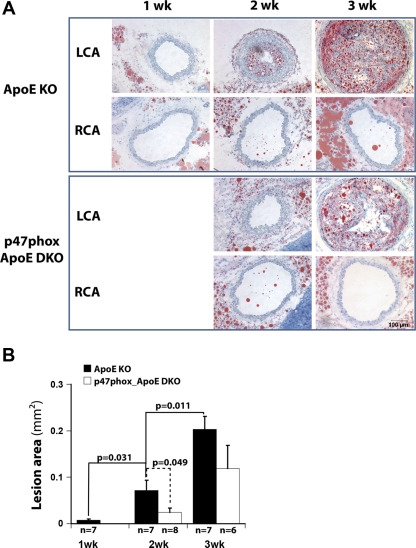
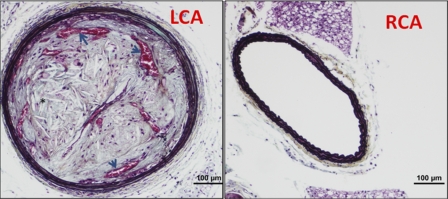
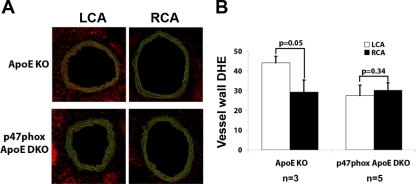
Atherosclerosis is closely associated with disturbed flow characterized by low and oscillatory shear stress, but studies directly linking disturbed flow to atherogenesis is lacking. The major reason for this has been a lack of an animal model in which disturbed flow can be acutely induced and cause atherosclerosis. Here, we characterize partial carotid ligation as a model of disturbed flow with characteristics of low and oscillatory wall shear stress. We also describe a method of isolating intimal RNA in sufficient quantity from mouse carotid arteries. Using this model and method, we found that partial ligation causes upregulation of proatherogenic genes, downregulation of antiatherogenic genes, endothelial dysfunction, and rapid atherosclerosis in 2 wk in a p47(phox)-dependent manner and advanced lesions by 4 wk. We found that partial ligation results in endothelial dysfunction, rapid atherosclerosis, and advanced lesion development in a physiologically relevant model of disturbed flow. It also allows for easy and rapid intimal RNA isolation. This novel model and method could be used for genome-wide studies to determine molecular mechanisms underlying flow-dependent regulation of vascular biology and diseases.
Figures
References
-
- Berk BC. Atheroprotective signaling mechanisms activated by steady laminar flow in endothelial cells. Circulation 117: 1082–1089, 2008 - PubMed
-
- Chang K, Weiss D, Suo J, Vega JD, Giddens D, Taylor WR, Jo H. Bone morphogenic protein antagonists are coexpressed with bone morphogenic protein 4 in endothelial cells exposed to unstable flow in vitro in mouse aortas and in human coronary arteries: role of bone morphogenic protein antagonists in inflammation and atherosclerosis. Circulation 116: 1258–1266, 2007 - PubMed
-
- Chappell DC, Varner SE, Nerem RM, Medford RM, Alexander RW. Oscillatory shear stress stimulates adhesion molecule expression in cultured human endothelium. Circ Res 82: 532–539, 1998 - PubMed
-
- Chatzizisis YS, Coskun AU, Jonas M, Edelman ER, Feldman CL, Stone PH. Role of endothelial shear stress in the natural history of coronary atherosclerosis and vascular remodeling: molecular, cellular, and vascular behavior. J Am Coll Cardiol 49: 2379–2393, 2007 - PubMed
Publication types
MeSH terms
Substances
Grants and funding
LinkOut - more resources
Full Text Sources
Other Literature Sources
Medical
Molecular Biology Databases
