


Redox proteomic analysis of carbonylated brain proteins in mild cognitive impairment and early Alzheimer's disease
- PMID: 19686046
- PMCID: PMC2821142
- DOI: 10.1089/ars.2009.2810
Redox proteomic analysis of carbonylated brain proteins in mild cognitive impairment and early Alzheimer's disease
Abstract
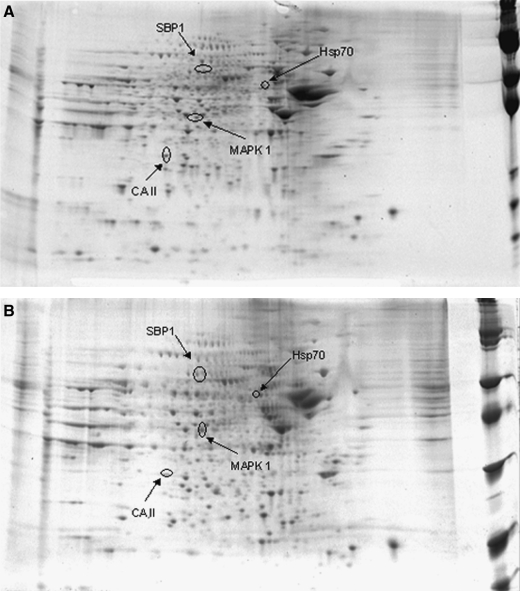
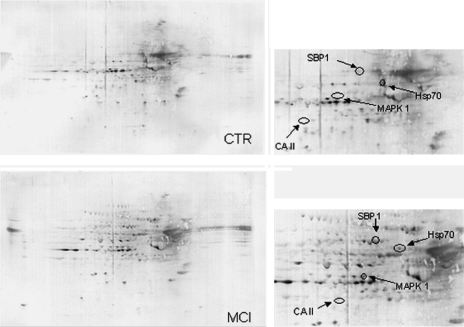
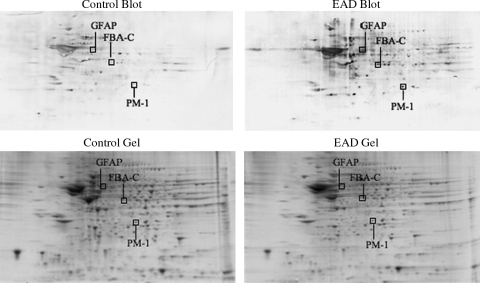
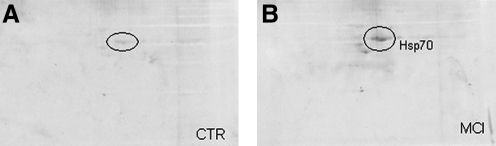
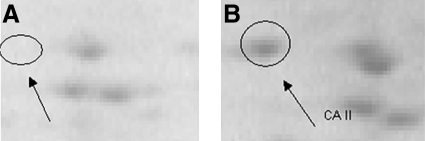
Previous studies indicated increased levels of protein oxidation in brain from subjects with Alzheimer's disease (AD), raising the question of whether oxidative damage is a late effect of neurodegeneration or precedes and contributes to the pathogenesis of AD. Hence, in the present study we used a parallel proteomic approach to identify oxidatively modified proteins in inferior parietal lobule (IPL) from subjects with mild cognitive impairment (MCI) and early stage-AD (EAD). By comparing to age-matched controls, we reasoned that such analysis could help in understanding potential mechanisms involved in upstream processes in AD pathogenesis. We have identified four proteins that showed elevated levels of protein carbonyls: carbonic anhydrase II (CA II), heat shock protein 70 (Hsp70), mitogen-activated protein kinase I (MAPKI), and syntaxin binding protein I (SBP1) in MCI IPL. In EAD IPL we identified three proteins: phosphoglycerate mutase 1 (PM1), glial fibrillary acidic protein, and fructose bisphospate aldolase C (FBA-C). Our results imply that some of the common targets of protein carbonylation correlated with AD neuropathology and suggest a possible involvement of protein modifications in the AD progression.
Figures
References
-
- Arendt T. Disturbance of neuronal plasticity is a critical pathogenetic event in Alzheimer's disease. Int J Dev Neurosci. 2001;19:231–245. - PubMed
-
- Beal MF. Oxidative damage as an early marker of Alzheimer's disease and mild cognitive impairment. Neurobiol Aging. 2005;26:585–586. - PubMed
-
- Bigl M. Bruckner MK. Arendt T. Bigl V. Eschrich K. Activities of key glycolytic enzymes in the brains of patients with Alzheimer's disease. J Neural Transm. 1999;106:499–511. - PubMed
-
- Braak H. Braak E. Demonstration of amyloid deposits and neurofibrillary changes in whole brain sections. Brain Pathol. 1991;1:213–216. - PubMed
-
- Butterfield DA. Amyloid beta-peptide (1–42)-induced oxidative stress and neurotoxicity: Implications for neurodegeneration in Alzheimer's disease brain. A review. Free Radic Res. 2002;36:1307–1313. - PubMed
Publication types
MeSH terms
Grants and funding
LinkOut - more resources
Full Text Sources
Medical
