


Olfaction in aging and Alzheimer's disease: event-related potentials to a cross-modal odor-recognition memory task discriminate ApoE epsilon4+ and ApoE epsilon 4- individuals
- PMID: 19686207
- PMCID: PMC4575288
- DOI: 10.1111/j.1749-6632.2009.04486.x
Olfaction in aging and Alzheimer's disease: event-related potentials to a cross-modal odor-recognition memory task discriminate ApoE epsilon4+ and ApoE epsilon 4- individuals
Abstract
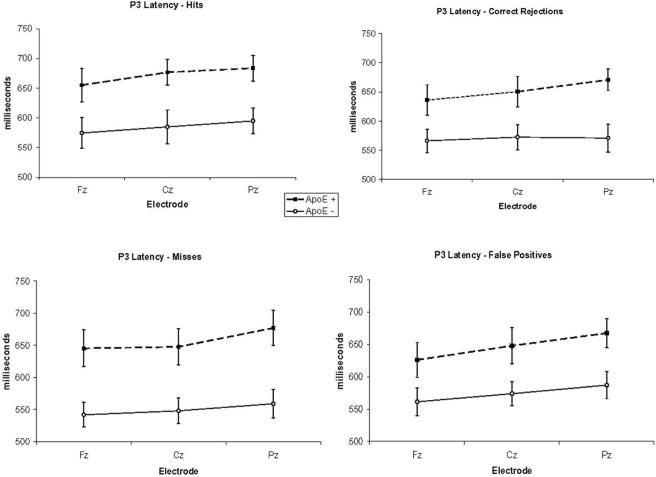
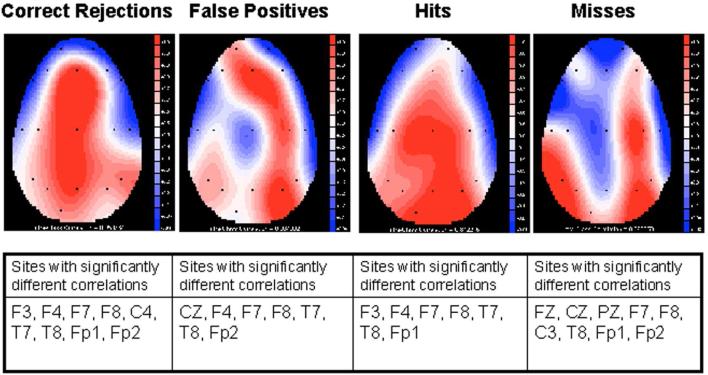
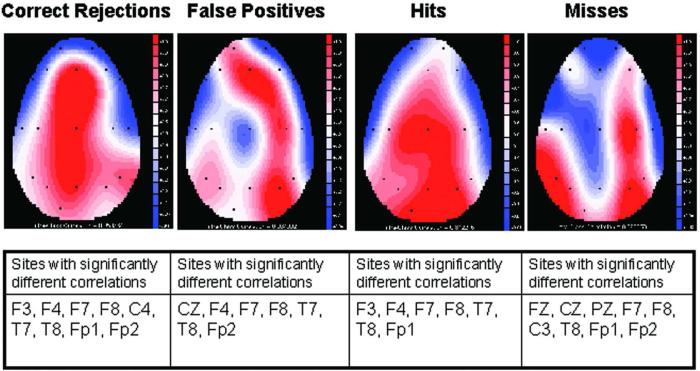
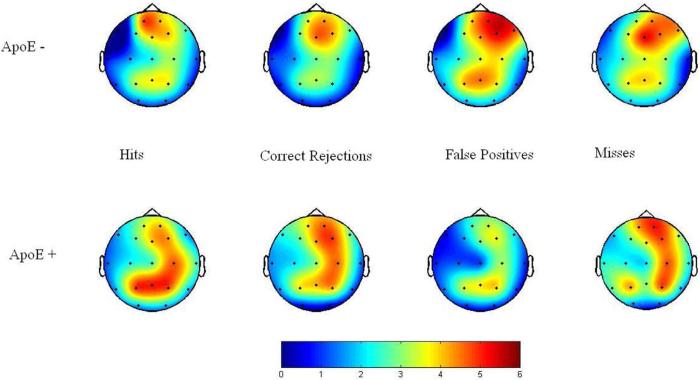
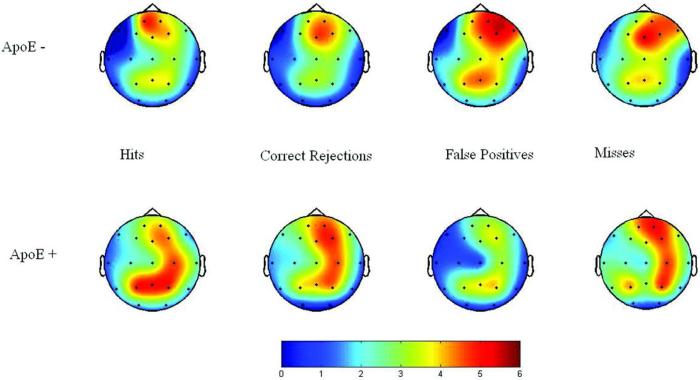
Alzheimer's disease (AD) is a devastating neurodegenerative condition that affects more than 5 million Americans. Currently, a definitive and unequivocal diagnosis of AD can only be confirmed histopathogically via postmortem autopsy, demonstrating the need for objective measures of cognitive functioning for those at risk for AD. The single most important genetic risk factor of AD is the apolipoprotein E (ApoE) epsilon4 allele. The present study investigated olfactory and cognitive processing deficits in ApoE epsilon4(+) individuals using a cross-modal recognition memory task and an objective electrophysiological measure, the event-related potential (ERP). Ten epsilon4(+) individuals (5 M, 5 F, mean [M]= 75.1 years) and 10 age- and gender-matched epsilon4(-) individuals (5 M, 5 F, M = 71 years) sequentially encoded a set of 16 olfactory stimuli and were subsequently shown names of odors previously presented (targets) or not (foils). EEG activity was recorded from 19 electrodes as participants distinguished targets from foils using a two-button mouse. P3 latencies were significantly longer in epsilon4(+) individuals, and intraclass correlations demonstrated differential activity between the two groups. These findings are consistent with a compensatory hypothesis, which posits that nondemented epsilon4(+) individuals will expend greater effort in cognitive processing or engage in alternative strategies and therefore require greater activation of neural tissue or recruitment of different neural populations. The findings also suggest that cross-modal ERP studies of recognition memory discriminate early neurocognitive changes in ApoE epsilon4(+) and ApoE epsilon4(-) individuals and may contribute to identifying the phenotype of persons who will develop Alzheimer's disease.
Figures
References
-
- Hebert LE, et al. Alzheimer disease in the US population: Prevalence estimates using the 2000 census. Arch. Neurol. 2003;60:1119–1122. - PubMed
-
- Farrer LA, et al. Apolipoprotein E genotype in patients with Alzheimer's disease: Implications for the risk of dementia among relatives. Ann. Neurol. 1995;38:797–808. - PubMed
-
- Mayeux R. Epidemiology of neurodegeneration. Annu. Rev. Neurosci. 2003;26:81–104. - PubMed
-
- Mortimer JA, Snowdon DA, Markesbery WR. Head circumference, education and risk of dementia: Findings from the Nun Study. J. Clin. Exp. Neuropsychol. 2003;25:671–679. - PubMed
-
- Jellinger KA. Head injury and dementia. Curr. Opin. Neurol. 2004;17:719–723. - PubMed
Publication types
MeSH terms
Substances
Grants and funding
LinkOut - more resources
Full Text Sources
Medical
Miscellaneous
