


Transcriptional regulation of nonfermentable carbon utilization in budding yeast
- PMID: 19686338
- PMCID: PMC5003605
- DOI: 10.1111/j.1567-1364.2009.00555.x
Transcriptional regulation of nonfermentable carbon utilization in budding yeast
Abstract
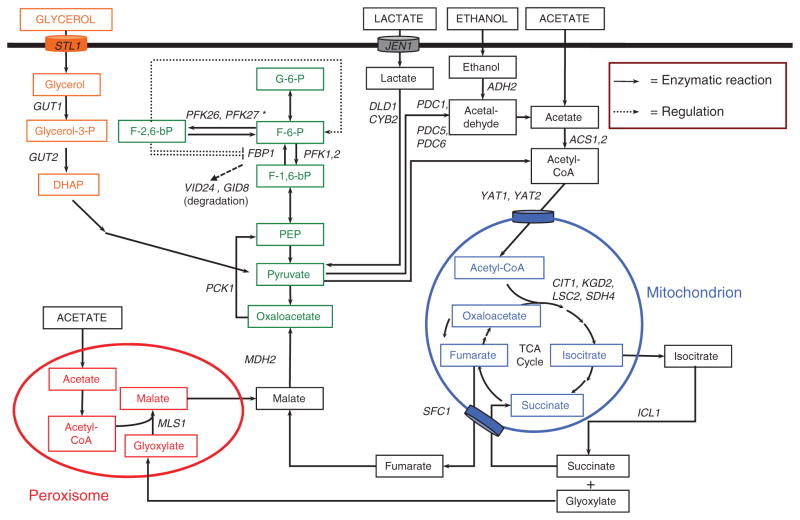
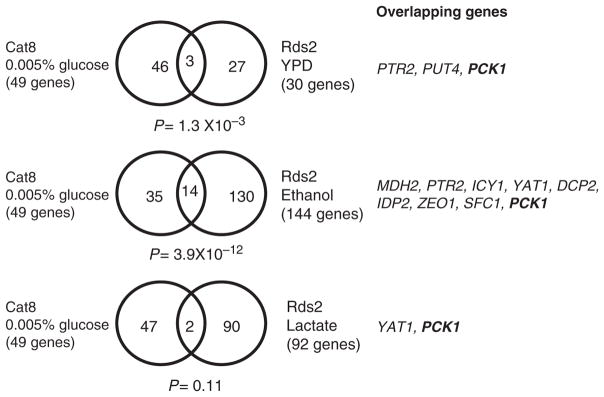
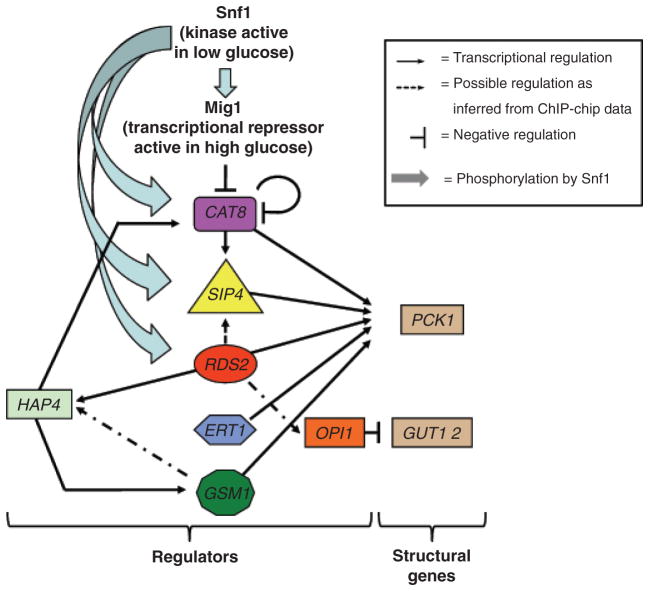
Saccharomyces cerevisiae preferentially uses glucose as a carbon source, but following its depletion, it can utilize a wide variety of other carbons including nonfermentable compounds such as ethanol. A shift to a nonfermentable carbon source results in massive reprogramming of gene expression including genes involved in gluconeogenesis, the glyoxylate cycle, and the tricarboxylic acid cycle. This review is aimed at describing the recent progress made toward understanding the mechanism of transcriptional regulation of genes responsible for utilization of nonfermentable carbon sources. A central player for the use of nonfermentable carbons is the Snf1 kinase, which becomes activated under low glucose levels. Snf1 phosphorylates various targets including the transcriptional repressor Mig1, resulting in its inactivation allowing derepression of gene expression. For example, the expression of CAT8, encoding a member of the zinc cluster family of transcriptional regulators, is then no longer repressed by Mig1. Cat8 becomes activated through phosphorylation by Snf1, allowing upregulation of the zinc cluster gene SIP4. These regulators control the expression of various genes including those involved in gluconeogenesis. Recent data show that another zinc cluster protein, Rds2, plays a key role in regulating genes involved in gluconeogenesis and the glyoxylate pathway. Finally, the role of additional regulators such as Adr1, Ert1, Oaf1, and Pip2 is also discussed.
Figures
References
-
- Akache B, Turcotte B. New regulators of drug sensitivity in the family of yeast zinc cluster proteins. J Biol Chem. 2002;277:21254–21260. - PubMed
-
- Akache B, MacPherson S, Sylvain MA, Turcotte B. Complex interplay among regulators of drug resistance genes in Saccharomyces cerevisiae. J Biol Chem. 2004;279:27855–27860. - PubMed
-
- Andrade RP, Kotter P, Entian KD, Casal M. Multiple transcripts regulate glucose-triggered mRNA decay of the lactate transporter JEN1 from Saccharomyces cerevisiae. Biochem Bioph Res Co. 2005;332:254–262. - PubMed
Publication types
MeSH terms
Substances
Grants and funding
LinkOut - more resources
Full Text Sources
Other Literature Sources
Molecular Biology Databases
