


Formation of the first peptide bond: the structure of EF-P bound to the 70S ribosome
- PMID: 19696344
- PMCID: PMC3296453
- DOI: 10.1126/science.1175800
Formation of the first peptide bond: the structure of EF-P bound to the 70S ribosome
Abstract
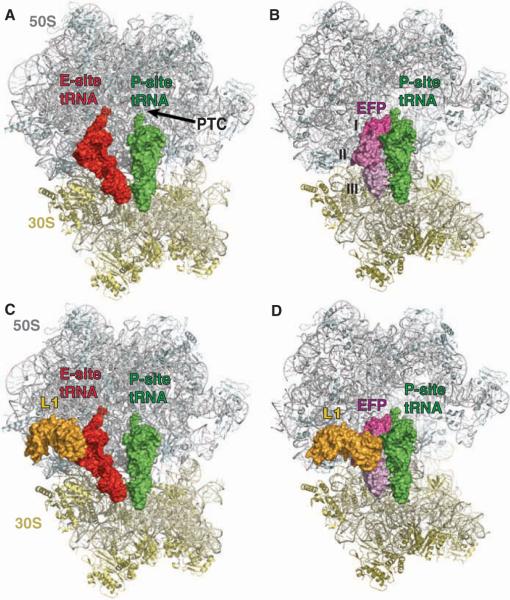
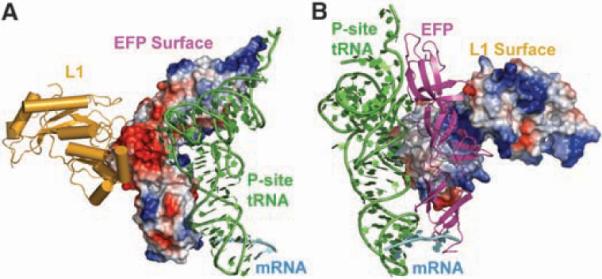
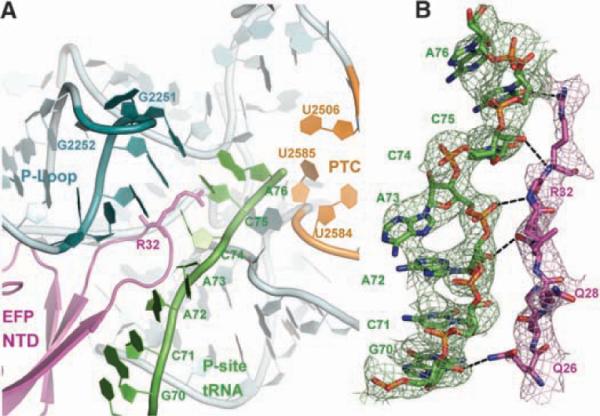
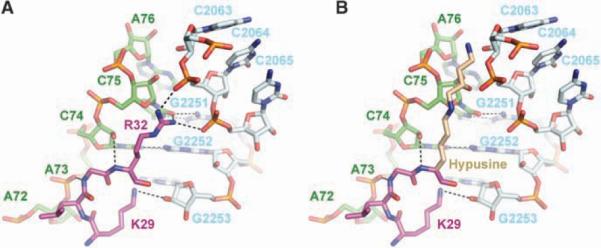
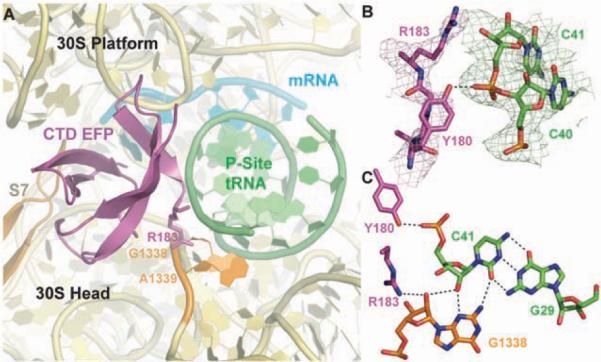
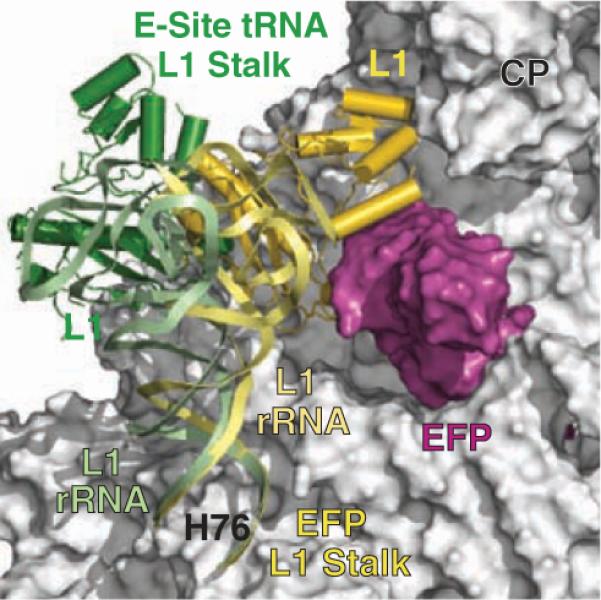
Elongation factor P (EF-P) is an essential protein that stimulates the formation of the first peptide bond in protein synthesis. Here we report the crystal structure of EF-P bound to the Thermus thermophilus 70S ribosome along with the initiator transfer RNA N-formyl-methionyl-tRNA(i) (fMet-tRNA(i)(fMet)) and a short piece of messenger RNA (mRNA) at a resolution of 3.5 angstroms. EF-P binds to a site located between the binding site for the peptidyl tRNA (P site) and the exiting tRNA (E site). It spans both ribosomal subunits with its amino-terminal domain positioned adjacent to the aminoacyl acceptor stem and its carboxyl-terminal domain positioned next to the anticodon stem-loop of the P site-bound initiator tRNA. Domain II of EF-P interacts with the ribosomal protein L1, which results in the largest movement of the L1 stalk that has been observed in the absence of ratcheting of the ribosomal subunits. EF-P facilitates the proper positioning of the fMet-tRNA(i)(fMet) for the formation of the first peptide bond during translation initiation.
Figures
Comment in
-
Biochemistry. Leaps in translational elongation.Science. 2009 Oct 30;326(5953):677-8. doi: 10.1126/science.1181511. Epub 2009 Oct 15. Science. 2009. PMID: 19833922 No abstract available.
References
Publication types
MeSH terms
Substances
Associated data
- Actions
- Actions
- Actions
- Actions
Grants and funding
LinkOut - more resources
Full Text Sources
Other Literature Sources
Molecular Biology Databases
