


Association of soluble endotoxin receptor CD14 and mortality among patients undergoing hemodialysis
- PMID: 19699018
- PMCID: PMC3737251
- DOI: 10.1053/j.ajkd.2009.06.028
Association of soluble endotoxin receptor CD14 and mortality among patients undergoing hemodialysis
Abstract
Background: CD14 is a key molecule in innate immunity that mediates cell activation and signaling in response to endotoxin and other bacterial wall-derived components. CD14 protein exists in soluble (sCD14) and membrane-bound forms. The correlates of sCD14 in persons undergoing long-term hemodialysis (HD) therapy are not known. We hypothesized that increased sCD14 levels in HD patients are associated with proinflammatory cytokine activation and increased mortality.
Study design: Cohort study.
Setting & participants: 310 long-term HD patients who participated in the Nutritional and Inflammatory Evaluation in Dialysis (NIED) Study, a cohort derived from a pool of more than 3,000 HD outpatients during 5 years in 8 DaVita maintenance dialysis facilities in the South Bay Los Angeles, CA, area.
Predictors: sCD14 levels in serum.
Outcomes: 33-month mortality.
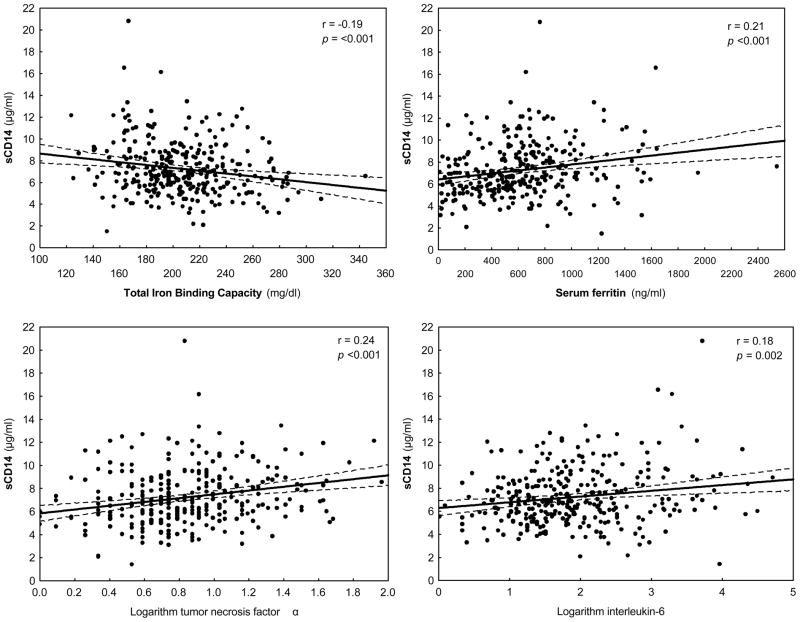
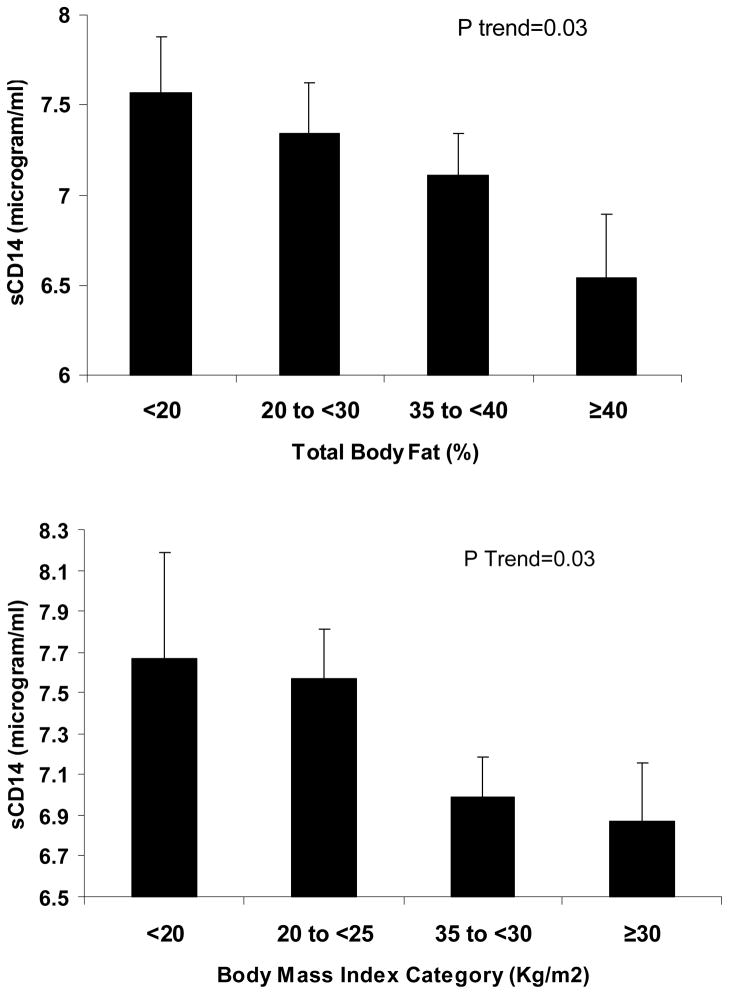
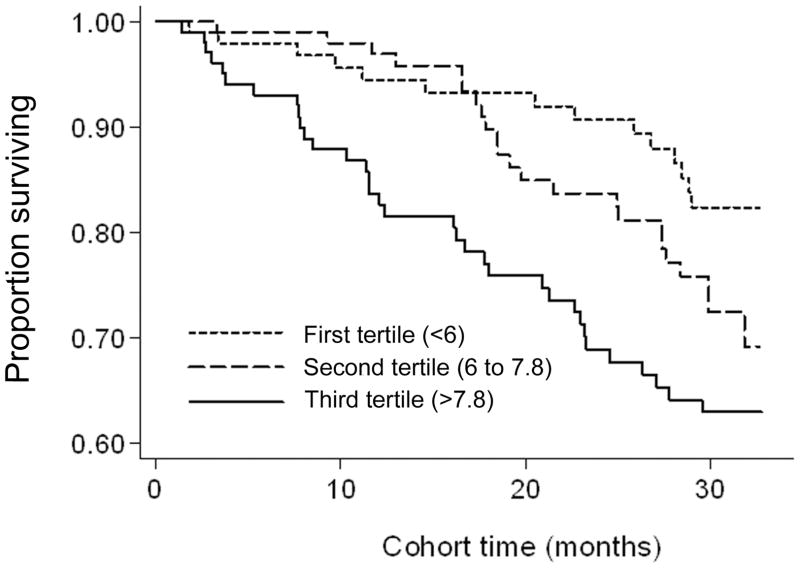
Results: Mean sCD14 level was 7.24 +/- 2.45 microg/mL. Tumor necrosis factor alpha level was the strongest correlate of sCD14 level (r = +0.24; P < 0.001), followed by interleukin 6 level (r = +0.18; P = 0.002), serum ferritin level (r = +0.21; P < 0.001), total iron-binding capacity (r = -0.19; P < 0.001), body mass index (r = -0.15; P = 0.008), vintage (r = +0.14; P = 0.01), low-density lipoprotein cholesterol level (r = +0.13; P = 0.03), and body fat (r = -0.11; P = 0.06). During the 33-month follow-up, 71 (23%) patients died. Multivariable Cox proportional analysis adjusted for case-mix and other nutritional and inflammatory confounders, including serum tumor necrosis factor alpha, C-reactive protein, and interleukin 6 levels, showed that compared with the lowest sCD14 tertile, sCD14 levels in the third tertile (>7.8 microg/mL) were associated with greater death risk (hazard ratio, 1.94; 95% confidence interval, 1.01 to 3.75; P = 0.04).
Limitations: Survivor bias in combined incident/prevalent studies.
Conclusions: Increased sCD14 level is related positively to markers of inflammation and negatively to nutritional status and is an independent predictor of mortality in long-term HD patients. Additional studies are needed to examine the usefulness of sCD14 level in risk stratification and the clinical decision-making process in HD patients.
Conflict of interest statement
Figures
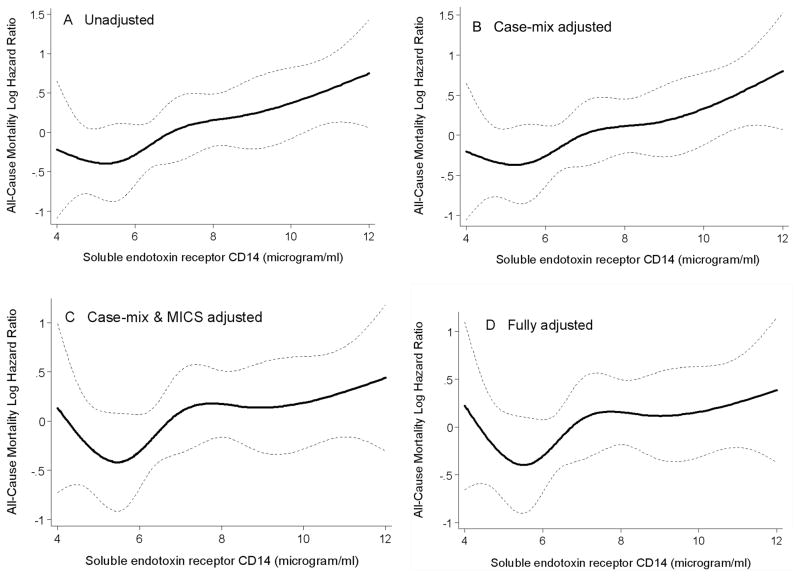
Case-mix variables: age, sex, race/ethnicity, diabetes mellitus, log vintageMICS variables: albumin, creatinine, hemoglobin, normalized protein catabolic rate (nPCR), lymphocyte percentage, and body mass indexInflammatory variables: Log C-reactive protein, Log Interleukin-6, Log Tumor necrosis factor-α
Comment in
-
Soluble CD14 and endotoxin levels in hemodialysis patients: a tale of 2 molecules.Am J Kidney Dis. 2009 Dec;54(6):990-2. doi: 10.1053/j.ajkd.2009.09.003. Am J Kidney Dis. 2009. PMID: 19932875 No abstract available.
References
-
- Yamagami S, Adachi T, Sugimura T, et al. Detection of endotoxin antibody in long-term dialysis patients. Int J Artif Organs. 1990;13:205–210. - PubMed
-
- Lonnemann G, Behme TC, Lenzner B, et al. Permeability of dialyzer membranes to TNF alpha-inducing substances derived from water bacteria. Kidney Int. 1992;42:61–68. - PubMed
-
- Pereira BJ, Sundaram S, Barrett TW, et al. Transfer of cytokine-inducing bacterial products across hemodialyzer membranes in the presence of plasma or whole blood. Clin Nephrol. 1996;46:394–401. - PubMed
-
- Nockher WA, Scherberich JE. Monocyte cell-surface CD14 expression and soluble CD14 antigen in hemodialysis: evidence for chronic exposure to LPS. Kidney Int. 1995;48:1469–1476. - PubMed
Publication types
MeSH terms
Substances
Grants and funding
LinkOut - more resources
Full Text Sources
Medical
Research Materials
