


A placebo-controlled trial of buspirone for the treatment of marijuana dependence
- PMID: 19699593
- PMCID: PMC2789590
- DOI: 10.1016/j.drugalcdep.2009.06.022
A placebo-controlled trial of buspirone for the treatment of marijuana dependence
Abstract
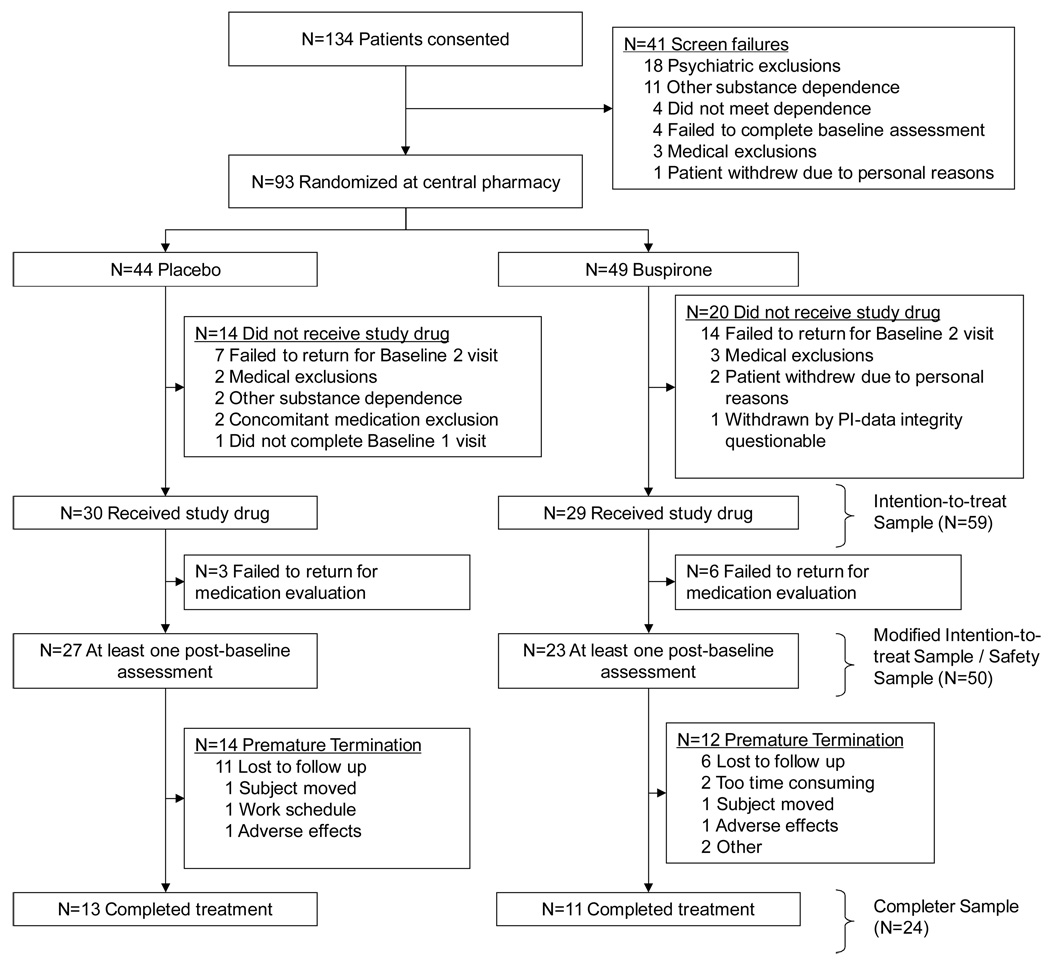
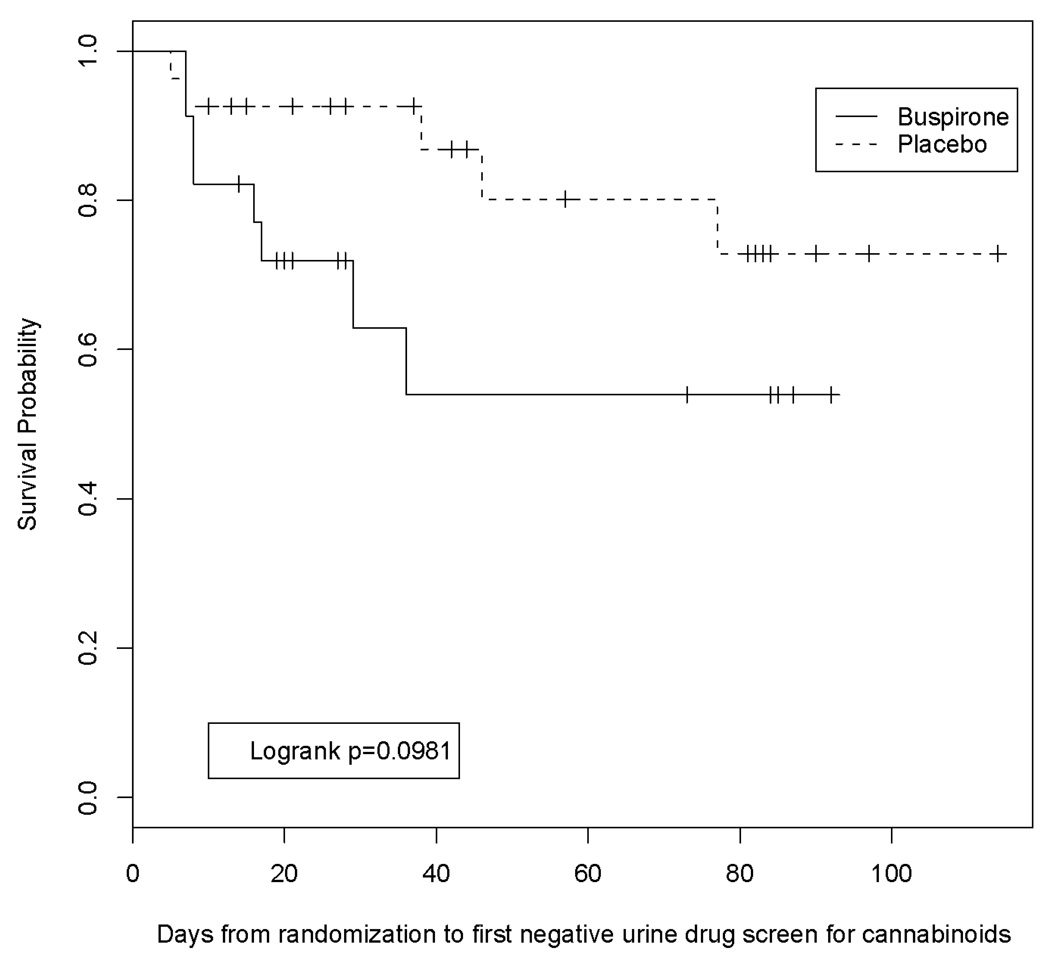
The present study investigated the potential efficacy of buspirone for treating marijuana dependence. Participants received either buspirone (maximum 60mg/day) (n=23) or matching placebo (n=27) for 12 weeks, each in conjunction with motivational interviewing. In the modified intention-to-treat analysis, the percentage of negative UDS results in the buspirone-treatment group was 18 percentage points higher than the placebo-treatment group (95% CI: -2% to 37%, p=0.071). On self-report, participants receiving buspirone reported not using marijuana 45.2% of days and participants receiving placebo reported not using 51.4% of days (p=0.55). An analysis of participants that completed the 12-week trial showed a significant difference in the percentage negative UDS (95% CI: 7-63%, p=0.014) and a trend for participants randomized to the buspirone-treatment group who completed treatment to achieve the first negative UDS result sooner than those participants treated with placebo (p=0.054). Further study with buspirone in this population may be warranted; however, strategies to enhance study retention and improve outcome measurement should be considered in future trials.
Conflict of interest statement
Authors McRae and Brady have received grant support from Bristol-Myers Squibb. Author Brady has received honoraria from Bristol-Myers Squibb. All other authors declare that they have no conflict of interest.
Figures
References
-
- Agosti V, Nunes E, Levin F. Rates of psychiatric comorbidity among U.S. residents with lifetime cannabis dependence. Am J Drug Alcohol Abuse. 2002;28:643–652. - PubMed
-
- Bachman J, Reese RT. Personality correlates of cannabis dependence. Addict Behav. 1979;4:361–371. - PubMed
-
- Bornheim LM, Kim KY, Li J, Perotti BY, Benet LZ. Effect of cannabidiol pretreatment on the kinetics of tetrahydrocannabinol metabolites in mouse brain. Drug Metab Dispos. 1995;23:825–831. - PubMed
-
- Budney AJ, Hughes JR. The cannabis withdrawal syndrome. Curr Opin Psychiatry. 2006;19:233–238. - PubMed
-
- Budney AJ, Hughes JR, Moore BA, Vandrey R. Review of the validity and significance of cannabis withdrawal syndrome. Am J Psychiatry. 2004;161:1967–1977. - PubMed
Publication types
MeSH terms
Substances
Grants and funding
LinkOut - more resources
Full Text Sources
Medical
