


Development, implementation, and process evaluation of a regional palliative care quality improvement project
- PMID: 19699607
- PMCID: PMC7126310
- DOI: 10.1016/j.jpainsymman.2008.12.006
Development, implementation, and process evaluation of a regional palliative care quality improvement project
Abstract
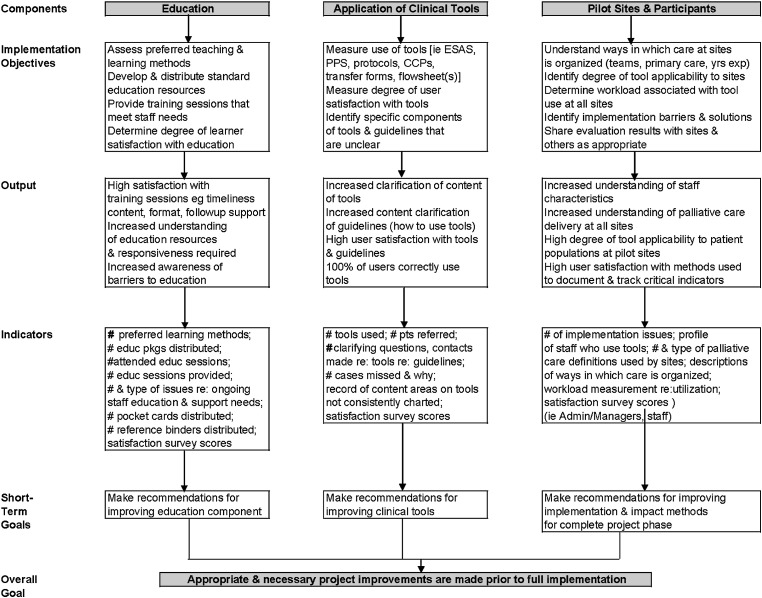
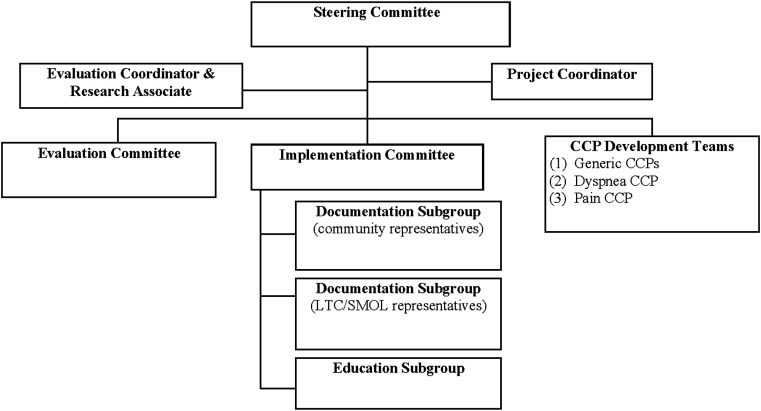
The delivery of optimal palliative care requires an integrated and coordinated approach of many health care providers across the continuum of care. In response to identified gaps in the region, the Palliative Care Integration Project (PCIP) was developed to improve continuity and decrease variability of care to palliative patients with cancer. The infrastructure for the project included multi-institutional and multisectoral representation on the Steering Committee and on the Development, Implementation and Evaluation Working Groups. After review of the literature, five Collaborative Care Plans and Symptom Management Guidelines were developed and integrated with validated assessment tools (Edmonton Symptom Assessment System and Palliative Performance Scale). These project resources were implemented in the community, the palliative care unit, and the cancer center. Surveys were completed by frontline health professionals (defined as health professionals providing direct care), and two independent focus groups were conducted to capture information regarding: 1) the development of the project and 2) the processes of implementation and usefulness of the different components of the project. Over 90 individuals from more than 30 organizations were involved in the development, implementation, and evaluation of the PCIP. Approximately 600 regulated health professionals and allied health professionals who provided direct care, and over 200 family physicians and medical residents, received education/training on the use of the PCIP resources. Despite unanticipated challenges, frontline health professionals reported that the PCIP added value to their practice, particularly in the community sector. The PCIP showed that a network in which each organization had ownership and where no organization lost its autonomy, was an effective way to improve integration and coordination of care delivery.
Figures
References
-
- Hospice Kingston. Needs assessment: Kingston, Frontenac, Lennox and Addington Counties, 2000. Kingston, Ontario: Hospice Kingston, 2000.
-
- Chapman C. Southeastern Ontario Palliative Pain and Symptom Management Program; Brockville, Ontario: 1998. Perceived barriers to delivery of palliative care: Guide to program planning.
-
- Ostic H. Survey of family physicians—impediments to dying at home (unpublished). Kingston, Ontario, 1999.
-
- Rosenbaum C. Health Care Network of Southeastern Ontario; Kingston, Ontario: 2000. Integrating health services in Southeastern Ontario: Moving forward 2000.
MeSH terms
LinkOut - more resources
Full Text Sources
Medical
