


Effects of the nicotinic receptor antagonist mecamylamine on ad-lib smoking behavior, topography, and nicotine levels in smokers with and without schizophrenia: a preliminary study
- PMID: 19700263
- PMCID: PMC2784178
- DOI: 10.1016/j.schres.2009.07.019
Effects of the nicotinic receptor antagonist mecamylamine on ad-lib smoking behavior, topography, and nicotine levels in smokers with and without schizophrenia: a preliminary study
Abstract
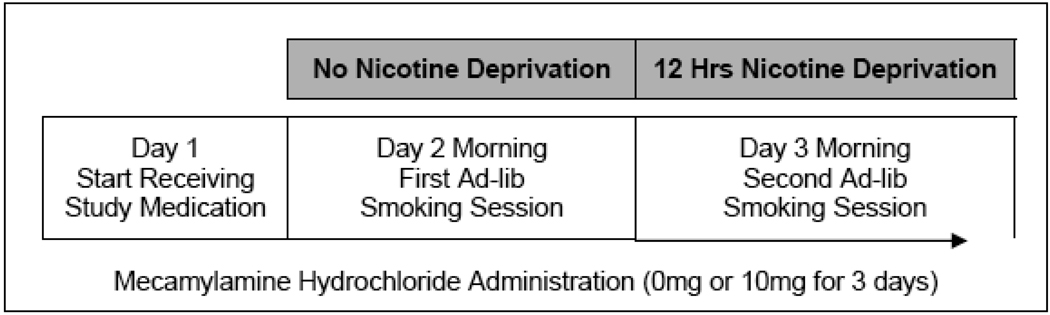
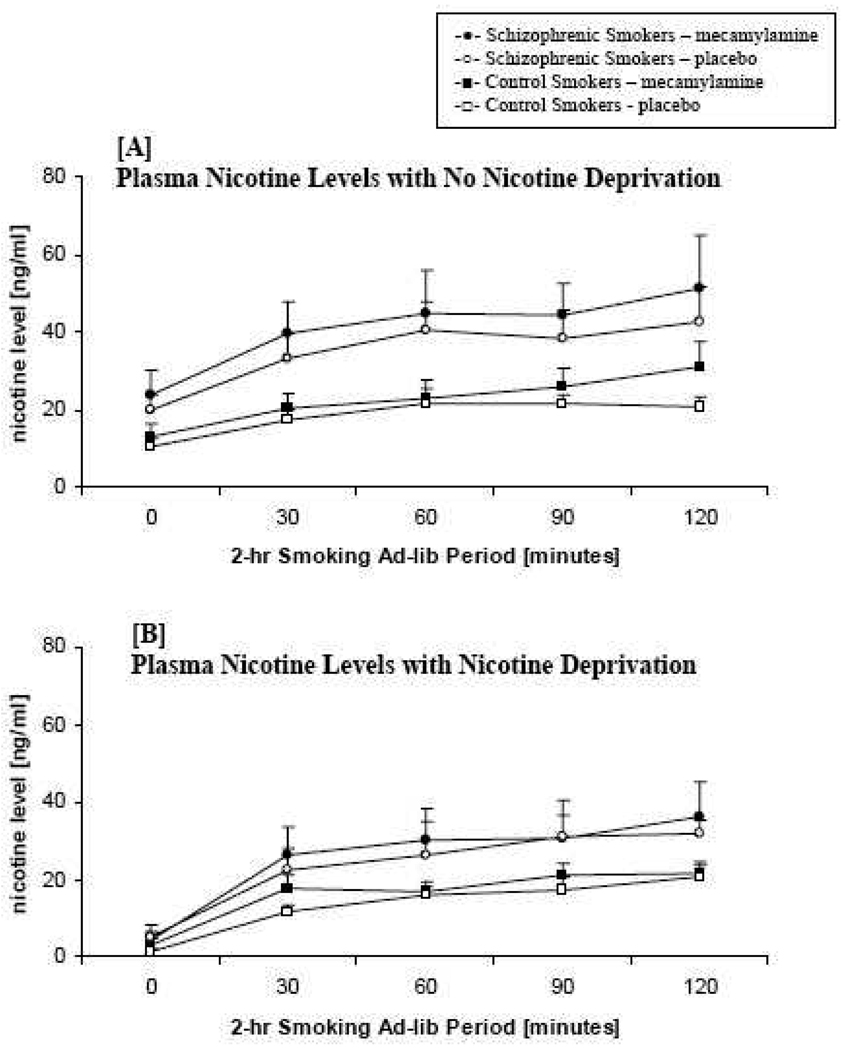
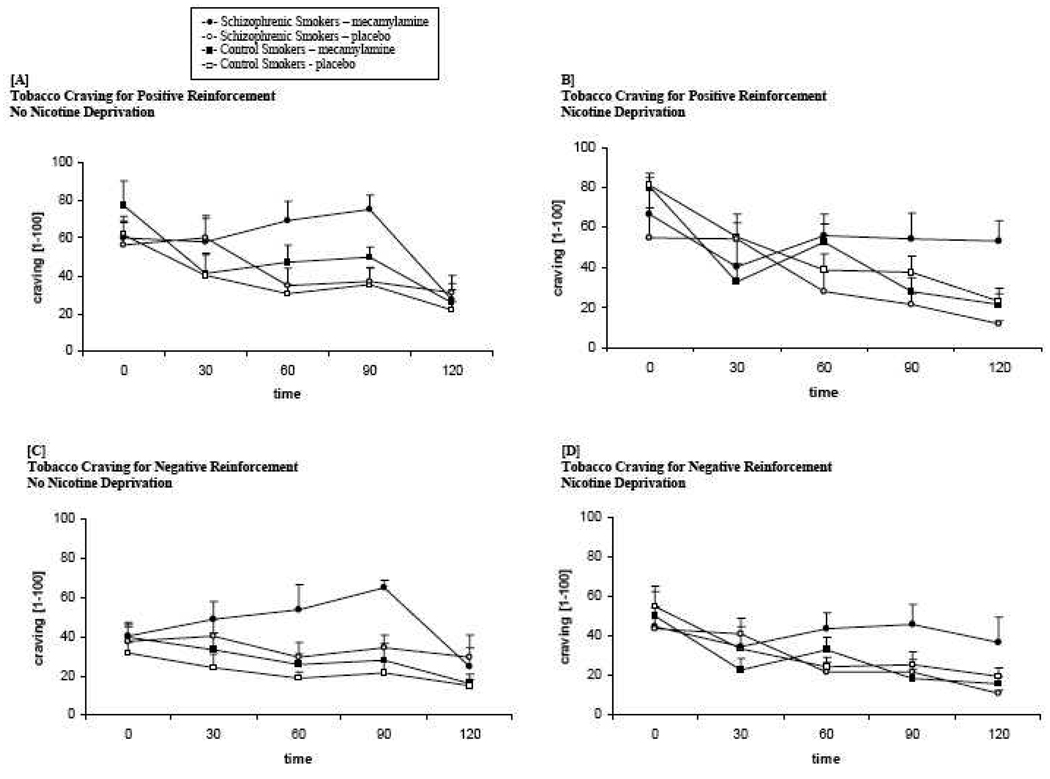
Individuals with schizophrenia have higher plasma nicotine levels in comparison to non-psychiatric smokers, even when differences in smoking are equated. This difference may be related to how intensely cigarettes are smoked but this has not been well studied. Mecamylamine (MEC), a non-competitive nicotinic acetylcholine receptor (nAChR) antagonist, which has been shown to increase ad-lib smoking and to affect smoking topography, was used in the current study as a pharmacological probe to increase our understanding of smoking behavior, smoking topography, and resulting nicotine levels in smokers with schizophrenia. This preliminary study used a within-subject, placebo-controlled design in smokers with schizophrenia (n=6) and healthy control smokers (n=8) to examine the effects of MEC (10mg/day) on ad-lib smoking behavior, topography, nicotine levels, and tobacco craving across two smoking deprivation conditions (no deprivation and 12-h deprivation). MEC, compared to placebo, increased the number of cigarettes smoked and plasma nicotine levels. MEC increased smoking intensity and resulted in greater plasma nicotine levels in smokers with schizophrenia compared to controls, although these results were not consistent across deprivation conditions. MEC also increased tobacco craving in smokers with schizophrenia but not in control smokers. Our results suggest that antagonism of high-affinity nAChRs in smokers with schizophrenia may prompt compensatory smoking, increasing the intensity of smoking and nicotine exposure without alleviating craving. Further work is needed to assess whether nicotine levels are directly mediated by how intensely the cigarettes are smoked, and to confirm whether this effect is more pronounced in smokers with schizophrenia.
Figures
References
-
- Beck AT, Steer RA, Garbin MG. Psychometric properties of the Beck Depression Inventory: twenty-five years of evaluation. Clinical Psychology Review. 1988;8:77–100.
-
- Cox LS, Tiffany ST, Christen AG. Evaluation of the brief questionnaire of smoking urges (QSU-brief) in laboratory and clinical settings. Nicotine and Tobacco Research. 2001;3:7–16. - PubMed
-
- Dalack GW, Meador-Woodruff JH. Nicotine dependence in schizophrenia: clinical phenomena and laboratory findings. American Journal of Psychiatry. 1998;155:1490–1501. - PubMed
-
- Eissenberg T, Griffiths RR, Stitzer ML. Mecamylamine does not precipitate withdrawal in cigarette smokers. Psychopharmacology. 1996;127:328–336. - PubMed
-
- Fagerström K-0. Measuring degree of physical dependency to tobacco smoking with reference to individualization of treatment. Addictive Behaviors. 1978;3:235–241. - PubMed
Publication types
MeSH terms
Substances
Grants and funding
LinkOut - more resources
Full Text Sources
Medical
