Body mass index in Saudi Arabian children and adolescents: a national reference and comparison with international standards
- PMID: 19700890
- PMCID: PMC3290051
- DOI: 10.4103/0256-4947.55162
Body mass index in Saudi Arabian children and adolescents: a national reference and comparison with international standards
Abstract
Background and objectives: Because there are no reference standards for body mass index (BMI) in Saudi children, we established BMI reference percentiles for normal Saudi Arabian children and adolescents and compared them with international standards.
Subjects and methods: Data from a stratified multistage probability sample were collected from the 13 health regions in Saudi Arabia, as part of a nationwide health profile survey of Saudi Arabian children and adolescents conducted to establish normal physical growth references. Selected households were visited by a trained team. Weight and length/height were measured and recorded following the WHO recommended procedures using the same equipment, which were subjected to both calibration and intra/interobserver variations.
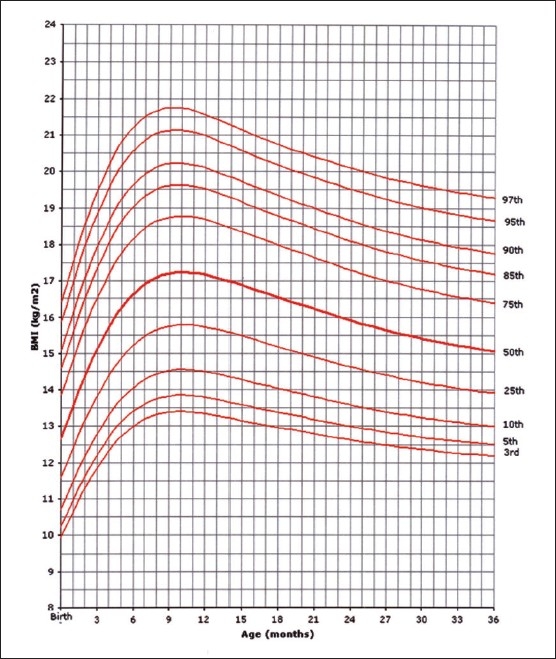
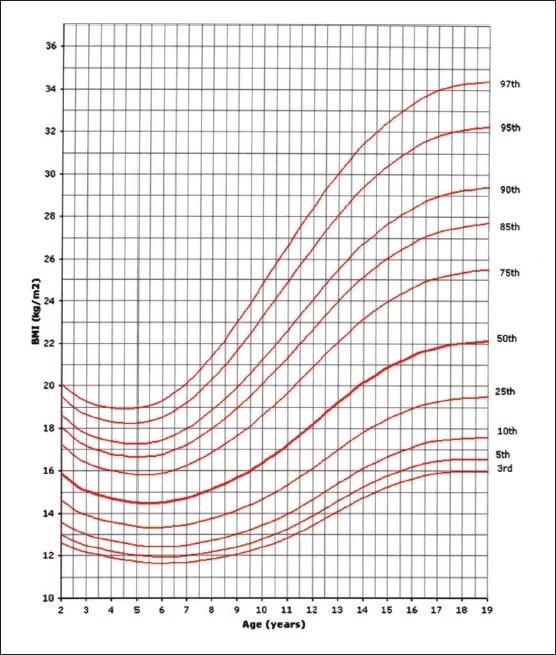
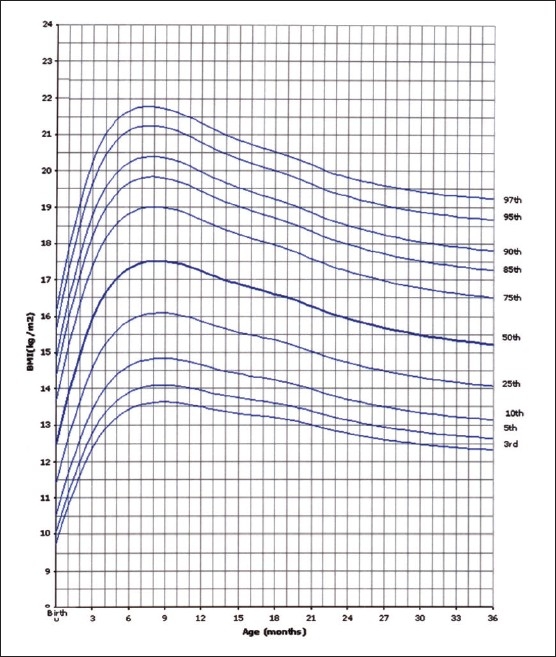
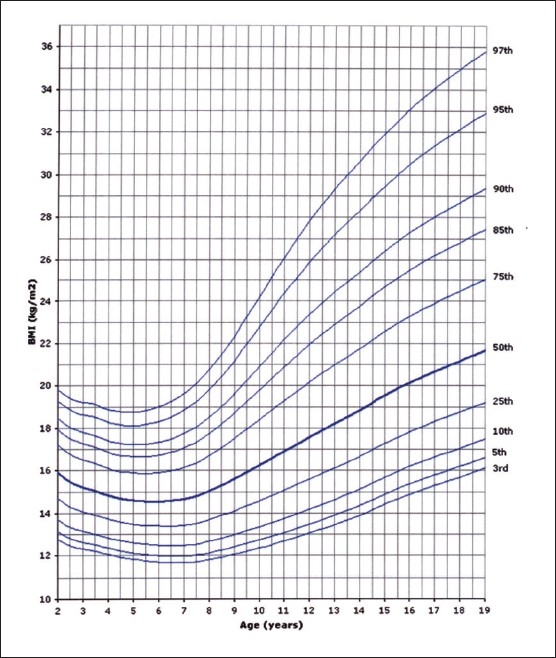
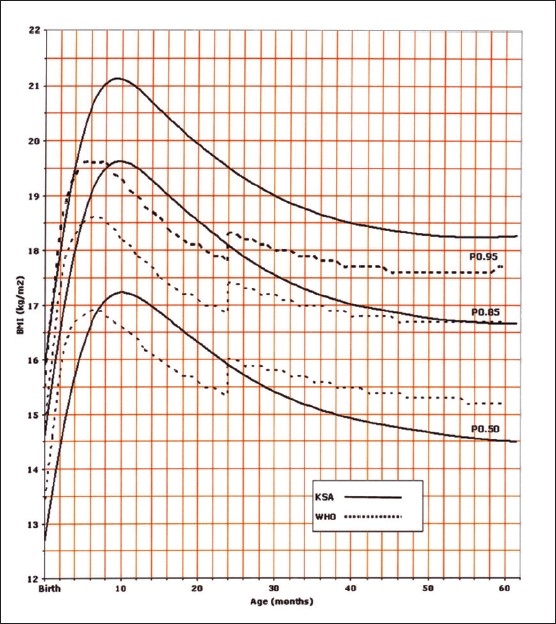
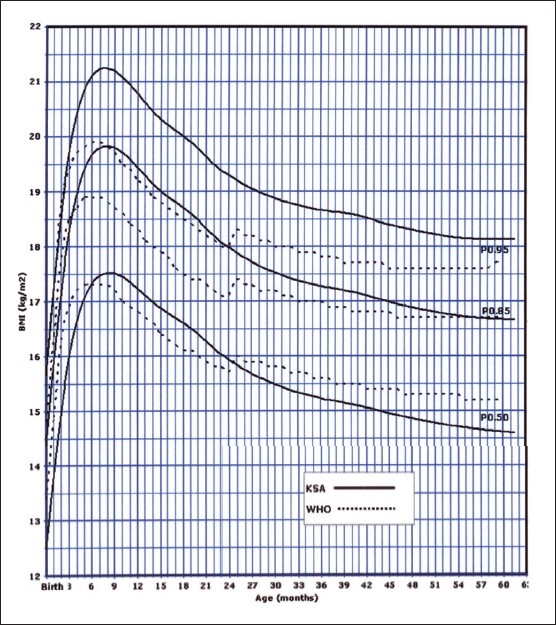
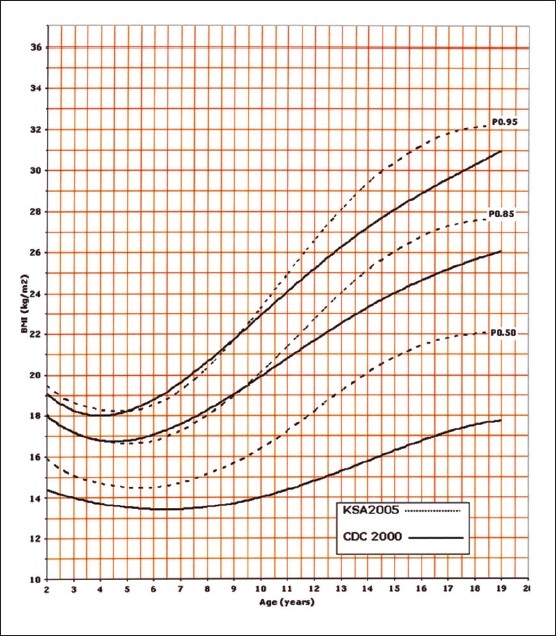
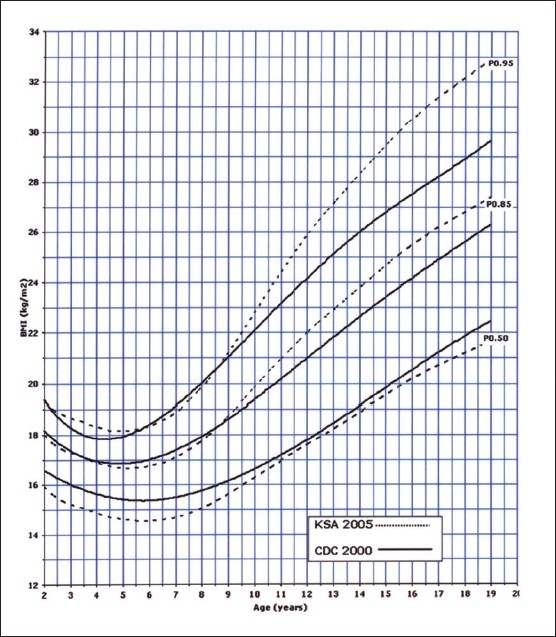
Results: Survey of 11 874 eligible households yielded 35 275 full-term and healthy children and adolescents who were subjected to anthropometric measurements. Four BMI curves were produced, from birth to 36 months and 2 to 19 years for girls and boys. The 3rd , 5 th , 10th , 25th , 50th , 75th , 85th , 90th , 95th , and 97th percentiles were produced and compared with the WHO and CDC BMI charts. In the higher percentiles, the Saudi children differed from Western counterparts, indicating that Saudi children have equal or higher BMIs.
Conclusion: The BMI curves reflect statistically representative BMI values for Saudi Arabian children and adolescents.
Figures
References
-
- Quetelet LAJ. Physique Socialle. Vol 2. Brussels: C Muquardt; 1869.
-
- Kamp J. Ein Korperproperti Onsegesetzy zur beurteilung der langegewitchstund – abweicher populations – altergruppe. Munchener Medizinische Wochenschrift. 1921;68:976–8.
-
- WHO multicenter growth reference group. Assessment of differences in linear growth among population in the WHO multicenter growth references study. Acta Paediatr. 2006;450:56–65. - PubMed
-
- Kuczmarski RJ, Ogden CL, Guo SS, Grummer-Strawn LM, Flegal KM, Mei Z, et al. The 2000 CDC growth charts for the United States: methods and development. Vital Health Stat 11. 2004;246:1–190. - PubMed
-
- Lynch J, Wang XL, Wilcken DE. Body mass index in Australian children: recent changes and relevance of ethnicity. Arch Dis Child. 2000;82:16–20. - PubMed
MeSH terms
LinkOut - more resources
Full Text Sources
Medical