Review
. 2009 Aug 13;14(8):3037-72.
doi: 10.3390/molecules14083037.

Plant-derived antimalarial agents: new leads and efficient phytomedicines. Part II. Non-alkaloidal natural products

Affiliations
Review

Plant-derived antimalarial agents: new leads and efficient phytomedicines. Part II. Non-alkaloidal natural products

Ronan Batista et al. Molecules. .

Abstract

Malaria is still the most destructive and dangerous parasitic infection in many tropical and subtropical countries. The burden of this disease is getting worse, mainly due to the increasing resistance of Plasmodium falciparum against the widely available antimalarial drugs. There is an urgent need for new, more affordable and accessible antimalarial agents possessing original modes of action. Natural products have played a dominant role in the discovery of leads for the development of drugs to treat human diseases, and this fact anticipates that new antimalarial leads may certainly emerge from tropical plant sources. This present review covers most of the recently-published non-alkaloidal natural compounds from plants with antiplasmodial and antimalarial properties, belonging to the classes of terpenes, limonoids, flavonoids, chromones, xanthones, anthraquinones, miscellaneous and related compounds, besides the majority of papers describing antiplasmodial crude extracts published in the last five years not reviewed before. In addition, some perspectives and remarks on the development of new drugs and phytomedicines for malaria are succinctly discussed.


Figures
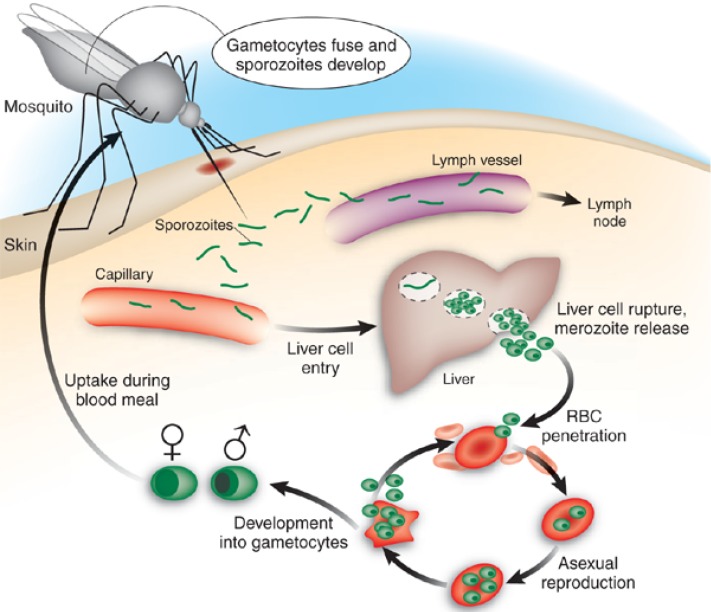
Figure 1
Figure 1
Schematic life cycle of malaria in humans. Sporozoites are injected into human dermis through the bite of infected Anopheles mosquito. After inoculation, sporozoites migrate to liver cells to establish the first intracellular replicative stage. Merozoites generated from this exoerythrocytic phase then invade erythrocytes (RBCs), and it is during this erythrocytic stage that severe conditions of malaria occur. The life cycle is completed when sexual stages (gametocytes) are ingested by a mosquito. Some sporozoites deposited in the skin eventually penetrate capillaries or lymph vessels. Those entering the lymph vessels will penetrate lymph vascular endothelial cells in lymph nodes to establish a lymph node form, which appears not to continue the life cycle - but may be significant in priming an immune response. Adapted and reproduced by permission from Macmillan Publishers Ltd. [7].
Figure 2
Figure 2
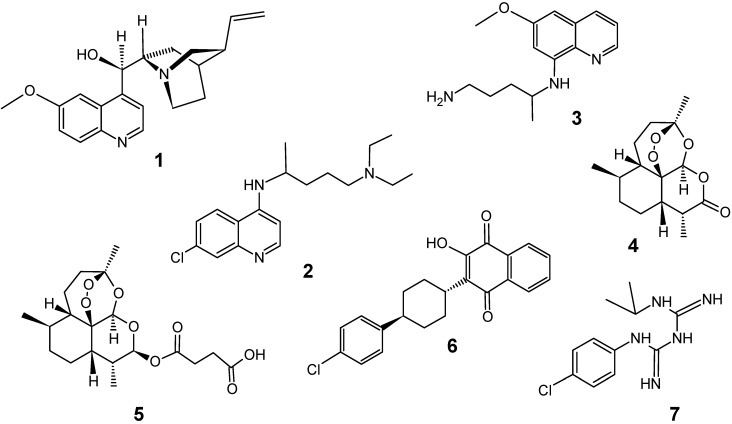
Some traditional antimalarial drugs.
Figure 3
Figure 3
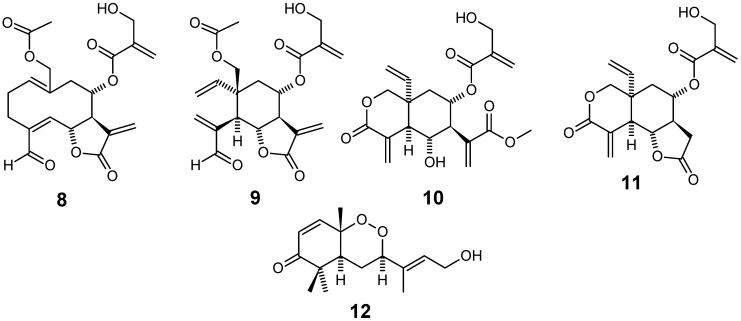
Antiplasmodial terpenes 8-12.
Figure 4
Figure 4
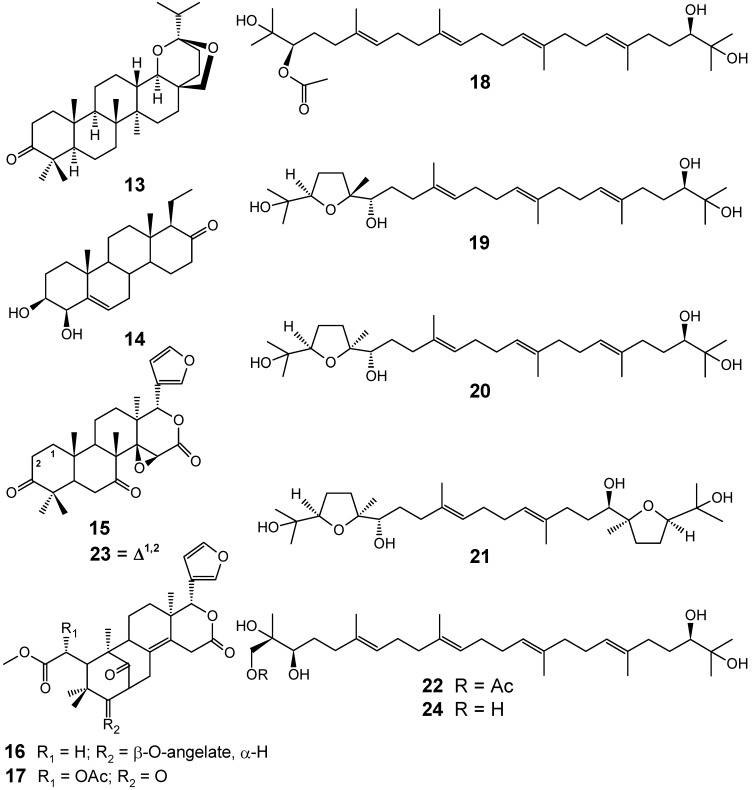
Antiplasmodial terpenes 13-24.
Figure 5
Figure 5
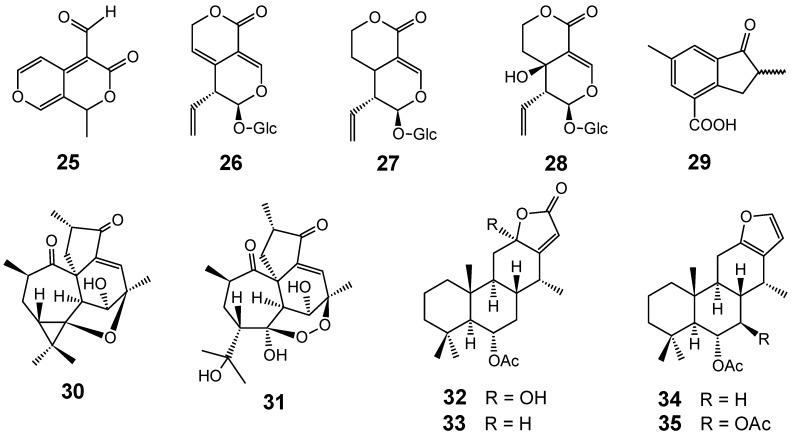
Antiplasmodial terpenes and related compounds 25-35.
Figure 6
Figure 6
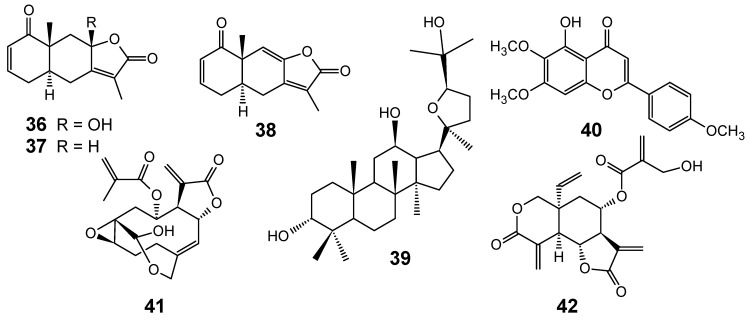
Antiplasmodial terpenes and related compounds 36-42.
Figure 7
Figure 7
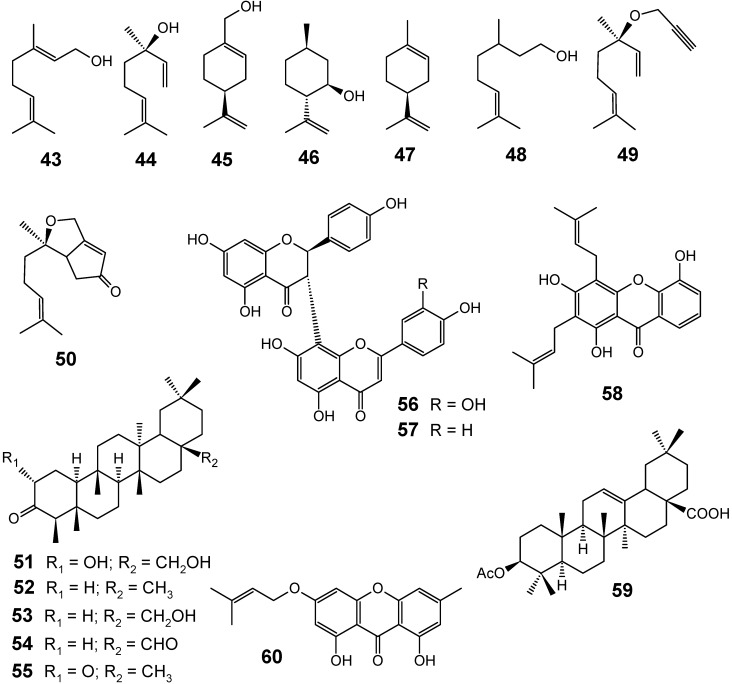
Antiplasmodial terpenes and related compounds 43-60.
Figure 8
Figure 8
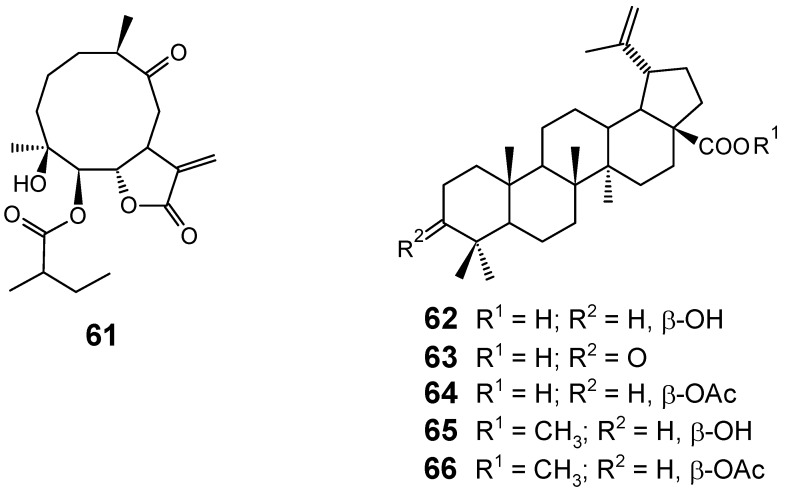
Antiplasmodial terpenes 61-66.
Figure 9
Figure 9
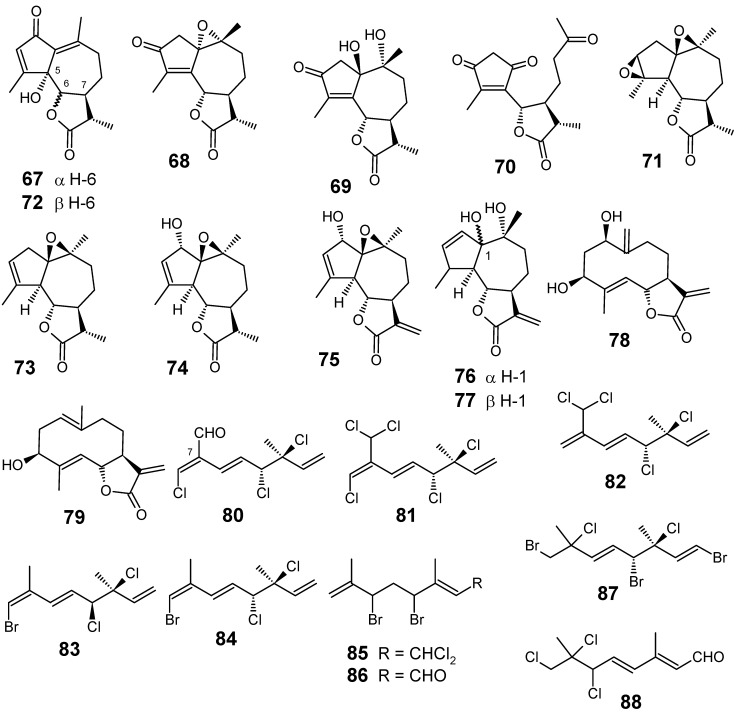
Antiplasmodial terpenes and related compounds 67-88.
Figure 10
Figure 10
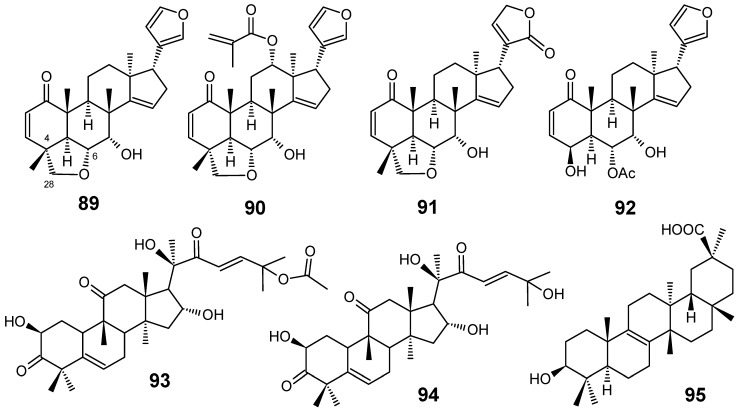
Antiplasmodial terpenes 89-95.
Figure 11
Figure 11
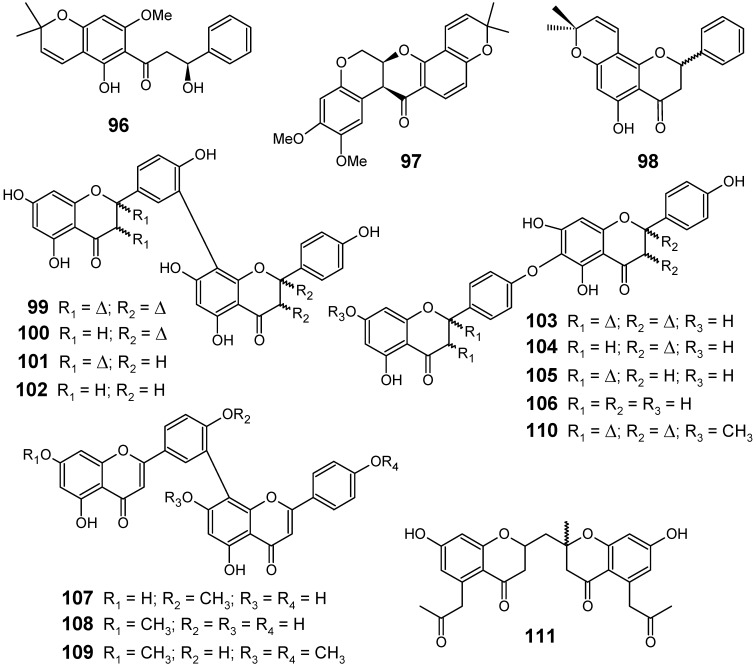
Antiplasmodial flavonoids and related compounds 96-111.
Figure 12
Figure 12
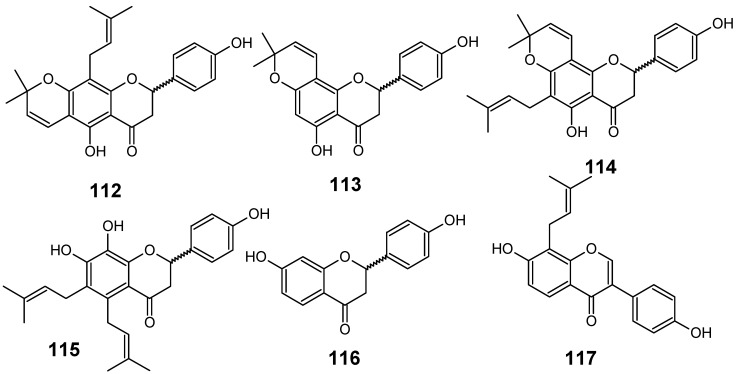
Antiplasmodial flavonoids 112-117.
Figure 13
Figure 13
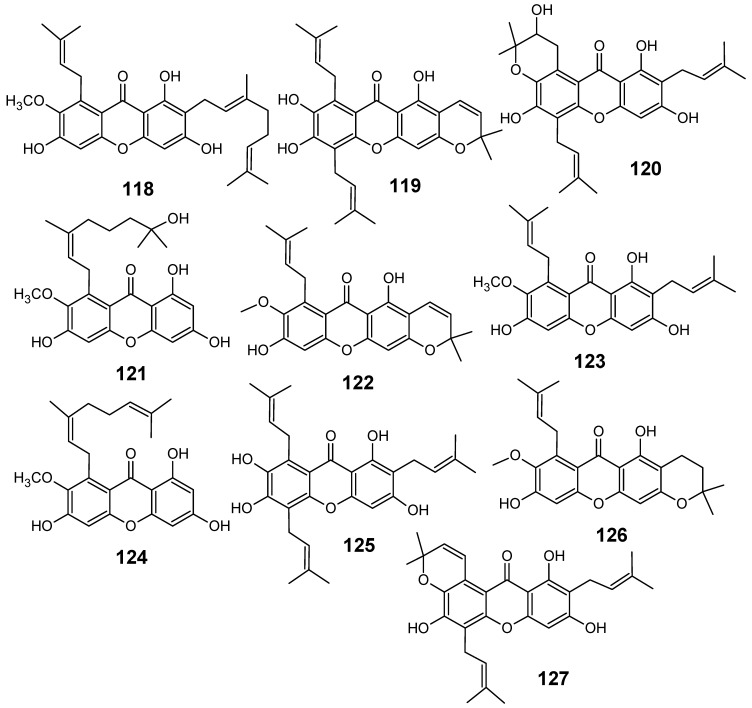
Antiplasmodial xanthones 118-127.
Figure 14
Figure 14
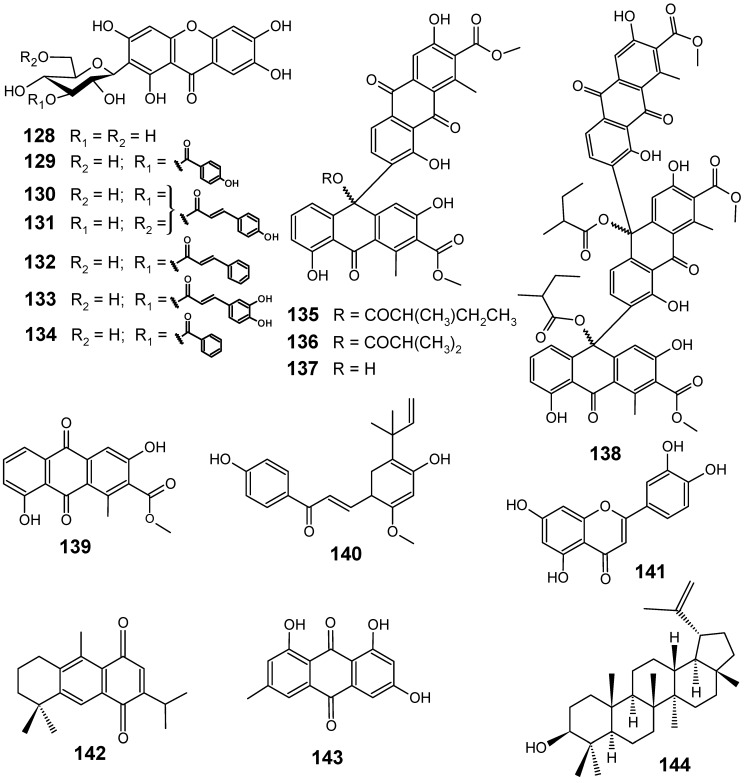
Antiplasmodial flavonoids and related compounds 128-144.
Figure 15
Figure 15
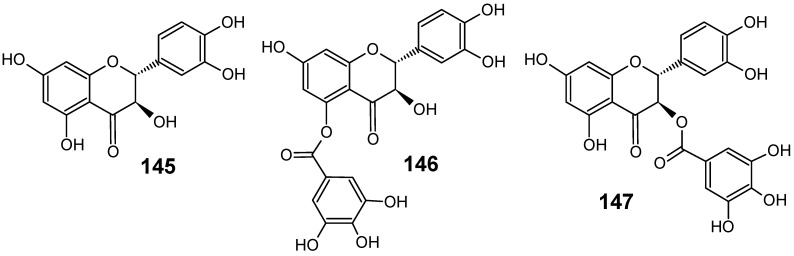
Antiplasmodial flavonoids 145-147.
Figure 16
Figure 16
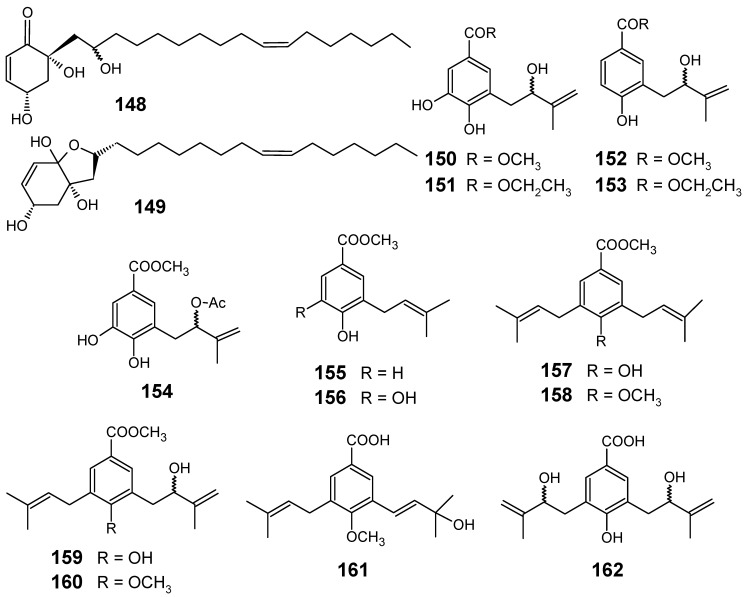
Antiplasmodial miscellaneous compounds 148-162.
Figure 17
Figure 17
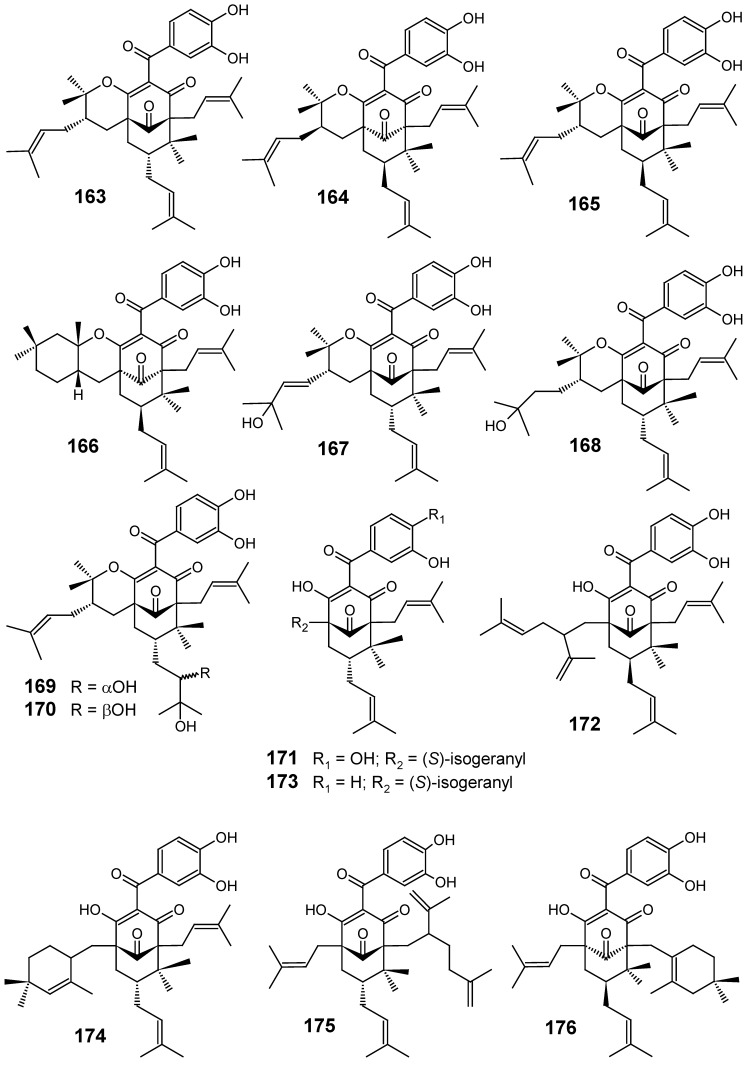
Antiplasmodial miscellaneous compounds 163-176.
Figure 18
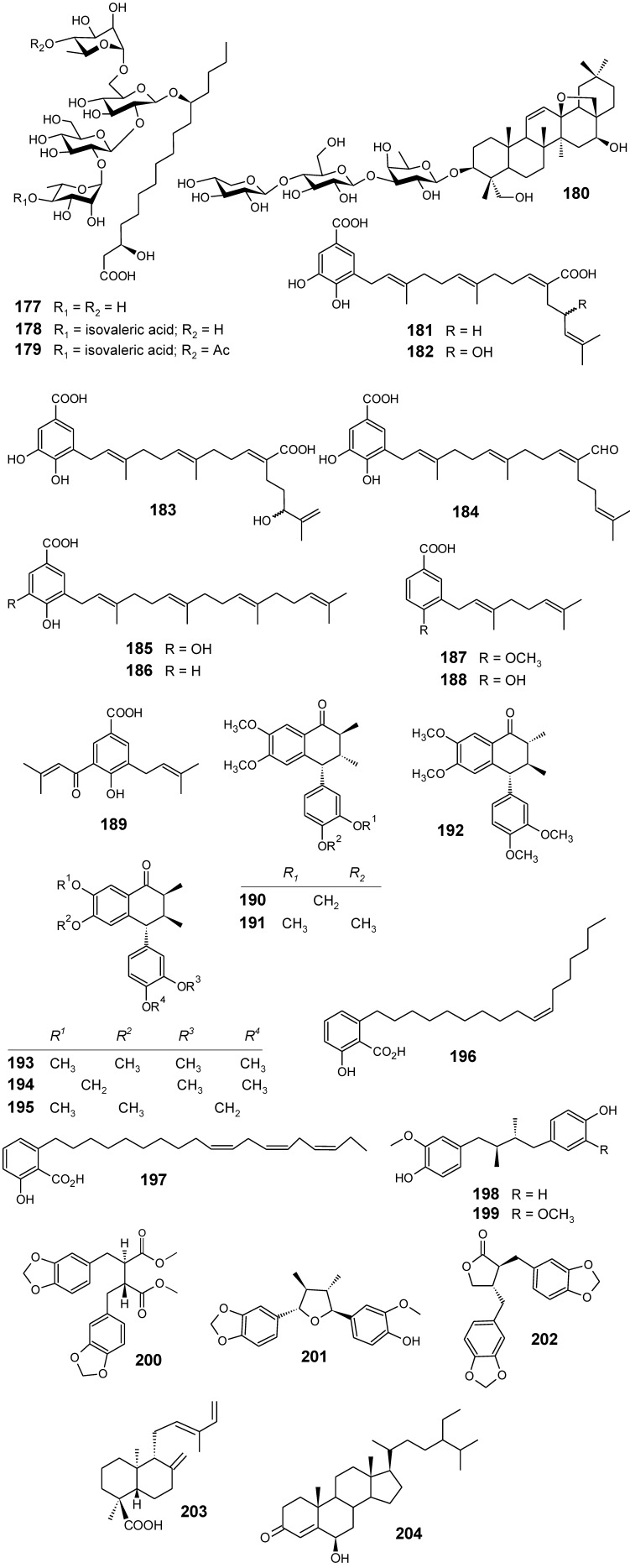
Figure 18
Antiplasmodial miscellaneous compounds 177-204.

References

    1. Greenwood B.M., Bojang K., Whitty C.J., Targett G.A. Malaria. Lancet. 2005;365:1487–1498. doi: 10.1016/S0140-6736(05)66420-3. - DOI - PubMed
    1. Winter R.W., Kelly J.X., Smilkstein M.J., Dodean R., Bagby G.C., Rathbun R.K., Levin J.I., Hinrichs D., Riscoe M.K. Evaluation and lead optimization of anti-malarial acridones. Exp. Parasitol. 2006;114:47–56. doi: 10.1016/j.exppara.2006.03.014. - DOI - PubMed
    1. Sachs J., Malaney P. The economic and social burden of malaria. Nature. 2002;415:680–685. doi: 10.1038/415680a. - DOI - PubMed
    1. WHO . World Health Organization; Geneva, Switzerland: 2008. World Malaria Report. Available online: http://apps.who.int/malaria/wmr2008/
    1. Fidock D.A., Rosenthal P.J., Croft S.L., Brun R., Nwaka S. Antimalarial drug discovery: efficacy models for compound screening. Nat. Rev. Drug Discov. 2004;3:509–520. doi: 10.1038/nrd1416. - DOI - PubMed

Publication types

LinkOut - more resources