


Defining network topologies that can achieve biochemical adaptation
- PMID: 19703401
- PMCID: PMC3068210
- DOI: 10.1016/j.cell.2009.06.013
Defining network topologies that can achieve biochemical adaptation
Abstract
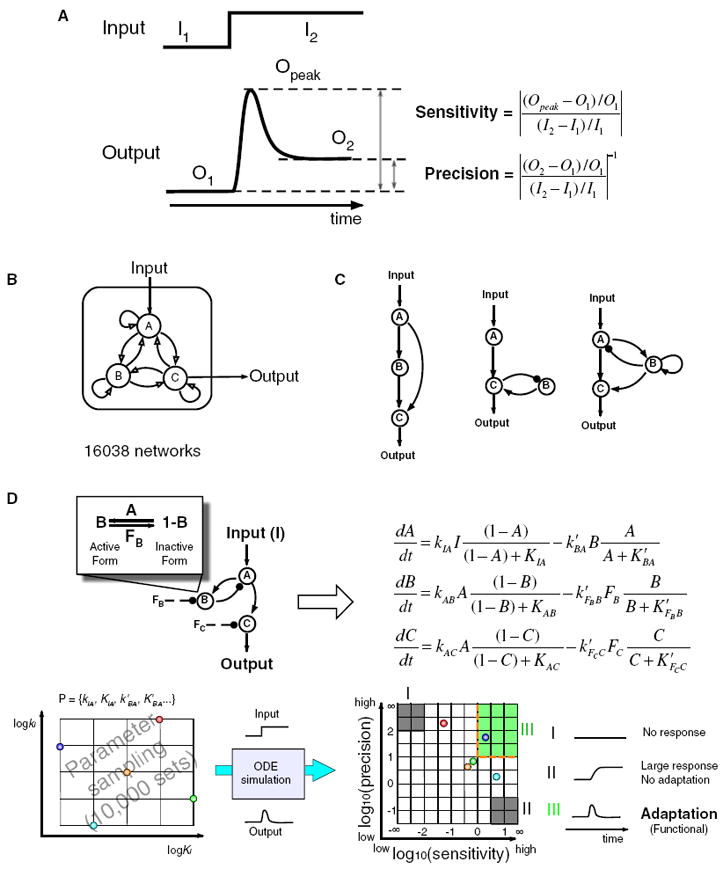
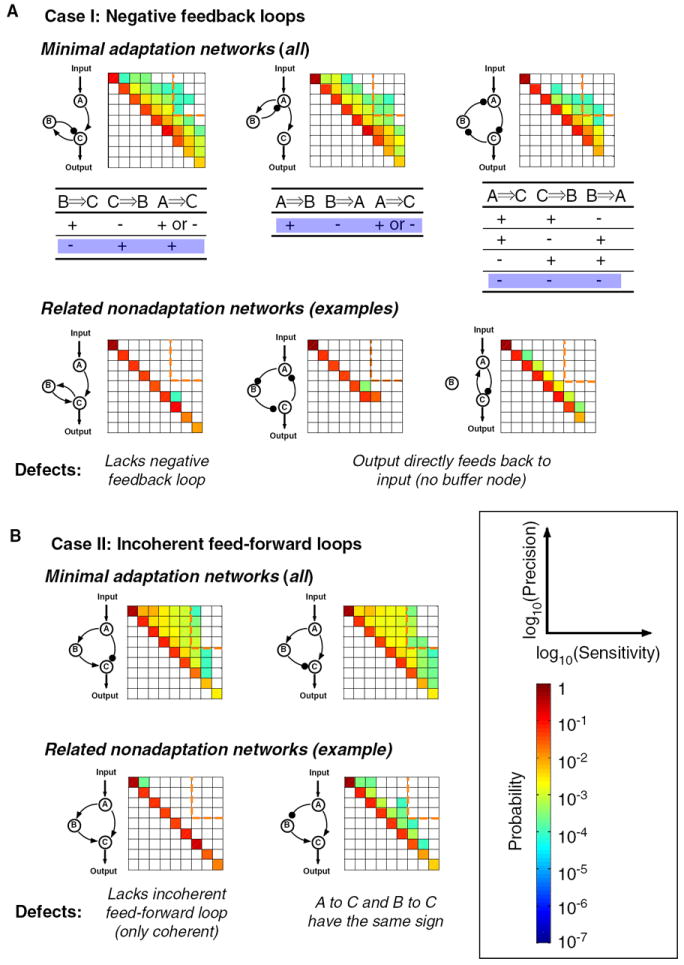
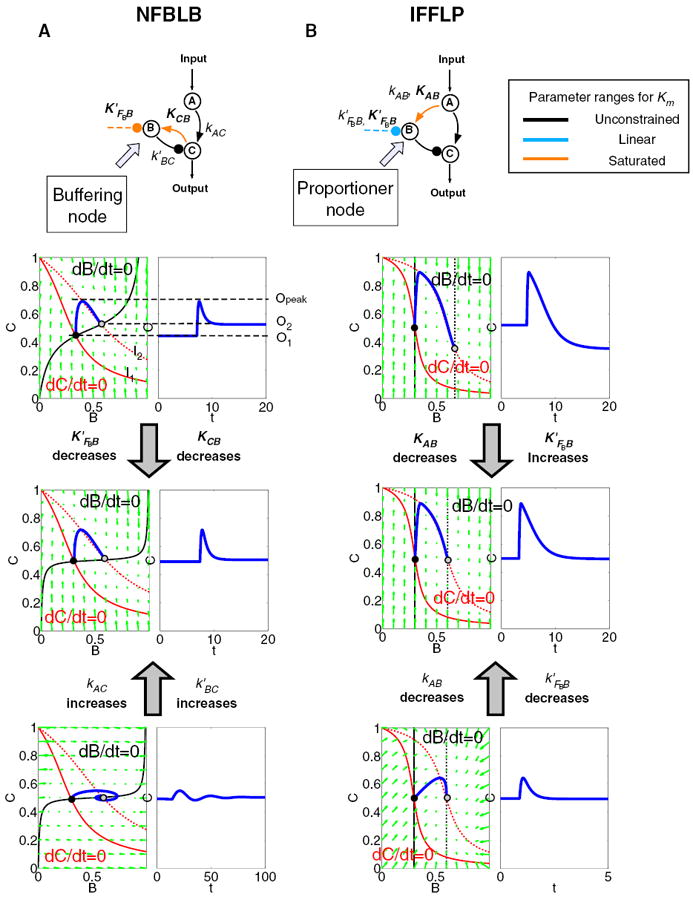
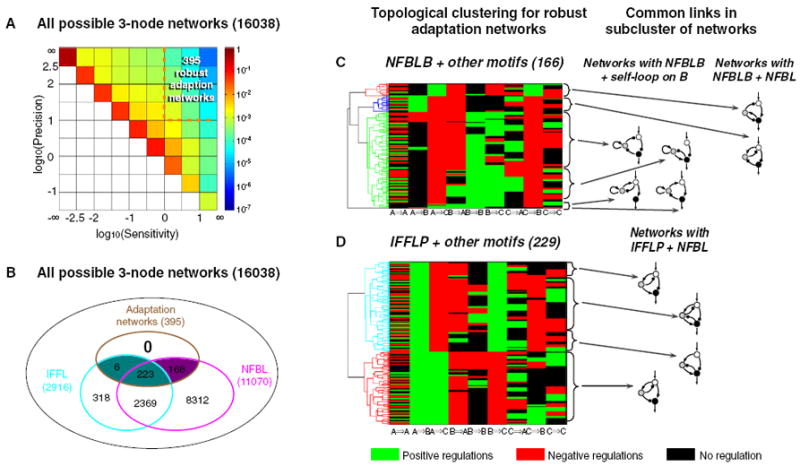
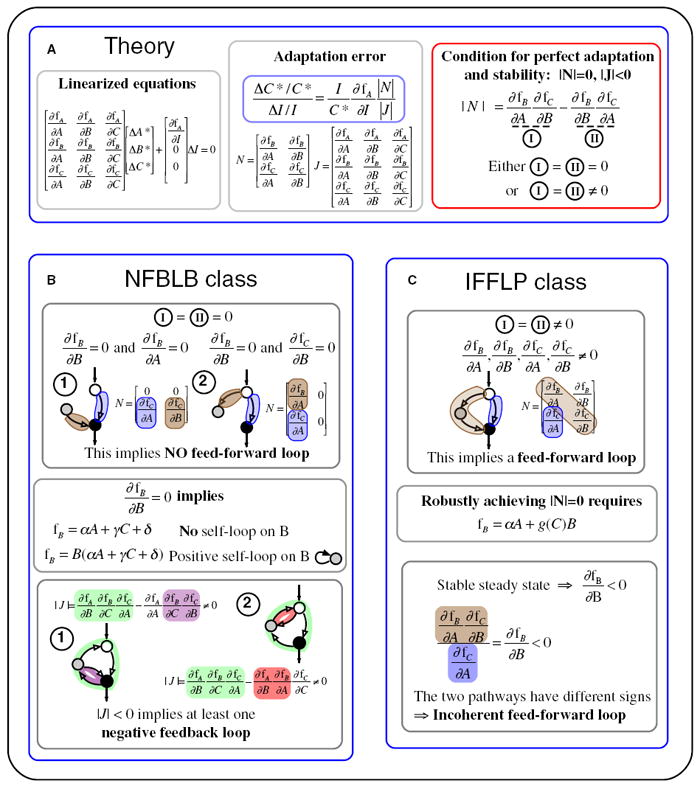
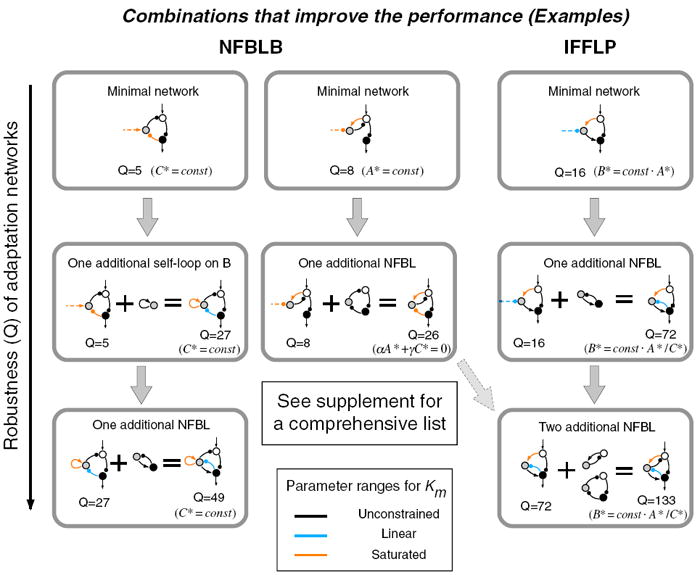
Many signaling systems show adaptation-the ability to reset themselves after responding to a stimulus. We computationally searched all possible three-node enzyme network topologies to identify those that could perform adaptation. Only two major core topologies emerge as robust solutions: a negative feedback loop with a buffering node and an incoherent feedforward loop with a proportioner node. Minimal circuits containing these topologies are, within proper regions of parameter space, sufficient to achieve adaptation. More complex circuits that robustly perform adaptation all contain at least one of these topologies at their core. This analysis yields a design table highlighting a finite set of adaptive circuits. Despite the diversity of possible biochemical networks, it may be common to find that only a finite set of core topologies can execute a particular function. These design rules provide a framework for functionally classifying complex natural networks and a manual for engineering networks. For a video summary of this article, see the PaperFlick file with the Supplemental Data available online.
Figures

Comment in
-
Only two ways to achieve perfection.Cell. 2009 Aug 21;138(4):619-21. doi: 10.1016/j.cell.2009.08.010. Cell. 2009. PMID: 19703388
References
-
- Alon U. Network motifs: theory and experimental approaches. Nat Rev Genet. 2007;8:450–461. - PubMed
-
- Barkai N, Leibler S. Robustness in simple biochemical networks. Nature. 1997;387:913–917. - PubMed
-
- Berg HC, Brown DA. Chemotaxis in Escherichia coli analysed by three-dimensional tracking. Nature. 1972;239:500–504. - PubMed
Publication types
MeSH terms
Substances
Grants and funding
LinkOut - more resources
Full Text Sources
Other Literature Sources
