


Mechanisms of thermoregulation in plants
- PMID: 19704809
- PMCID: PMC2634508
- DOI: 10.4161/psb.3.8.6341
Mechanisms of thermoregulation in plants
Abstract
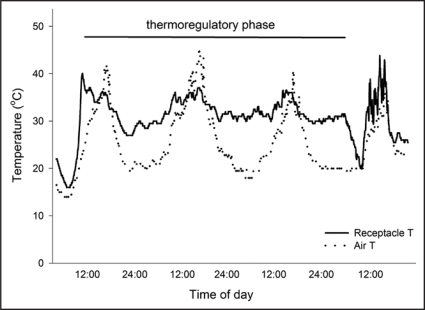
Endothermic heating of floral tissues and even thermoregulation is known to occur in a number of plant species across a wide taxonomic range. The mechanisms by which flowers heat, however, are only just beginning to be understood, and even less is known about how heating is regulated in response to changes in ambient temperature. We have recently demonstrated that the alternative pathway of respiration, in which the alternative oxidase (AOX) rather than cytochrome C (COX) acts as terminal electron acceptor, is responsible for heat generation in one thermoregulating species, the sacred lotus (Nelumbo nucifera). In the March issue of the Journal of Experimental Botany we further demonstrated that AOX-mediated heat production in this species is regulated at both the level of gene expression and also post-translationally. Similarly, AOX has also been implicated in heat production in other thermogenic species. In this addendum we discuss the central role of AOX in heat production and how post-translational mechanisms may provide the fine control necessary for thermoregulation.
Keywords: Nelumbo nucifera; alternative oxidase; thermogenic plants; uncoupling proteins.
Figures
Comment on
-
Synchronicity of thermogenic activity, alternative pathway respiratory flux, AOX protein content, and carbohydrates in receptacle tissues of sacred lotus during floral development.J Exp Bot. 2008;59(3):705-14. doi: 10.1093/jxb/erm333. Epub 2008 Feb 4. J Exp Bot. 2008. PMID: 18252702
References
-
- Meeuse BJD. Thermogenic respiration in aroids. Ann Rev Plant Physiol Plant Mol Biol. 1975;26:117–126.
-
- Seymour RS, White CR, Gibernau M. Heat reward for insect pollinators. Nature. 2003;426:243–244. - PubMed
-
- Knutson RM. Heat production and temperature regulation in eastern skunk cabbage. Science. 1974;186:746–747. - PubMed
-
- Seymour RS. Biophysics and physiology of temperature regulation in thermogenic flowers. Biosci Rep. 2001;21:223–236. - PubMed
-
- McDonald AE, Vanlerberghe AE. Origins, evolutionary history and taxonomic distribution of alternative oxidase and plastoquinol terminal oxidase. Comp Biochem Physiol D-Genomics & Proteomics. 2006;1:357–364. - PubMed
LinkOut - more resources
Full Text Sources
