


High-fat diet determines the composition of the murine gut microbiome independently of obesity
- PMID: 19706296
- PMCID: PMC2770164
- DOI: 10.1053/j.gastro.2009.08.042
High-fat diet determines the composition of the murine gut microbiome independently of obesity
Abstract
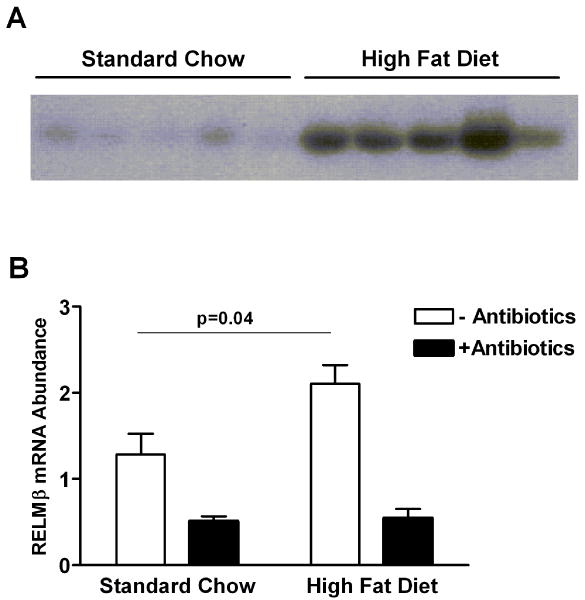
Background & aims: The composition of the gut microbiome is affected by host phenotype, genotype, immune function, and diet. Here, we used the phenotype of RELMbeta knockout (KO) mice to assess the influence of these factors.
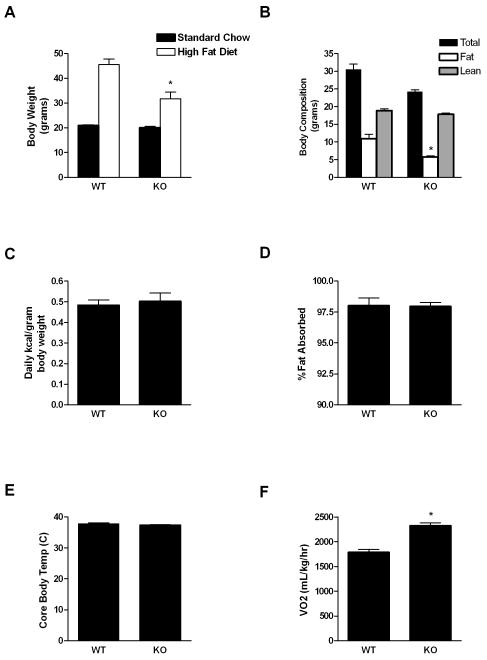
Methods: Both wild-type and RELMbeta KO mice were lean on a standard chow diet, but, upon switching to a high-fat diet, wild-type mice became obese, whereas RELMbeta KO mice remained comparatively lean. To investigate the influence of diet, genotype, and obesity on microbiome composition, we used deep sequencing to characterize 25,790 16S rDNA sequences from uncultured bacterial communities from both genotypes on both diets.
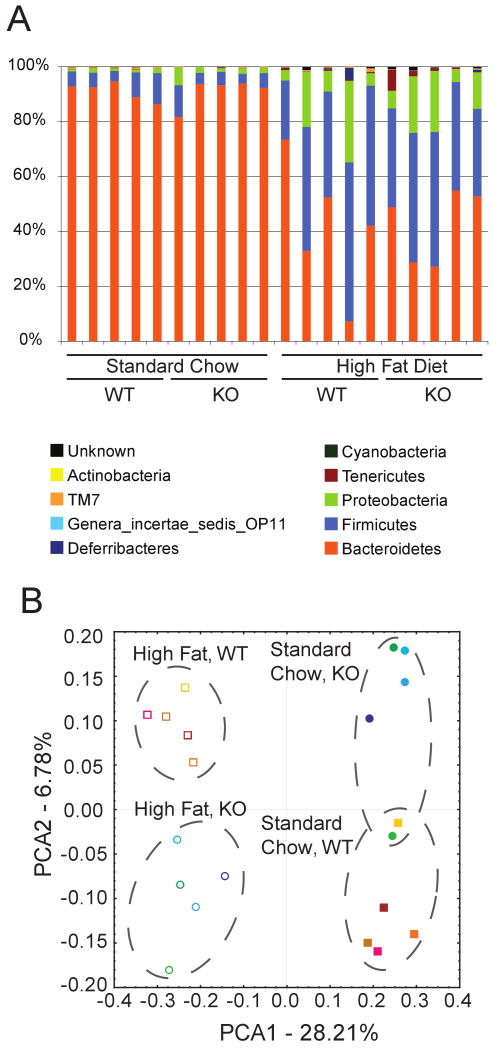
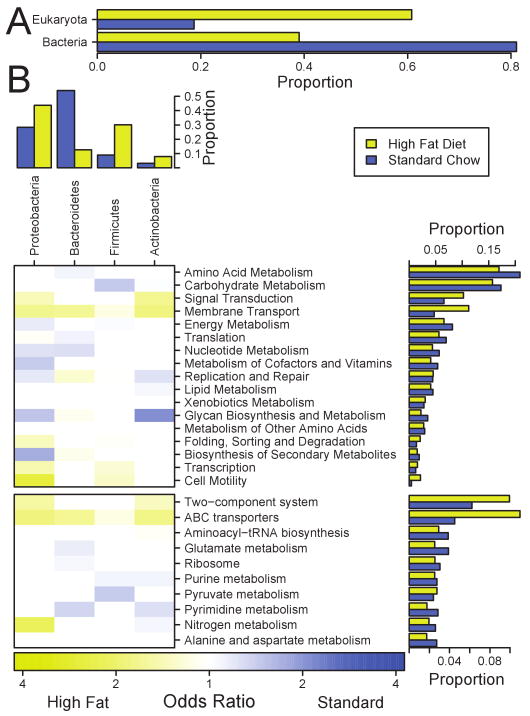
Results: We found large alterations associated with switching to the high-fat diet, including a decrease in Bacteroidetes and an increase in both Firmicutes and Proteobacteria. This was seen for both genotypes (ie, in the presence and absence of obesity), indicating that the high-fat diet itself, and not the obese state, mainly accounted for the observed changes in the gut microbiota. The RELMbeta genotype also modestly influenced microbiome composition independently of diet. Metagenomic analysis of 537,604 sequence reads documented extensive changes in gene content because of a high-fat diet, including an increase in transporters and 2-component sensor responders as well as a general decrease in metabolic genes. Unexpectedly, we found a substantial amount of murine DNA in our samples that increased in proportion on a high-fat diet.
Conclusions: These results demonstrate the importance of diet as a determinant of gut microbiome composition and suggest the need to control for dietary variation when evaluating the composition of the human gut microbiome.
Conflict of interest statement
No conflicts of interest exist.
Figures
References
-
- Saltiel AR. New perspectives into the molecular pathogenesis and treatment of type 2 diabetes. Cell. 2001;104:517–29. - PubMed
-
- Spiegelman BM, Flier JS. Obesity and the regulation of energy balance. Cell. 2001;104:531–43. - PubMed
-
- Turnbaugh PJ, Ley RE, Mahowald MA, et al. An obesity-associated gut microbiome with increased capacity for energy harvest. Nature. 2006;444:1027–31. - PubMed
-
- Ley RE, Turnbaugh PJ, Klein S, et al. Microbial ecology: human gut microbes associated with obesity. Nature. 2006;444:1022–3. - PubMed
Publication types
MeSH terms
Substances
Grants and funding
- P01 DK078669/DK/NIDDK NIH HHS/United States
- R01 DK062348/DK/NIDDK NIH HHS/United States
- DK50306/DK/NIDDK NIH HHS/United States
- S10 RR024525/RR/NCRR NIH HHS/United States
- DK078669/DK/NIDDK NIH HHS/United States
- R01 HG004872/HG/NHGRI NIH HHS/United States
- DK019525/DK/NIDDK NIH HHS/United States
- AI39368/AI/NIAID NIH HHS/United States
- DK062348/DK/NIDDK NIH HHS/United States
- R01 AI039368/AI/NIAID NIH HHS/United States
- P30 DK050306/DK/NIDDK NIH HHS/United States
- R56 DK062348/DK/NIDDK NIH HHS/United States
- HG004872/HG/NHGRI NIH HHS/United States
- P30 DK019525/DK/NIDDK NIH HHS/United States
- S10RR024525/RR/NCRR NIH HHS/United States
- T32 GM065103/GM/NIGMS NIH HHS/United States
LinkOut - more resources
Full Text Sources
Other Literature Sources
Medical
Research Materials
