


Identification and targeting of cancer stem cells
- PMID: 19708024
- PMCID: PMC2887758
- DOI: 10.1002/bies.200900058
Identification and targeting of cancer stem cells
Abstract
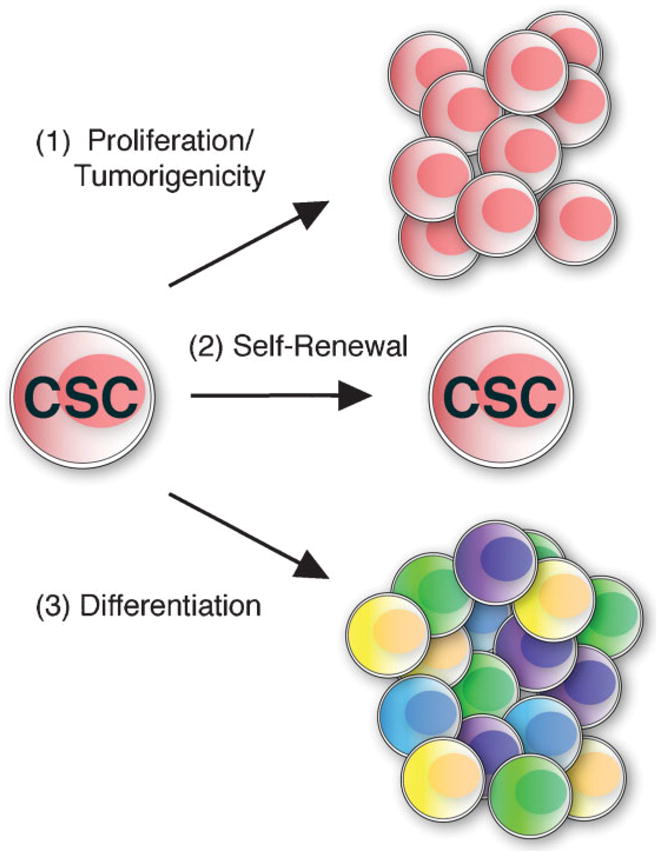
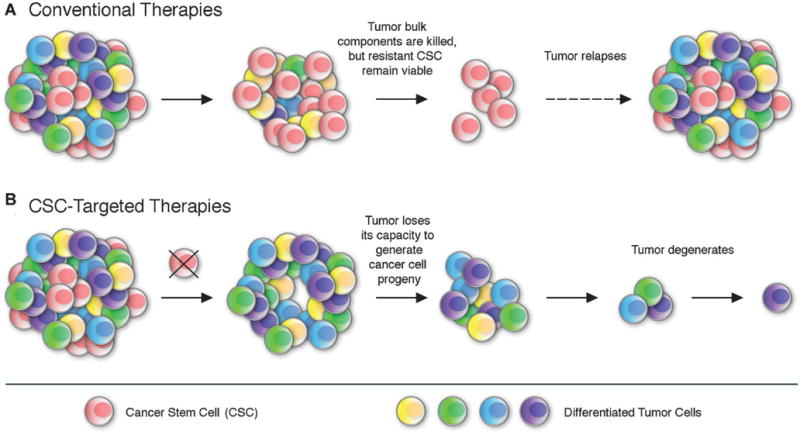
Cancer stem cells (CSC) represent malignant cell subsets in hierarchically organized tumors, which are selectively capable of tumor initiation and self-renewal and give rise to bulk populations of non-tumorigenic cancer cell progeny through differentiation. Robust evidence for the existence of prospectively identifiable CSC among cancer bulk populations has been generated using marker-specific genetic lineage tracking of molecularly defined cancer subpopulations in competitive tumor development models. Moreover, novel mechanisms and relationships have been discovered that link CSC to cancer therapeutic resistance and clinical tumor progression. Importantly, proof-of-principle for the potential therapeutic utility of the CSC concept has recently been provided by demonstrating that selective killing of CSC through a prospective molecular marker can inhibit tumor growth. Herein, we review these novel and translationally relevant research developments and discuss potential strategies for CSC-targeted therapy in the context of resistance mechanisms and molecular pathways preferentially operative in CSC.
Figures
References
-
- Reya T, Morrison SJ, Clarke MF, Weissman IL. Stem cells, cancer, and cancer stem cells. Nature. 2001;414:105–111. - PubMed
-
- Fidler IJ, Hart IR. Biological diversity in metastatic neoplasms: origins and implications. Science. 1982;217:998–1003. - PubMed
-
- Hanahan D, Weinberg RA. The hallmarks of cancer. Cell. 2000;100:57–70. - PubMed
-
- Griffin JD, Lowenberg B. Clonogenic cells in acute myeloblastic leukemia. Blood. 1986;68:1185–1195. - PubMed
Publication types
MeSH terms
Substances
Grants and funding
LinkOut - more resources
Full Text Sources
Other Literature Sources
