Monitoring the emergence of community transmission of influenza A/H1N1 2009 in England: a cross sectional opportunistic survey of self sampled telephone callers to NHS Direct
- PMID: 19713236
- PMCID: PMC2733951
- DOI: 10.1136/bmj.b3403
Monitoring the emergence of community transmission of influenza A/H1N1 2009 in England: a cross sectional opportunistic survey of self sampled telephone callers to NHS Direct
Abstract
Objective: To evaluate ascertainment of the onset of community transmission of influenza A/H1N1 2009 (swine flu) in England during the earliest phase of the epidemic through comparing data from two surveillance systems.
Design: Cross sectional opportunistic survey.
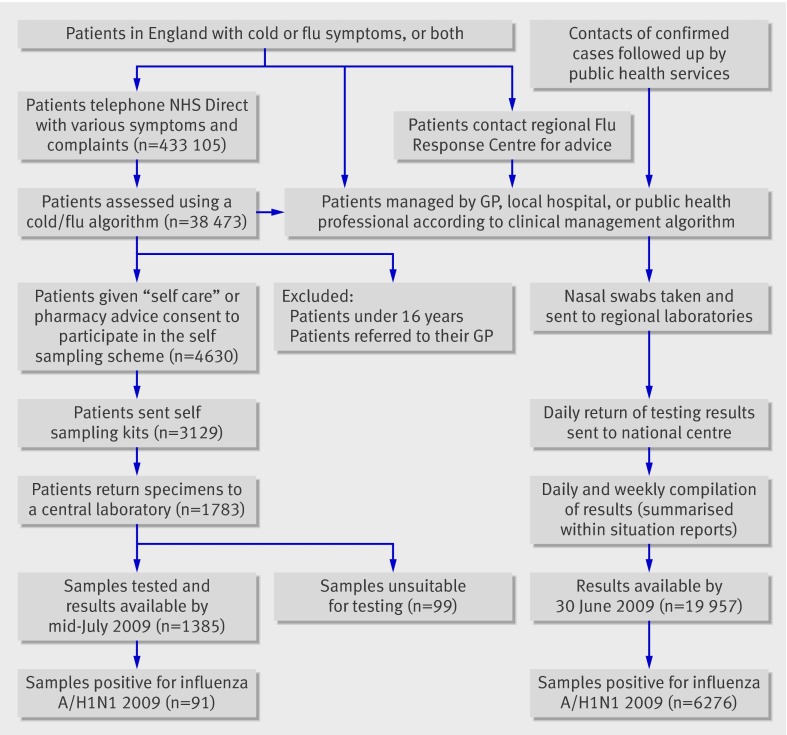
Study samples: Results from self samples by consenting patients who had called the NHS Direct telephone health line with cold or flu symptoms, or both, and results from Health Protection Agency (HPA) regional microbiology laboratories on patients tested according to the clinical algorithm for the management of suspected cases of swine flu.
Setting: Six regions of England between 24 May and 30 June 2009.
Main outcome measure: Proportion of specimens with laboratory evidence of influenza A/H1N1 2009.
Results: Influenza A/H1N1 2009 infections were detected in 91 (7%) of the 1385 self sampled specimens tested. In addition, eight instances of influenza A/H3 infection and two cases of influenza B infection were detected. The weekly rate of change in the proportions of infected individuals according to self obtained samples closely matched the rate of increase in the proportions of infected people reported by HPA regional laboratories. Comparing the data from both systems showed that local community transmission was occurring in London and the West Midlands once HPA regional laboratories began detecting 100 or more influenza A/H1N1 2009 infections, or a proportion positive of over 20% of those tested, each week.
Conclusions: Trends in the proportion of patients with influenza A/H1N1 2009 across regions detected through clinical management were mirrored by the proportion of NHS Direct callers with laboratory confirmed infection. The initial concern that information from HPA regional laboratory reports would be too limited because it was based on testing patients with either travel associated risk or who were contacts of other influenza cases was unfounded. Reports from HPA regional laboratories could be used to recognise the extent to which local community transmission was occurring.
Conflict of interest statement
Competing interests: None declared.
Figures
References
-
- Department of Health. Pandemic flu: a national framework for responding to an influenza pandemic. November 2007. http://www.dh.gov.uk/en/Publicationsandstatistics/Publications/Publicati....
-
- Department of Health. World Health Organization (WHO) has announced a move to pandemic phase 6. 11 June 2009. http://www.dh.gov.uk/en/Publichealth/Flu/Swineflu/DH_100693.
-
- Sir Liam Donaldson, Chief Medical Officer. Swine Flu Alert 1 May 2009. https://www.cas.dh.gov.uk/ViewandAcknowledgment/ViewAlert.aspx?AlertID=1....
-
- MacKenzie D. Europe may be blind to swine flu cases. New Scientist 20 May 2009. http://www.newscientist.com/article/mg20227094.400-europe-may-be-blind-t....
Publication types
MeSH terms
LinkOut - more resources
Full Text Sources
Medical