


Postsurgical recurrence of osteophytes causing dysphagia in patients with diffuse idiopathic skeletal hyperostosis
- PMID: 19714374
- PMCID: PMC2899398
- DOI: 10.1007/s00586-009-1133-3
Postsurgical recurrence of osteophytes causing dysphagia in patients with diffuse idiopathic skeletal hyperostosis
Abstract
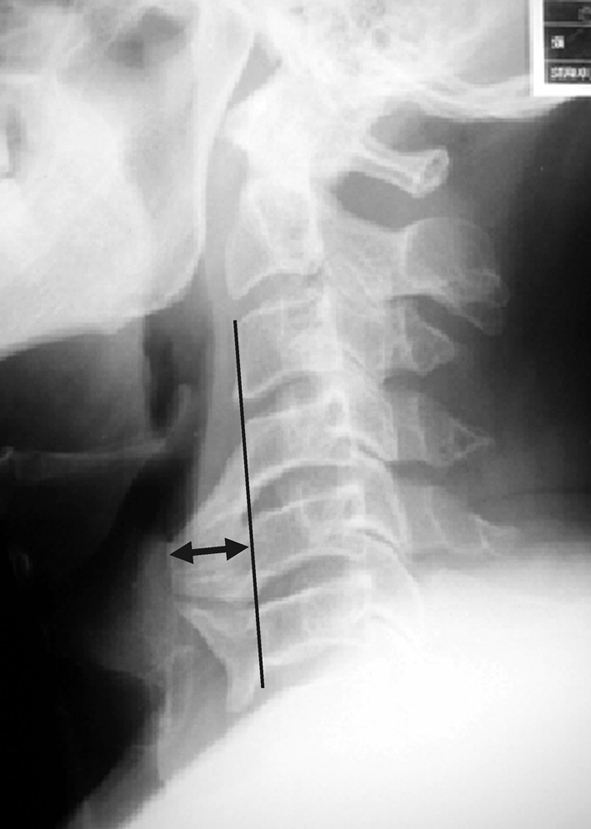
Although cervical anterior osteophytes accompanying diffuse idiopathic skeletal hyperostosis (DISH) are generally asymptomatic, large osteophytes sometimes cause swallowing disorders. Surgical resection of the osteophyte has been reported to be an effective treatment; however, little study has been given to the recurrences of osteophytes. A prospective study was performed for seven patients who underwent surgical resection of cervical anterior osteophytes for the treatment of recalcitrant dysphagia caused by osteophytes that accompanied DISH. The seven patients were six men and one woman ranging in age from 55 to 78 years (mean age = 65 years). After a mean postoperative follow-up period of 9 years (range: 6-13 years), surgical outcomes were evaluated by symptom severity and plain radiographs of the cervical spine. On all operated intervertebral segments, the effect of postoperative intervertebral mobility (range of movement > 1 degree) on the incidence of recurrent osteophytic formation (width > 2 mm) was analyzed by Fisher's exact test. Complete relief of the dysphagia was obtained within one month postoperatively in five patients, while it was delayed for 3 months in two patients. All of the patients developed recurrent cervical osteophytic formation, with an average increase rate of approximately 1 mm/year following surgical resection. Of the 20 operated intervertebral segments, the incidence of recurrent osteophytes was significantly higher (P = 0.0013) in the 16 segments with mobility than in the four segments without mobility. Five of the seven patients remained asymptomatic, although radiological recurrence of osteophytes was seen at the final follow-up. The two remaining patients complained of moderate dysphagia 10 and 11 years after surgery, respectively; one of these two required re-operation due to progressive dysphagia 11 years postoperatively. In patients with cervical DISH and dysphagia, surgical resection of osteophytes resulted in a high likelihood of the recurrence of osteophytes. Therefore, attending surgeons should continue to follow these patients postoperatively for more than 10 years in order to assess the regrowth of osteophytes that may contribute to recurrent symptoms.
Figures


References
-
- Hirano H, Suzuki H, Sakakibara T, et al. Dysphagia due to hypertrophic cervical osteophytes. Clin Orthop. 1982;167:168–172. - PubMed
-
- Karlins NL, Yagan R. Dyspnea and hoarseness. A complication of diffuse idiopathic skeletal hyperostosis. Spine. 1991;16:235–237. - PubMed
-
- Lambert JR, Tepperman PS, Jimenez J, et al. Cervical spine disease and dysphagia. Four new cases and a review of the literature. Am J Gastroenterol. 1981;76:35–40. - PubMed
Publication types
MeSH terms
LinkOut - more resources
Full Text Sources
Medical
