


Viral-encoded enzymes that target host chromatin functions
- PMID: 19716451
- PMCID: PMC2923641
- DOI: 10.1016/j.bbagrm.2009.08.007
Viral-encoded enzymes that target host chromatin functions
Abstract
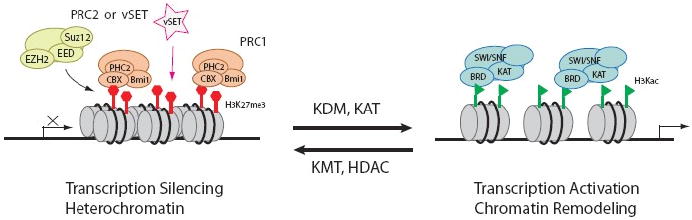
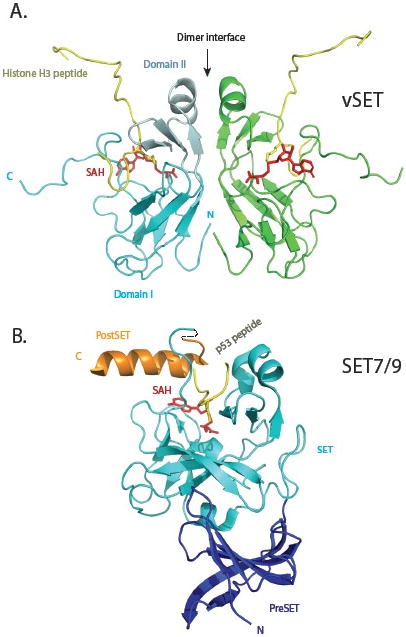
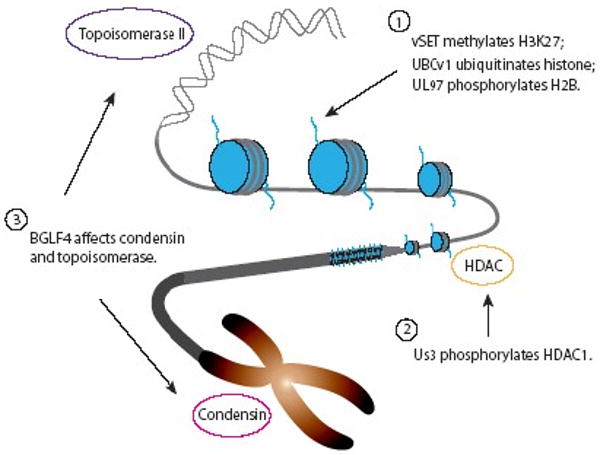
Ever since their existence, there has been an everlasting arms race between viruses and their host cells. Host cells have developed numerous strategies to silence viral gene expression whereas viruses always find their ways to overcome these obstacles. Recent studies show that viruses have also evolved to take full advantage of existing cellular chromatin components to activate or repress its own genes when needed. While in most cases viruses encode certain proteins to recruit or inhibit cellular factors through physical interactions, growing examples show that viral-encoded enzymes affect host chromatin structure through post-translationally modifying histones or other cellular proteins important for chromatin function. The most well-studied example is vSET encoded by paramecium bursaria chlorella virus 1. vSET specifically methylates histone H3 at lysine 27, causing genome-wide silencing of Polycomb target genes upon infection, thus mimicking the function of Polycomb repressive complex 2 (PRC2) in eukaryotes. Other examples include BGLF4 from Epstein-Barr virus that affects both condensin and topoisomerase II activity and Us3 from Herpes Simplex virus 1 that inhibits HDAC1 function through phosphorylation.
2009 Elsevier B.V. All rights reserved.
Figures
References
-
- Luger K, Mader AW, Richmond RK, Sargent DF, Richmond TJ. Crystal structure of the nucleosome core particle at 2.8 A resolution. Nature. 1997;389:251–260. - PubMed
-
- Jenuwein T, Allis CD. Translating the histone code. Science. 2001;293:1074–1080. - PubMed
-
- Eden S, Cedar H. Role of DNA methylation in the regulation of transcription. Curr Opin Genet Dev. 1994;4:255–259. - PubMed
-
- Nakayama J, Rice J, Strahl B, Allis C, Grewal S. Role of histone H3 lysine 9 methylation in epigenetic control of heterochromatin assembly. Science. 2001;292:110–113. - PubMed
Publication types
MeSH terms
Substances
Grants and funding
LinkOut - more resources
Full Text Sources
Miscellaneous
