


Karyotype-specific microRNA signature in chronic lymphocytic leukemia
- PMID: 19717645
- PMCID: PMC2773482
- DOI: 10.1182/blood-2009-06-229211
Karyotype-specific microRNA signature in chronic lymphocytic leukemia
Abstract
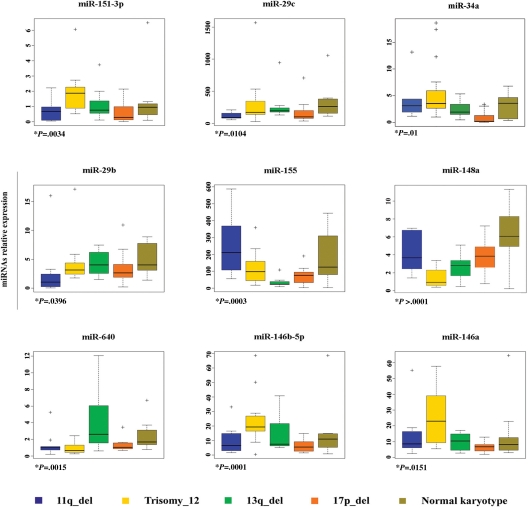
Chromosomal abnormalities, immunoglobulin heavy chain variable-region (IGHV) gene mutation status, and zeta-associated protein 70 (ZAP-70) expression levels have independent prognostic relevance in chronic lymphocytic leukemia (CLL); however, their concordance is variable. Because deregulation of microRNAs has been linked to disease initiation and progression in CLL, we studied the value of the microRNAs as a signature for CLL patients with specific chromosomal abnormalities. We identified 32 microRNAs able to discriminate the 11q deletion, 17p deletion, trisomy 12, 13q deletion, and normal karyotype cytogenetic subgroups. The expression values of 9 among the 32 microRNAs (miR-151-3p, miR-34a, miR-29c, miR-29b, miR-155, miR-148a, miR-146a, miR-146b5p, and miR-640) were correlated with gene expression data from the same samples to assess their biologic impact on CLL. In this study we also found that IGHV unmutated, high expression of ZAP-70 protein, and low expression of the miR-223, miR-29c, miR-29b, and miR-181 family were strongly associated with disease progression in CLL cases harboring 17p deletion, whereas in those harboring trisomy 12 only high expression of the miR-181a, among the analyzed parameters, suggested more aggressive disease. Thus, the use of the microRNA-based classifications may yield clinically useful biomarkers of tumor behavior in CLL.
Figures
References
-
- Chiorazzi N, Rai KR, Ferrarini M. Chronic lymphocytic leukemia. N Engl J Med. 2005;352(8):804–815. - PubMed
-
- Dighiero G, Hamblin TJ. Chronic lymphocytic leukaemia. Lancet. 2008;371(9617):1017–1029. - PubMed
-
- Hamblin TJ, Davis Z, Gardiner A, Oscier DG, Stevenson FK. Unmutated Ig V(H) genes are associated with a more aggressive form of chronic lymphocytic leukemia. Blood. 1999;94(6):1848–1854. - PubMed
-
- Damle RN, Wasil T, Fais F, et al. Ig V gene mutation status and CD38 expression as novel prognostic indicators in chronic lymphocytic leukemia. Blood. 1999;94(6):1840–1847. - PubMed
Publication types
MeSH terms
Substances
Grants and funding
LinkOut - more resources
Full Text Sources
Other Literature Sources
Molecular Biology Databases
Research Materials
