


Fetal exposure to moderate ethanol doses: heightened operant responsiveness elicited by ethanol-related reinforcers
- PMID: 19719792
- PMCID: PMC3085171
- DOI: 10.1111/j.1530-0277.2009.01037.x
Fetal exposure to moderate ethanol doses: heightened operant responsiveness elicited by ethanol-related reinforcers
Abstract
Background: Prenatal exposure to moderate ethanol doses during late gestation modifies postnatal ethanol palatability and ingestion. The use of Pavlovian associative procedures has indicated that these prenatal experiences broaden the range of ethanol doses capable of supporting appetitive conditioning. Recently, a novel operant technique aimed at analyzing neonatal predisposition to gain access to ethanol has been developed. Experiment 1 tested the operant conditioning technique for developing rats described by Arias and colleagues (2007) and Bordner and colleagues (2008). In Experiment 2, we analyzed changes in the disposition to gain access to ethanol as a result of moderate prenatal exposure to the drug.
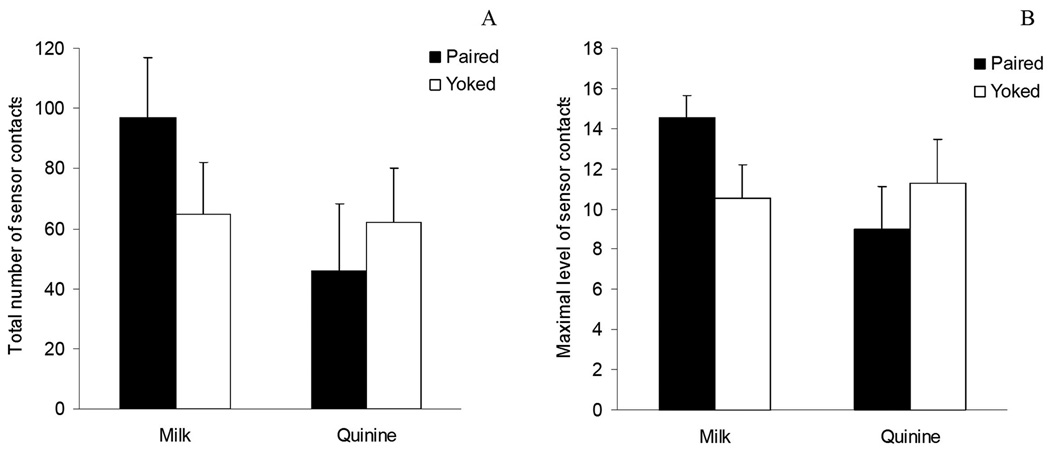
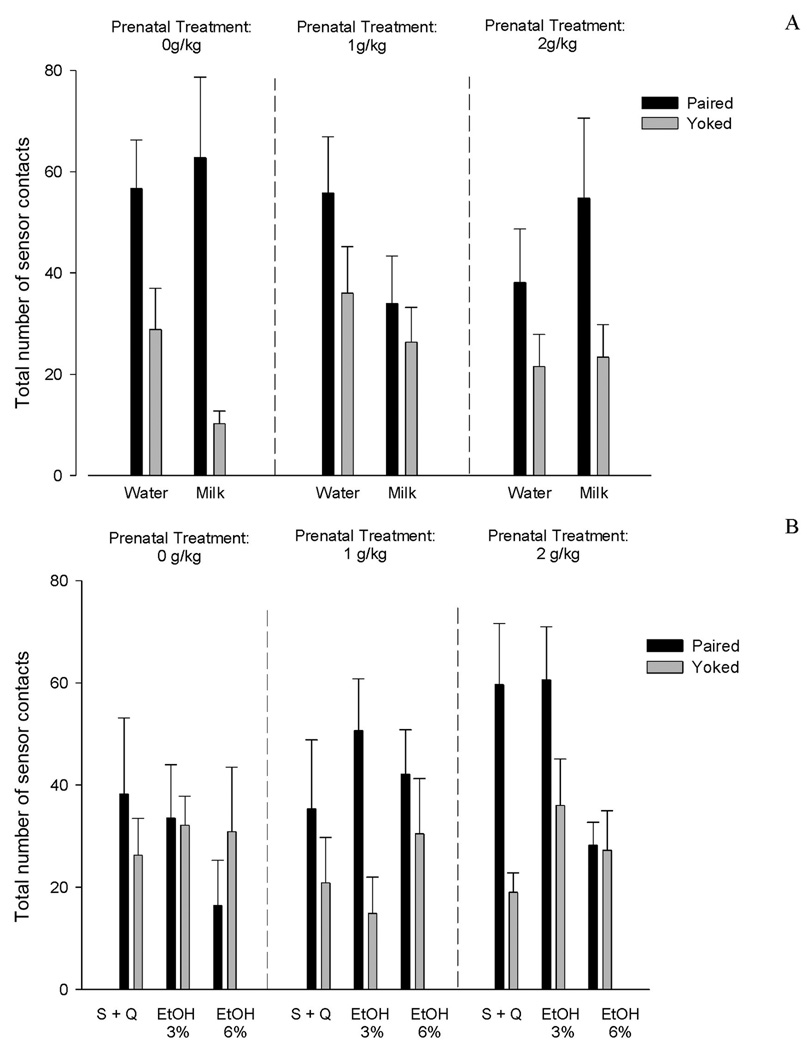
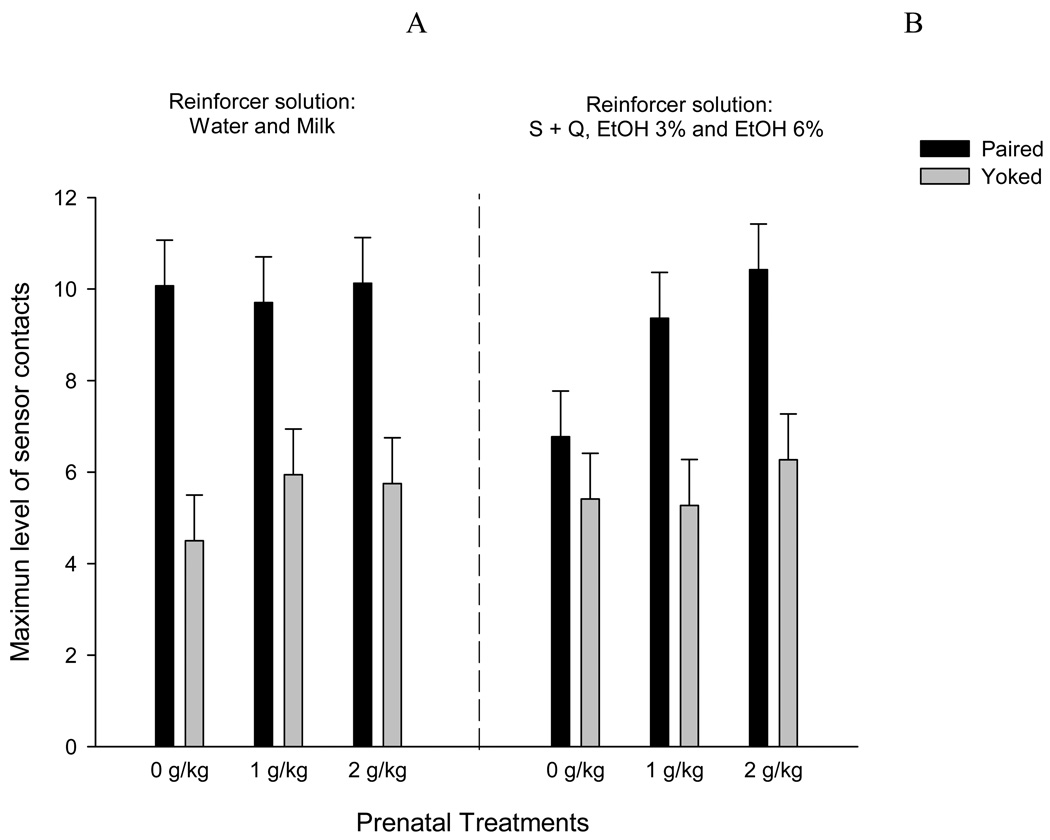
Methods: In Experiment 1, newborn pups were intraorally cannulated and placed in a supine position that allowed access to a touch-sensitive sensor. Paired pups received an intraoral administration of a given reinforcer (milk or quinine) contingent upon physical contact with the sensor. Yoked controls received similar reinforcers only when Paired pups activated the circuit. In Experiment 2, natural reinforcers (water or milk) as well as ethanol (3% or 6% v/v) or an ethanol-related reinforcer (sucrose compounded with quinine) were tested. In this experiment, pups had been exposed to water or ethanol (1 or 2 g/kg) during gestational days 17 to 20.
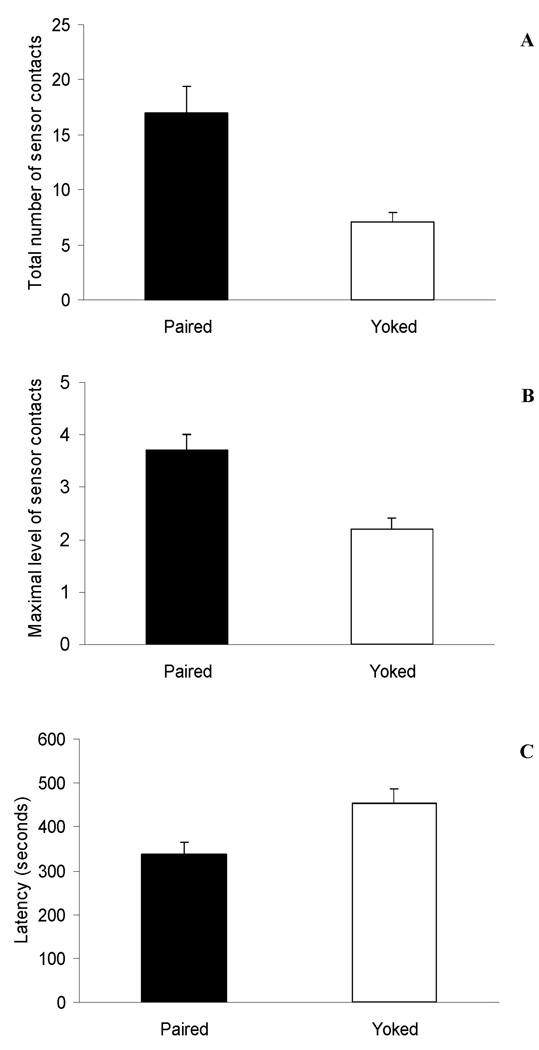
Results: Experiment 1 confirmed previous results showing that 1-day-old pups rapidly learn an operant task to gain access to milk, but not to gain access to a bitter tastant. Experiment 2 showed that water and milk were highly reinforcing across prenatal treatments. Furthermore, general activity during training was not affected by prenatal exposure to ethanol. Most importantly, prenatal ethanol exposure facilitated conditioning when the reinforcer was 3% v/v ethanol or a psychophysical equivalent of ethanol's gustatory properties (sucrose-quinine).
Conclusions: The present results suggest that late prenatal experience with ethanol changes the predisposition of the newborn to gain access to ethanol-related stimuli. In conjunction with prior literature, this study emphasizes the fact that intrauterine experience with ethanol not only augments ethanol's palatability and ingestion, but also facilitates the acquisition of response-stimulus associations where the drug acts as an intraoral reinforcer.
Figures
References
-
- Abate P, Pepino MY, Domínguez HD, Spear NE, Molina JC. Fetal associative learning mediated through maternal alcohol intoxication. Alcohol Clin Exp Res. 2000;24:39–47. - PubMed
-
- Abate P, Pepino MY, Spear NE, Molina JC. Fetal learning with ethanol: correlations between maternal hypothermia during pregnancy and neonatal responsiveness to chemosensory cues of the drug. Alcohol Clin Exp Res. 2004;28:805–815. - PubMed
-
- Abate P, Spear NE, Molina JC. Fetal and infantile alcohol-mediated associative learning in the rat. Alcohol Clin Exp Res. 2001;25:989–998. - PubMed
-
- Abate P, Varlinkaya EI, Cheslock SJ, Spear NE, Molina JC. Neonatal activation of alcohol-related prenatal memories: impact on the first suckling response. Alcohol Clin Exp Res. 2002;26:1512–1522. - PubMed
Publication types
MeSH terms
Substances
Grants and funding
LinkOut - more resources
Full Text Sources
Other Literature Sources
