


Histopathological study of lesions of the caruncle: a 15-year single center review
- PMID: 19719846
- PMCID: PMC2741430
- DOI: 10.1186/1746-1596-4-29
Histopathological study of lesions of the caruncle: a 15-year single center review
Abstract
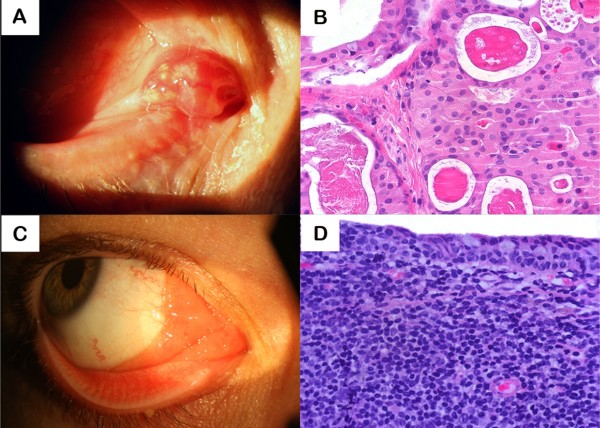
Introduction: The caruncle is a modified cutaneous tissue located at the inner canthus that contains hair follicles, accessory lacrimal glands, sweat glands and sebaceous glands. These different types of tissues can give rise to a wide variety of lesions that make the clinical diagnosis difficult. The aim of the study was to investigate the most common types of caruncle lesions and the clinical and pathological correlation.
Methods: Retrospective, observational case series. Records of caruncle lesions examined at the Henry C. Witelson Ocular Pathology Laboratory, McGill University, Montreal, Canada, between 1993 and 2008 were analyzed, comparing the clinical and histopathological findings.
Results: A total of 42 lesions from 42 patients were analyzed. Twenty-six (61.90%) of the patients were women and 16 (38.10%) were men and the age range from 20 to 84. The main diagnoses were: 16 epithelial lesions (38.09%), 14 inflammatory lesions (31.70%), 10 melanocytic lesions (21,95%), 2 lymphoid lesions (4.87%). From the 28 cases that had a preoperative clinical hypothesis only 17 presented a histopathological confirmation of the diagnosis (60.71%).
Conclusion: The most common caruncle lesions were epithelial tumors followed by chronic inflammation and melanocytic lesions. Although most of the lesions were benign, there was a great number of misdiagnose based on the clinical suspicious.
Figures
References
-
- Spencer WH, Folberg R. Ophthalmic Pathology An Atlas and Textbook. 4. I. WB Saunders. Philadelphia: Spencer WH; 1996. Conjunctiva; pp. 125–155.
-
- Shields CL, Shields JA, White D, Augsburger JJ. Types and frequency of lesions of the caruncle. Am J Ophthalmol. 1986;102:771–778. - PubMed
LinkOut - more resources
Full Text Sources
Medical
