


Regulatory T cells in mouse periapical lesions
- PMID: 19720221
- PMCID: PMC2778286
- DOI: 10.1016/j.joen.2009.06.006
Regulatory T cells in mouse periapical lesions
Abstract
Introduction: T-regulatory (Treg, CD4+ FOXP3+) cells constitute a unique subpopulation of CD4+ T cells that inhibit T-cell responses and prevent disease development/exacerbation in models of autoimmunity. In the present study, we tested the hypothesis that Treg cells are induced in periapical lesions by dental pulp infection.
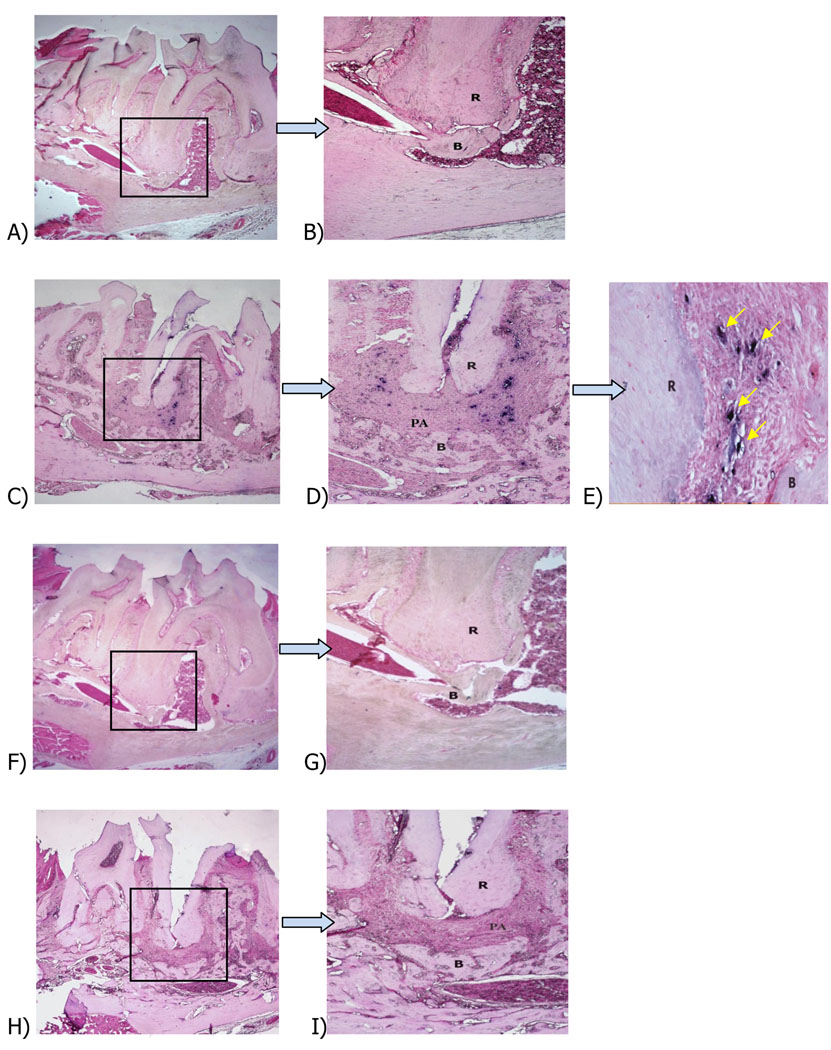
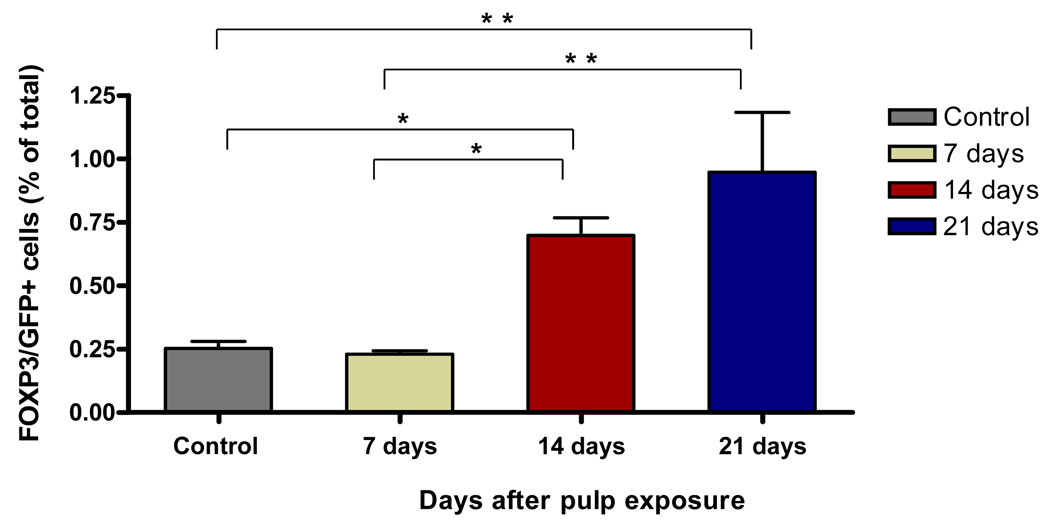
Methods: In situ hybridization (ISH) was used to localize FOXP3+ cells on day 21 after pulp exposure of the first molar teeth and infection with bacteria from the oral environment. FOXP3/GFP knock-in transgenic mice were used to quantify FOXP3+ Treg cells that infiltrate into periapical lesions by flow cytometry on days 7, 14, and 21 after infection. Periodontal ligament from uninfected teeth served as a negative control.
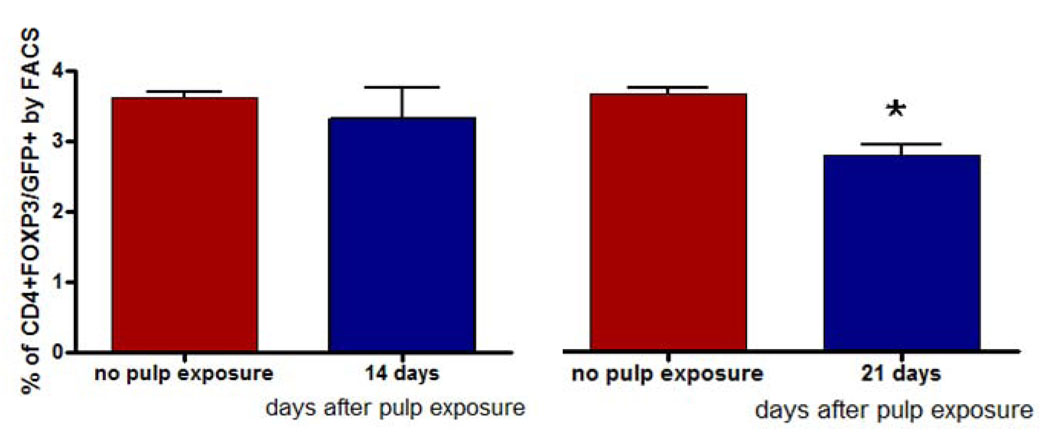
Results: ISH showed strong signals that showed the presence of FOXP3+ cells mainly at the periphery of periapical lesions. In contrast, no positive cells were present in the periodontal ligament of uninfected controls. Flow cytometry showed an increase in the number of FOXP3+ Treg beginning between day 7 and day 14 (0.69% of the infiltrate) after infection and increased to day 21 (0.94%) (p < 0.05 and p < 0.001, respectively, vs uninfected controls). Treg were also increased in number in draining cervical lymph nodes after pulpal infection.
Conclusions: These results show that Treg cells are induced to infiltrate into periapical lesions by pulpal infection and suggest that they increase in a time-dependent manner.
Figures
References
-
- Sakaguchi S, Sakaguchi N, Asano M, Itoh M, Toda M. Immunologic self-tolerance maintained by activated T cells expressing IL-2 receptor alpha-chains (CD25). Breakdown of a single mechanism of self-tolerance causes various autoimmune diseases. J Immunol. 1995;155:1151–1164. - PubMed
-
- McGuirk P, Mills KH. Pathogen-specific regulatory T cells provoke a shift in the Thl/Th2 paradigm in immunity to infectious diseases. Trends Immunol. 2002;23:450–455. - PubMed
-
- Fontenot JD, Rudensky AY. A well adapted regulatory contrivance: regulatory T cell development and the forkhead family transcription factor Foxp3. Nat Immunol. 2005;6:331–337. - PubMed
-
- Ramsdell F. Foxp3 and natural regulatory T cells: key to a cell lineage? Immunity. 2003;19:165–168. - PubMed
Publication types
MeSH terms
Substances
Grants and funding
LinkOut - more resources
Full Text Sources
Molecular Biology Databases
Research Materials
