


Parent-child agreement in report of nighttime respiratory symptoms and sleep disruptions and quality
- PMID: 19720267
- PMCID: PMC2774208
- DOI: 10.1016/j.pedhc.2008.04.001
Parent-child agreement in report of nighttime respiratory symptoms and sleep disruptions and quality
Abstract
Introduction: Asthma control requires assessment of nighttime symptoms and sleep disruption. Cognitive and emotional development enables most school-aged children to report nocturnal problems, but providers often rely only on parental report, potentially limiting the comprehensiveness of their assessments and their ability to support the child's emerging efforts at shared management of their illness. This study investigated parent-child concordance in report of nighttime respiratory symptoms, sleep disruption, and quality of sleep in a sample of 9- to 11-year-old children with asthma. Secondarily, similar concordance patterns in an equal number of dyads where the child was asthma free were examined to illustrate the potential influence of asthma.
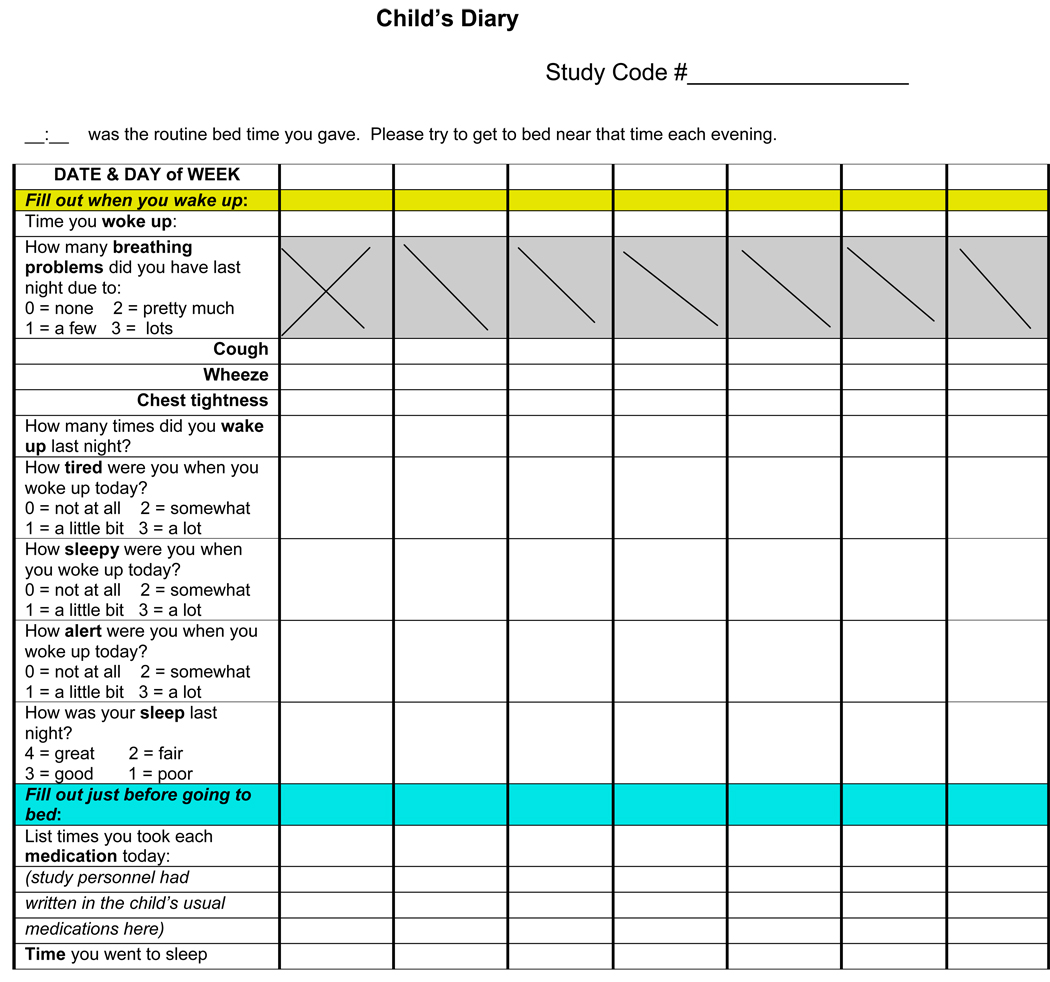
Method: Parents and children completed 1-week diaries in their homes without confiding in one another. The probability of knowing the child's report on a specific item if the parent's report was known was assessed using contingency tables.
Results: Within the asthma group, parent-child reports differed significantly across all symptoms and sleep parameters. Parents most often reported fewer symptoms and awakenings and better quality of sleep than did their child. Concordance rates were lowest for morning perceptions of tiredness, sleepiness, and alertness in both asthma and non-asthma groups.
Discussion: Both parents and school-aged children with asthma need to be asked about nighttime asthma symptoms, sleep, and morning perceptions when attempting to evaluate asthma control. Assessment of sleep in all children should include parent and child reports and would benefit by the addition of objective measures.
Figures
References
-
- Acebo C, Sadeh A, Seifer R, Tzischinsky O, Hafer A, Carskadon MA. Sleep/wake patterns derived from activity monitoring and maternal report for healthy 1- to 5-year-old children. Sleep. 2005;28(12):1568–1577. - PubMed
-
- Acebo C, Sadeh A, Seifer R, Tzischinsky O, Wolfson AR, Hafer A, et al. Estimating sleep patterns with activity monitoring in children and adolescents: how many nights are necessary for reliable measures? Sleep. 1999;22(1):95–103. - PubMed
-
- American Thoracic Society. Recommendations for standardized procedures for the on-line and off-line measurement of exhaled lower respiratory nitric oxide and nasal nitric oxide in adults and children-1999. This official statement of the American Thoracic Society was adopted by the ATS Board of Directors, July 1999. American Journal of Respiratory and Critical Care Medicine. 1999;160(6):2104–2117. - PubMed
-
- Anderson B, Ho J, Brackett J, Finkelstein D, Laffel L. Parental involvement in diabetes management tasks: relationships to blood glucose monitoring adherence and metabolic control in young adolescents with insulin-dependent diabetes mellitus. Journal of Pediatrics. 1997;130(2):257–265. - PubMed
-
- Ayala GX, Miller D, Zagami E, Riddle C, Willis S, King D. Asthma in middle schools: what students have to say about their asthma. Journal of School Health. 2006;76(6):208–214. - PubMed
