


Comparisons of subgingival microbial profiles of refractory periodontitis, severe periodontitis, and periodontal health using the human oral microbe identification microarray
- PMID: 19722792
- PMCID: PMC3627366
- DOI: 10.1902/jop.2009.090185
Comparisons of subgingival microbial profiles of refractory periodontitis, severe periodontitis, and periodontal health using the human oral microbe identification microarray
Abstract
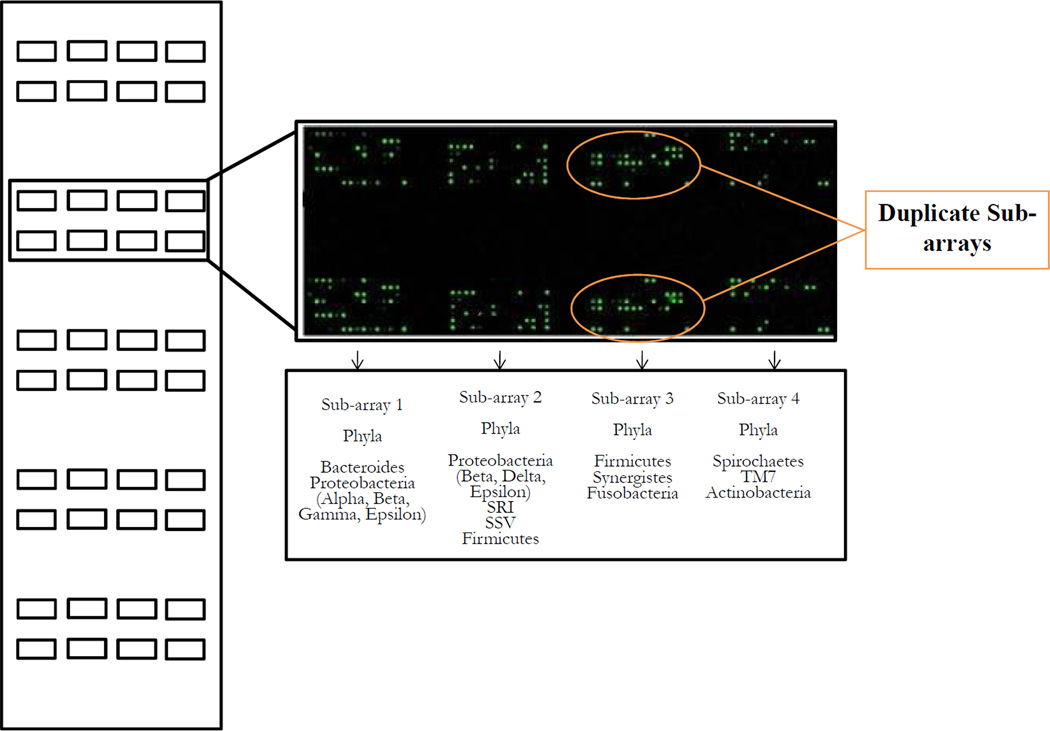
Background: This study compared the subgingival microbiota of subjects with refractory periodontitis (RP) to those in subjects with treatable periodontitis (GRs = good responders) or periodontal health (PH) using the Human Oral Microbe Identification Microarray (HOMIM).
Methods: At baseline, subgingival plaque samples were taken from 47 subjects with periodontitis and 20 individuals with PH and analyzed for the presence of 300 species by HOMIM. The subjects with periodontitis were classified as having RP (n = 17) based on mean attachment loss (AL) and/or more than three sites with AL >or=2.5 mm after scaling and root planing, surgery, and systemically administered amoxicillin and metronidazole or as GRs (n = 30) based on mean attachment gain and no sites with AL >or=2.5 mm after treatment. Significant differences in taxa among the groups were sought using the Kruskal-Wallis and chi(2) tests.
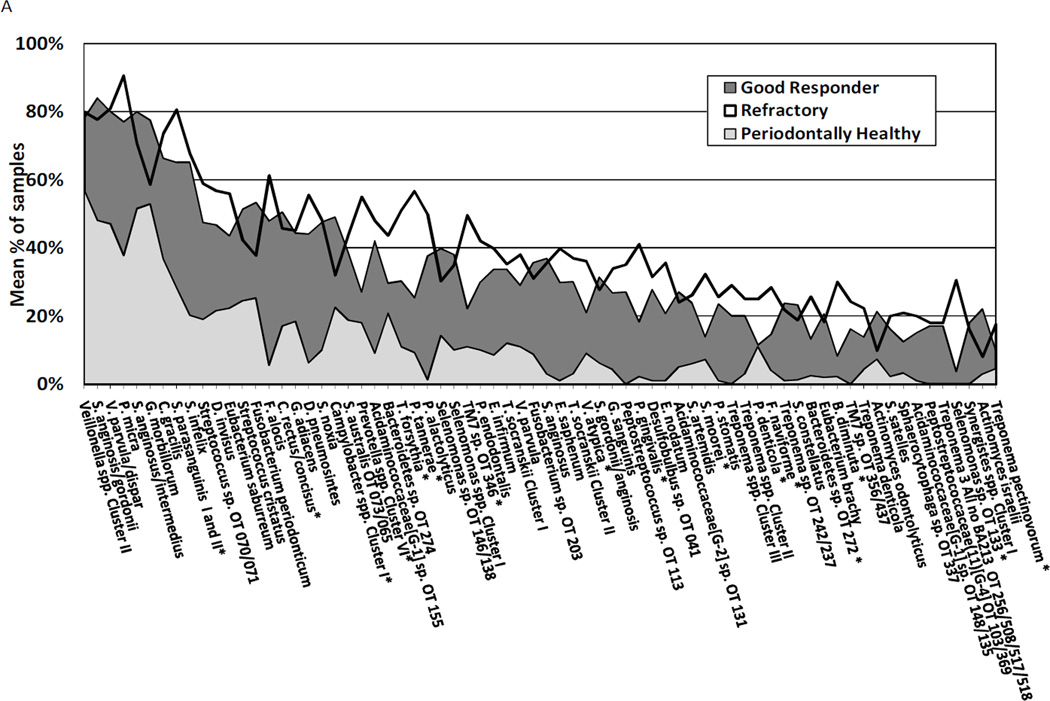
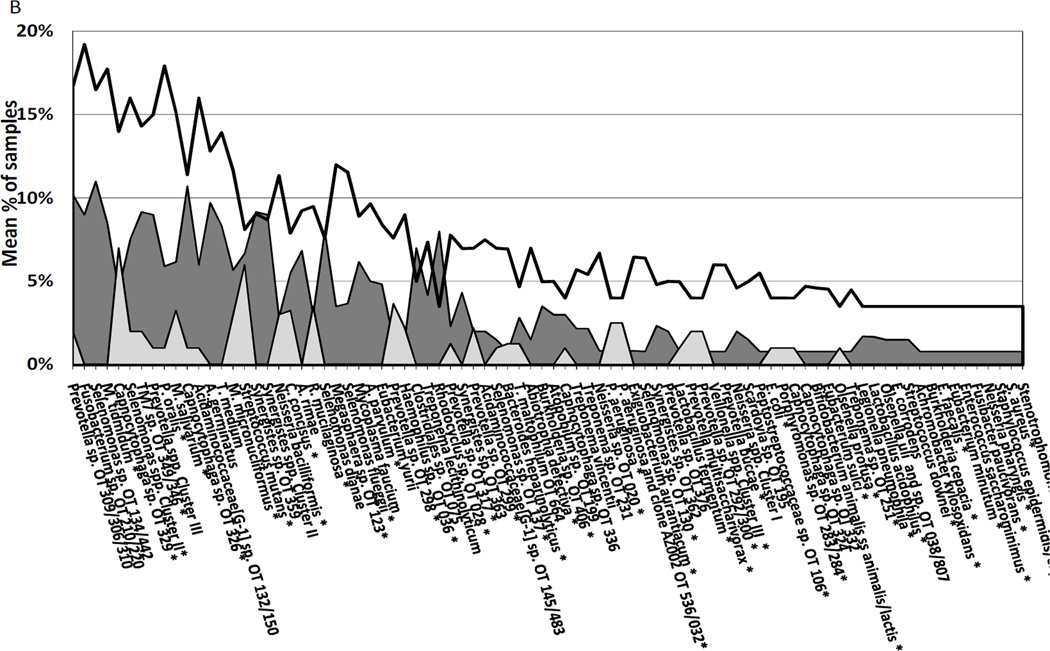
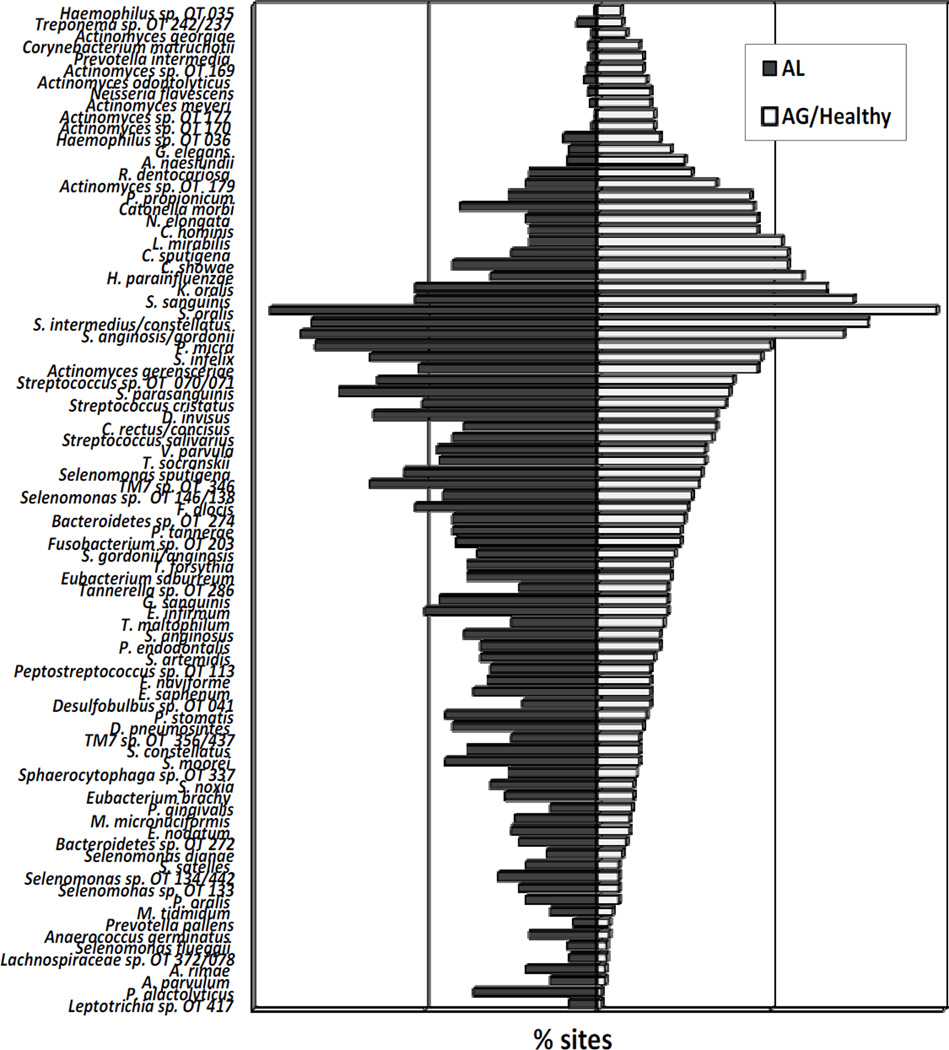
Results: More species were detected in patients with disease (GR or RP) than in those without disease (PH). Subjects with RP were distinguished from GRs or those with PH by a significantly higher frequency of putative periodontal pathogens, such as Parvimonas micra (previously Peptostreptococcus micros or Micromonas micros), Campylobacter gracilis, Eubacterium nodatum, Selenomonas noxia, Tannerella forsythia (previously T. forsythensis), Porphyromonas gingivalis, Prevotella spp., Treponema spp., and Eikenella corrodens, as well as unusual species (Pseudoramibacter alactolyticus, TM7 spp. oral taxon [OT] 346/356, Bacteroidetes sp. OT 272/274, Solobacterium moorei, Desulfobulbus sp. OT 041, Brevundimonas diminuta, Sphaerocytophaga sp. OT 337, Shuttleworthia satelles, Filifactor alocis, Dialister invisus/pneumosintes, Granulicatella adiacens, Mogibacterium timidum, Veillonella atypica, Mycoplasma salivarium, Synergistes sp. cluster II, and Acidaminococcaceae [G-1] sp. OT 132/150/155/148/135) (P <0.05). Species that were more prevalent in subjects with PH than in patients with periodontitis included Actinomyces sp. OT 170, Actinomyces spp. cluster I, Capnocytophaga sputigena, Cardiobacterium hominis, Haemophilus parainfluenzae, Lautropia mirabilis, Propionibacterium propionicum, Rothia dentocariosa/mucilaginosa, and Streptococcus sanguinis (P <0.05).
Conclusion: As determined by HOMIM, patients with RP presented a distinct microbial profile compared to patients in the GR and PH groups.
Figures
References
-
- Moore WEC, Moore LH. The bacteria of periodontal diseases. Periodontol 2000. 1994;5:66–77. - PubMed
-
- Socransky SS, Haffajee AD, Cugini MA, Smith C, Kent RL., Jr Microbial complexes in subgingival plaque. J Clin Periodontol. 1998;25:134–144. - PubMed
-
- Paster BJ, Olsen I, Aas JA, Dewhirst FE. The breadth of bacterial diversity in the human periodontal pocket and other oral sites. Periodontol 2000. 2006;42:80–87. - PubMed
Publication types
MeSH terms
Substances
Grants and funding
LinkOut - more resources
Full Text Sources
Other Literature Sources
Medical
Research Materials
Miscellaneous
