


Ethnic differences and functional analysis of MET mutations in lung cancer
- PMID: 19723643
- PMCID: PMC2767337
- DOI: 10.1158/1078-0432.CCR-09-0070
Ethnic differences and functional analysis of MET mutations in lung cancer
Abstract
Purpose: African Americans have higher incidence and poorer response to lung cancer treatment compared with Caucasians. However, the underlying molecular mechanisms for the significant ethnic difference are not known. The present study examines the ethnic differences in the type and frequency of MET proto-oncogene (MET) mutation in lung cancer and correlated them with other frequently mutated genes such as epidermal growth factor receptor (EGFR), KRAS2, and TP53.
Experimental design: Using tumor tissue genomic DNA from 141 Asian, 76 Caucasian, and 66 African American lung cancer patients, exons coding for MET and EGFR were PCR amplified, and mutations were detected by sequencing. Mutation carriers were further screened for KRAS2 and TP53 mutations. Functional implications of important MET mutations were explored by molecular modeling and hepatocyte growth factor binding studies.
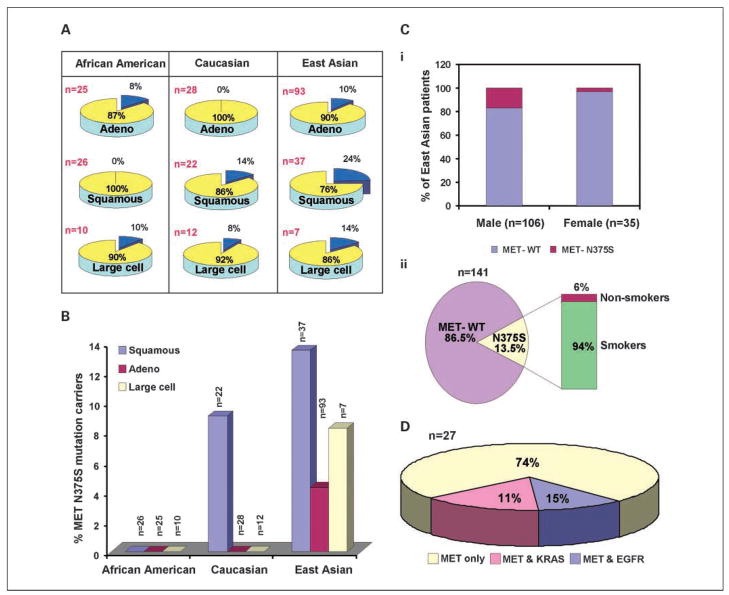
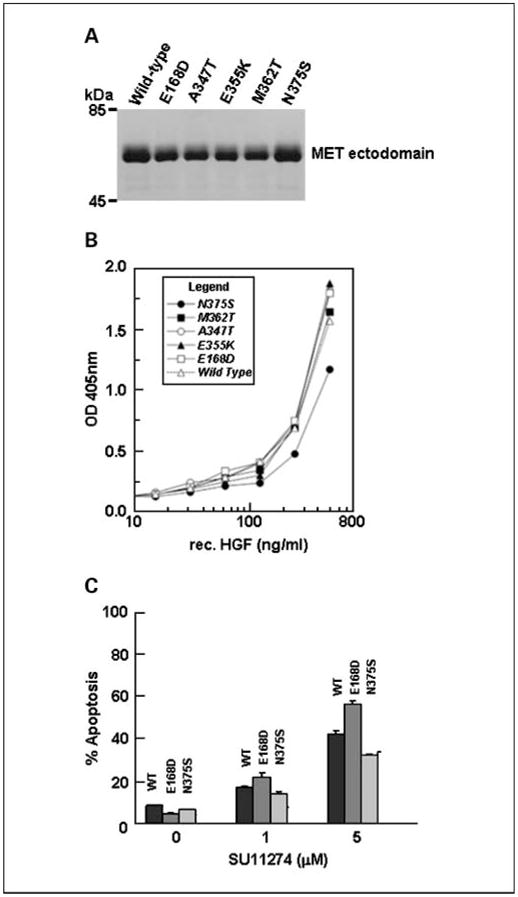
Results: Unlike the frequently encountered somatic mutations in EGFR, MET mutations in lung tumors were germline. MET-N375S, the most frequent mutation of MET, occurred in 13% of East Asians compared with none in African Americans. The frequency of MET mutations was highest among male smokers and squamous cell carcinoma. The MET-N375S mutation seems to confer resistance to MET inhibition based on hepatocyte growth factor ligand binding, molecular modeling, and apoptotic susceptibility to MET inhibitor studies.
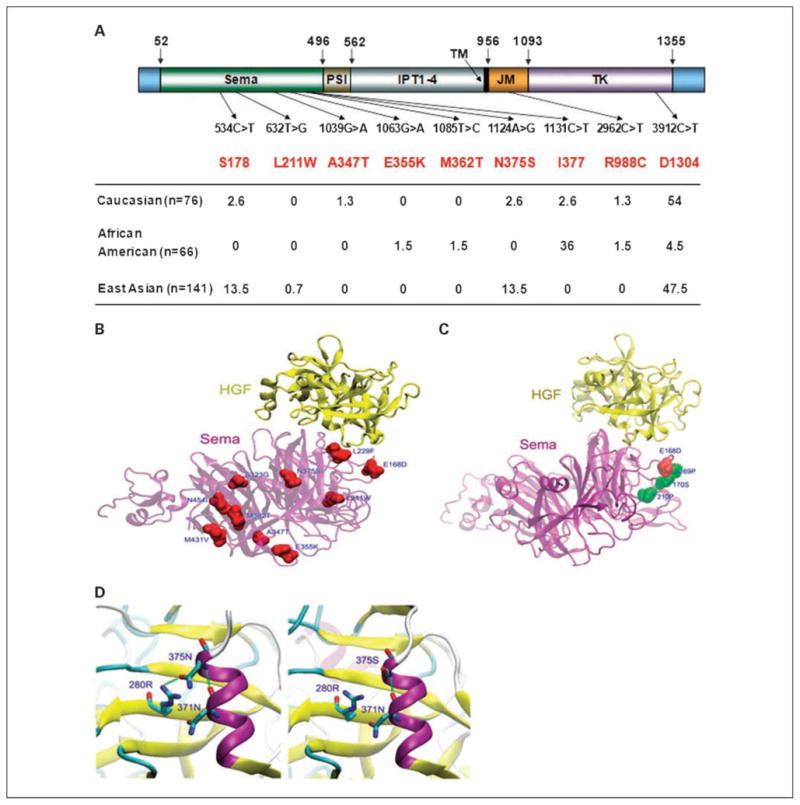
Conclusions: MET in lung cancer tissues contained nonsynonymous mutations in the semaphorin and juxtamembrane domains but not in the tyrosine kinase domain. All the MET mutations were germline. East Asians, African-Americans, and Caucasians had different MET genotypes and haplotypes. MET mutations in the semaphorin domain affected ligand binding.
Conflict of interest statement
No potential conflicts of interest were disclosed.
Figures
References
-
- Jemal A, Siegel R, Ward E, Murray T, Xu J, Thun MJ. Cancer statistics, 2007. CA Cancer J Clin. 2007;57:43–66. - PubMed
-
- Abidoye O, Ferguson MK, Salgia R. Lung carcinoma in African Americans. Nat Clin Pract Oncol. 2007;4:118–29. - PubMed
-
- Wu X, Zhao H, Amos CI, et al. p53 genotypes and haplotypes associated with lung cancer susceptibility and ethnicity. J Natl Cancer Inst. 2002;94:681–90. - PubMed
-
- Shigematsu H, Lin L, Takahashi T, et al. Clinical and biological features associated with epidermal growth factor receptor gene mutations in lung cancers. J Natl Cancer Inst. 2005;97:339–46. - PubMed
-
- Haber DA, Bell DW, Sordella R, et al. Molecular targeted therapy of lung cancer: EGFR mutations and response to EGFR inhibitors. Cold Spring Harb Symp Quant Biol. 2005;70:419–26. - PubMed
Publication types
MeSH terms
Substances
Grants and funding
LinkOut - more resources
Full Text Sources
Other Literature Sources
Medical
Research Materials
Miscellaneous
