A phase I trial of immunotherapy with lapuleucel-T (APC8024) in patients with refractory metastatic tumors that express HER-2/neu
- PMID: 19723649
- PMCID: PMC2766354
- DOI: 10.1158/1078-0432.CCR-08-3282
A phase I trial of immunotherapy with lapuleucel-T (APC8024) in patients with refractory metastatic tumors that express HER-2/neu
Abstract
Purpose: This study aimed to evaluate the safety of, immune response induced by, and efficacy of treatment with lapuleucel-T (APC8024) in patients with HER-2/neu-expressing tumors. Lapuleucel-T is an investigational active immunotherapy product consisting of autologous peripheral blood mononuclear cells, including antigen presenting cells, which are cultured ex vivo with BA7072, a recombinant fusion antigen consisting of portions of the intracellular and extracellular regions of HER-2/neu linked to granulocyte-macrophage colony-stimulating factor.
Experimental design: Patients with metastatic breast, ovarian, or colorectal cancer whose tumors expressed HER-2 were eligible. Patients underwent leukapheresis in week 0 and received lapuleucel-T infusions in weeks 0, 2, and 4. Patients who achieved a partial response or had stable disease through week 48 were eligible for re-treatment using the same protocol and dose as their initial treatment.
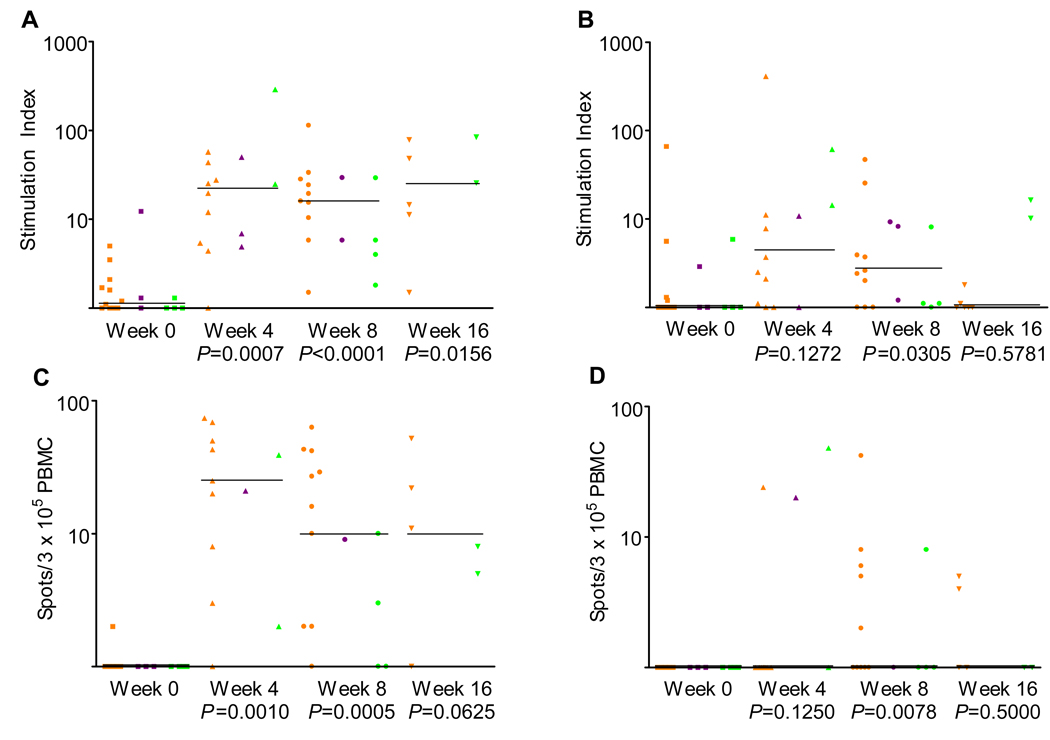
Results: Eighteen patients were enrolled and treated. Patients showed an immune response to the immunizing antigen (BA7072) at week 8 compared with week 0 as measured by T lymphocyte proliferation and IFN-gamma enzyme-linked immunospot assay. Therapy was well tolerated. The majority (94.7%) of adverse events associated with treatment were grade 1 or 2. Two patients experienced stable disease lasting > 48 weeks.
Conclusions: Autologous active cellular immunotherapy with lapuleucel-T stimulated an immune response specific to the immunizing antigen and seemed to be well tolerated. Further clinical studies to assess the clinical benefit for patients with HER/2-neu-expressing breast, ovarian, and colorectal cancer are warranted.
Conflict of interest statement
The conduct of this trial was supported by Dendreon Corporation.
Figures
References
-
- Hsu FJ, Benike C, Fagnoni F, et al. Vaccination of patients with B-cell lymphoma using autologous antigen-pulsed dendritic cells. Nat Med. 1996;2:52–58. - PubMed
-
- Murphy G, Tjoa B, Ragde H, Kenny G, Boynton A. Phase I clinical trial: T-cell therapy for prostate cancer using autologous dendritic cells pulsed with HLA-A0201-specific peptides from prostate-specific membrane antigen. Prostate. 1996;29:371–380. - PubMed
-
- Burch PA, Breen JK, Buckner JC, et al. Priming tissue-specific cellular immunity in a phase I trial of autologous dendritic cells for prostate cancer. Clin Cancer Res. 2000;6:2175–2182. - PubMed
-
- Small EJ, Fratesi P, Reese DM, et al. Immunotherapy of hormone-refractory prostate cancer with antigen-loaded dendritic cells. J Clin Oncol. 2000;18:3894–3903. - PubMed
-
- Nestle FO, Alijagic S, Gilliet M, et al. Vaccination of melanoma patients with peptide- or tumor lysate-pulsed dendritic cells. Nat Med. 1998;4:328–332. - PubMed
Publication types
MeSH terms
Substances
Grants and funding
LinkOut - more resources
Full Text Sources
Other Literature Sources
Medical
Research Materials
Miscellaneous