The instrumented timed up and go test: potential outcome measure for disease modifying therapies in Parkinson's disease
- PMID: 19726406
- PMCID: PMC3065923
- DOI: 10.1136/jnnp.2009.173740
The instrumented timed up and go test: potential outcome measure for disease modifying therapies in Parkinson's disease
Abstract
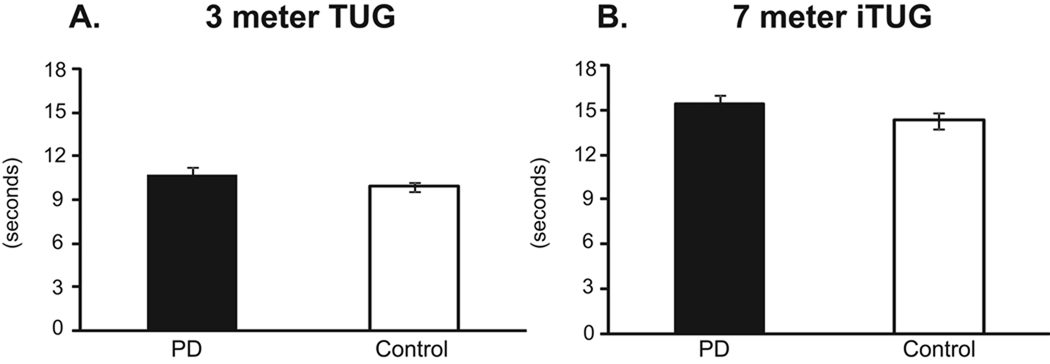
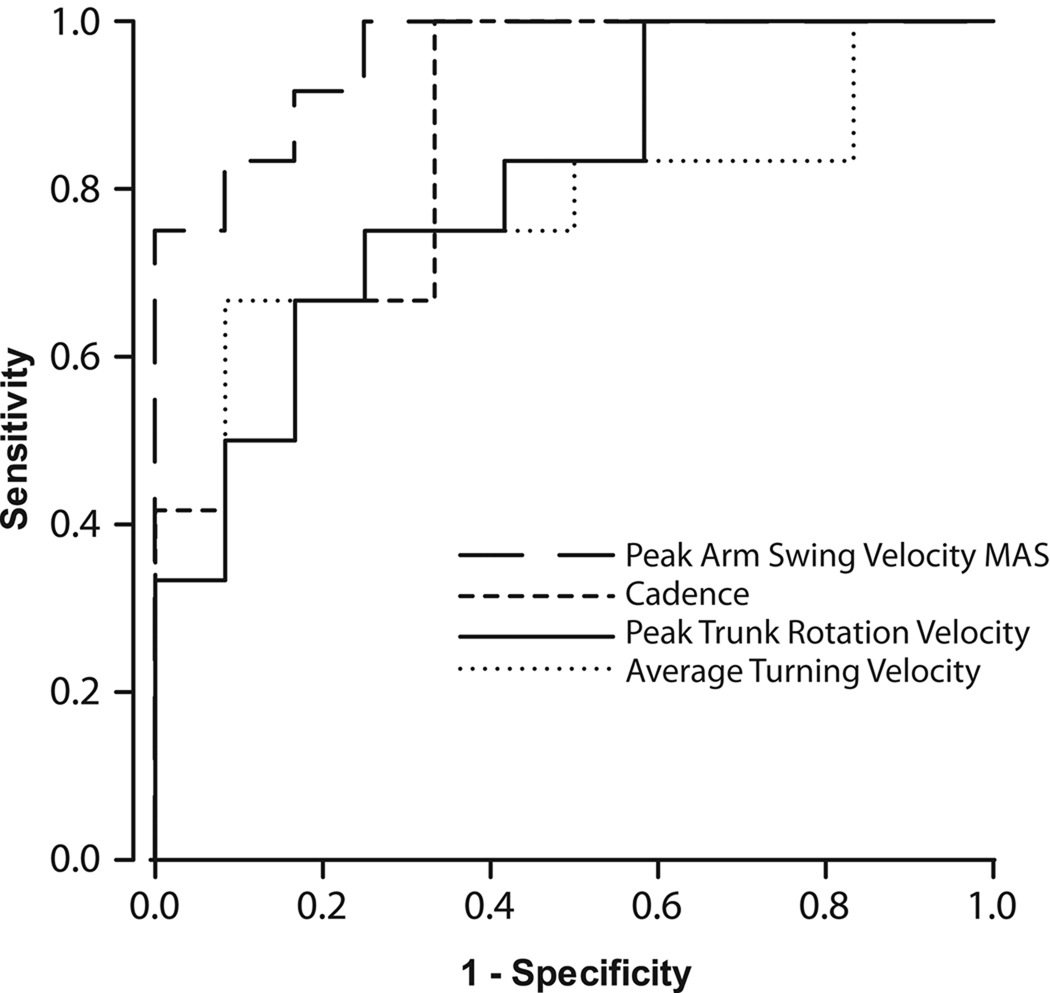
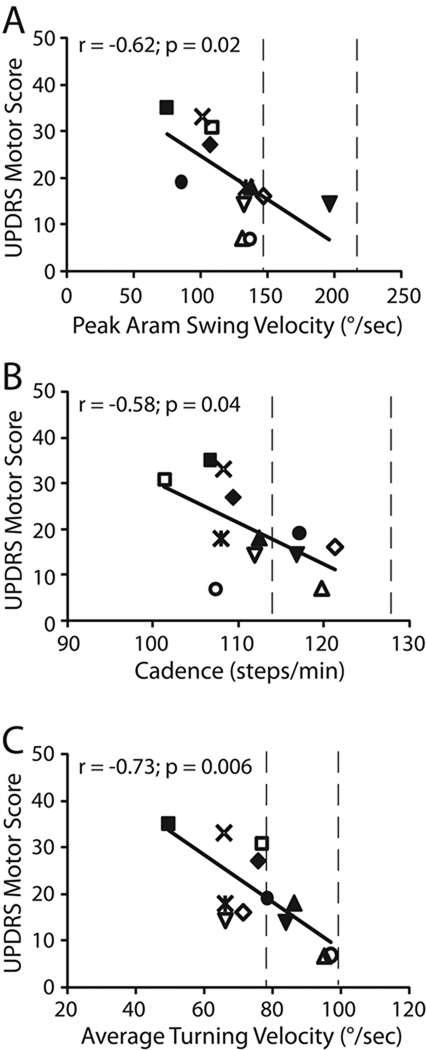
The Timed Up and Go (TUG) test has been used to assess balance and mobility in Parkinson's Disease (PD). However, it is not known if this test is sensitive to subtle abnormalities present in early stages of the disease, when balance and gait problems are not clinically evident but may be detected with instrumented analysis of movement. We hypothesise that postural transitions and arm swing during gait will be the most sensitive characteristics of the TUG for early PD. In the present study, we instrumented the TUG test (iTUG) using portable inertial sensors, and extended the walking distance from 3 m (traditional TUG) to 7 m. Twelve subjects with early-to-moderate, untreated PD and 12 healthy individuals participated. Our findings show that although the stopwatch measure of TUG duration did not detect any abnormalities in early-to-mid-stage PD, the peak arm swing velocity on the more affected side, average turning velocity, cadence and peak trunk rotation velocity were significantly slower. These iTUG parameters were also correlated with the Unified Parkinson's Disease Rating Motor Scale. Thus, the iTUG test is sensitive to untreated PD and could potentially detect progression of PD and response to symptomatic and disease-modifying treatments.
Conflict of interest statement
This potential conflict of interest has been reviewed and managed by OHSU.
Figures

References
-
- Berg KO, Maki BE, Williams KI. Clinical and laboratory measures of postural balance in an elderly population. Arch Phys Med Rehabil. 1992;73:1073–1080. - PubMed
-
- Lin M, Hwang H, Hu M, et al. Psychometric Comparisons of the Timed Up and Go, One-Leg Stand, Functional Reach, and Tinetti Balance Measures in Community-Dwelling Older People. JAGS. 2004;52:1343–1348. - PubMed
-
- Thompson M, Medley A. Performance of community dwelling elderly on the Timed Up and Go test. Phys Occup Ther Geriatr. 1995;13:17–29.
-
- Ng SS, Hui-Chan CW. The timed up & go test: its reliability and association with lower-limb impairments and locomotor capacities in people with chronic stroke. Arch Phys Med Rehabil. 2005;86:1641–1647. - PubMed
-
- Nilsagard Y, Lundholm C, Gunnarsson LG, et al. Clinical relevance using timed walk tests and 'timed up and go' testing in persons with multiple sclerosis. Physiother Res Int. 2007;12:105–114. - PubMed
Publication types
MeSH terms
Substances
Grants and funding
LinkOut - more resources
Full Text Sources
Other Literature Sources
Medical