


Engineering multicellular systems by cell-cell communication
- PMID: 19733047
- PMCID: PMC2763981
- DOI: 10.1016/j.copbio.2009.08.006
Engineering multicellular systems by cell-cell communication
Abstract
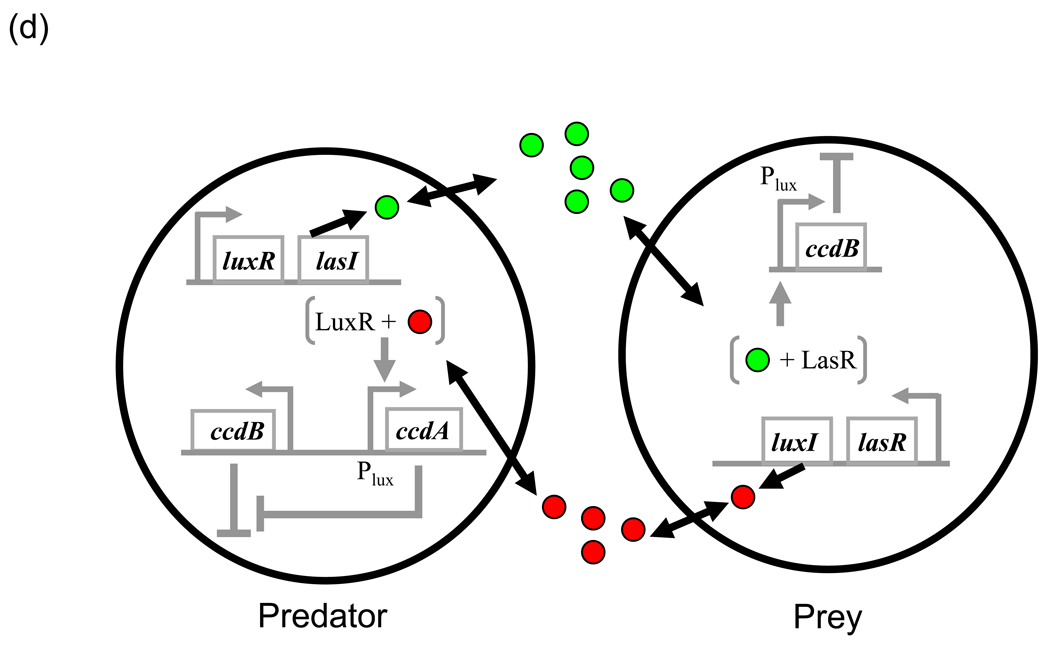
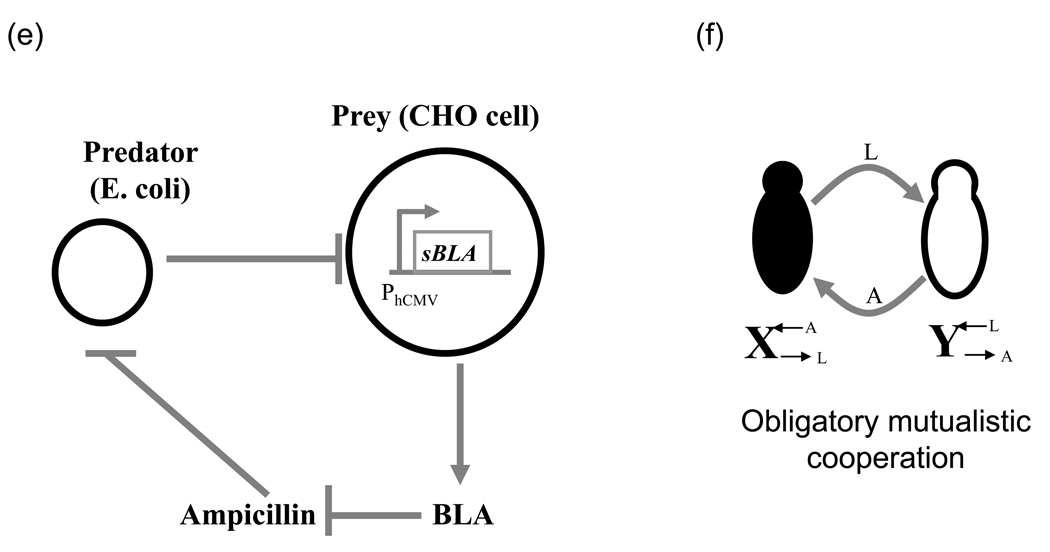
Synthetic biology encompasses the design of new biological parts and systems as well as the modulation of existing biological networks to generate novel functions. In recent years, increasing emphasis has been placed on the engineering of population-level behaviors using cell-cell communication. From the engineering perspective, cell-cell communication serves as a versatile regulatory module that enables coordination among cells in and between populations and facilitates the generation of reliable dynamics. In addition to exploring biological 'design principles' via the construction of increasingly complex dynamics, communication-based synthetic systems can be used as well-defined model systems to study ecological and social interactions such as competition, cooperation, and predation. Here we discuss the dynamic properties of cell-cell communication modules, how they can be engineered for synthetic circuit design, and applications of these systems.
Figures
References
-
- Voigt CA. Genetic parts to program bacteria. Curr Opin Biotechnol. 2006;17:548–557. - PubMed
-
- Lucks JB, Qi L, Whitaker WR, Arkin AP. Toward scalable parts families for predictable design of biological circuits. Curr Opin Microbiol. 2008;11:567–573. - PubMed
-
- Chin JW. Programming and engineering biological networks. Curr Opin Struct Biol. 2006;16:551–556. - PubMed
-
- Haseltine EL, Arnold FH. Synthetic gene circuits: design with directed evolution. Annu Rev Biophys Biomol Struct. 2007;36:1–19. - PubMed
Publication types
MeSH terms
Grants and funding
LinkOut - more resources
Full Text Sources
