Lenalidomide-induced upregulation of CD80 on tumor cells correlates with T-cell activation, the rapid onset of a cytokine release syndrome and leukemic cell clearance in chronic lymphocytic leukemia
- PMID: 19734418
- PMCID: PMC2738719
- DOI: 10.3324/haematol.2009.005835
Lenalidomide-induced upregulation of CD80 on tumor cells correlates with T-cell activation, the rapid onset of a cytokine release syndrome and leukemic cell clearance in chronic lymphocytic leukemia
Abstract
Background: In chronic lymphocytic leukemia lenalidomide causes striking immune activation, possibly leading to clearance of tumor cells. We conducted this study to investigate the mechanism of action of lenalidomide and the basis for its unique toxicities in chronic lymphocytic leukemia.
Design and methods: Patients with relapsed chronic lymphocytic leukemia were treated with lenalidomide 20 mg (n=10) or 10 mg (n=8) daily for 3 weeks on a 6-week cycle. Correlative studies assessed expression of co-stimulatory molecules on tumor cells, T-cell activation, cytokine levels, and changes in lymphocyte subsets.
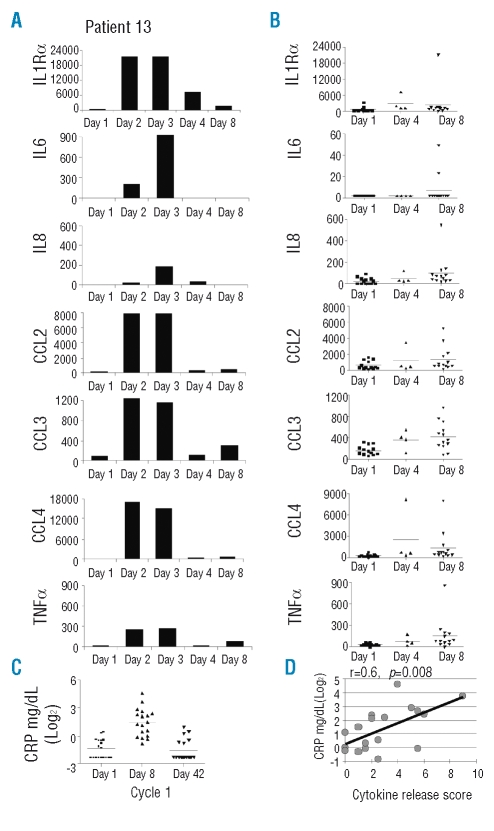
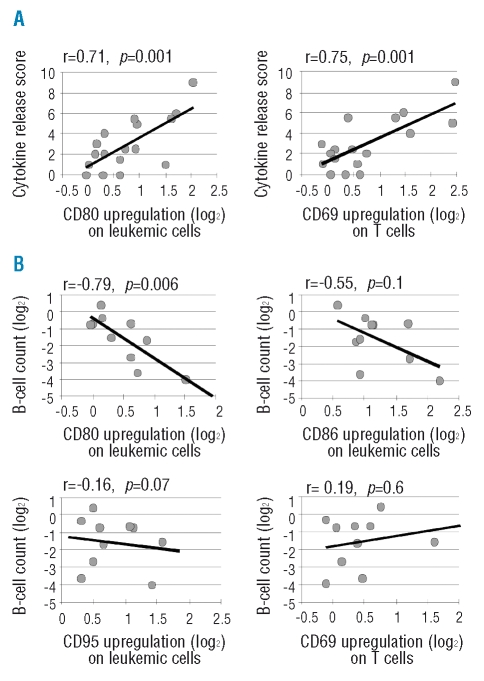
Results: Lenalidomide upregulated the co-stimulatory molecule CD80 on chronic lymphocytic leukemia and mantle cell lymphoma cells but not on normal peripheral blood B cells in vitro. T-cell activation was apparent in chronic lymphocytic leukemia, weak in mantle cell lymphoma, but absent in normal peripheral blood mononuclear cells and correlated with the upregulation of CD80 on B cells. Strong CD80 upregulation and T-cell activation predicted more severe side effects, manifesting in 83% of patients as a cytokine release syndrome within 8-72 h after the first dose of lenalidomide. Serum levels of various cytokines, including tumor necrosis factor-alpha, increased during treatment. CD80 upregulation on tumor cells correlated with rapid clearance of leukemic cells from the peripheral blood. In contrast, neither the severity of the cytokine release syndrome nor the degree of T-cell activation in vitro correlated with clinical response.
Conclusions: Upregulation of CD80 on tumor cells and T-cell activation correlate with unique toxicities of lenalidomide in chronic lymphocytic leukemia. However, T-cell activation appears to be dispensable for the drug's anti-tumor effects. This provides a rationale for combinations of lenalidomide with fludarabine or alemtuzumab.
Figures


References
-
- Chanan-Khan A, Miller KC, Musial L, Lawrence D, Padmanabhan S, Takeshita K, et al. Clinical efficacy of lenalidomide in patients with relapsed or refractory chronic lymphocytic leukemia: results of a phase II study. J Clin Oncol. 2006;24:5343–9. - PubMed
-
- Chanan-Khan AA, Cheson BD. Lenalidomide for the treatment of B-cell malignancies. J Clin Oncol. 2008;26:1544–52. - PubMed
-
- Moutouh-de Parseval LA, Weiss L, DeLap RJ, Knight RD, Zeldis JB. Tumor lysis syndrome/tumor flare reaction in lenalidomide-treated chronic lymphocytic leukemia. J Clin Oncol. 2007;25:5047. - PubMed
Publication types
MeSH terms
Substances
Grants and funding
LinkOut - more resources
Full Text Sources