


QTc: how long is too long?
- PMID: 19734499
- PMCID: PMC3940069
- DOI: 10.1136/bjsm.2008.054734
QTc: how long is too long?
Abstract
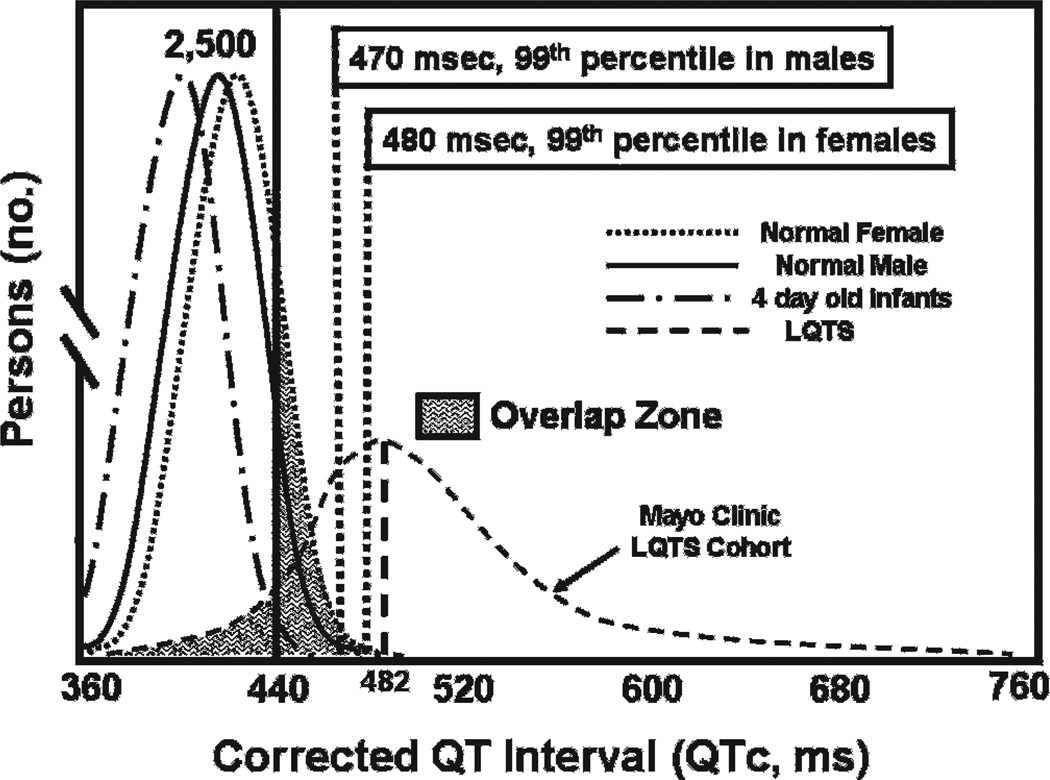
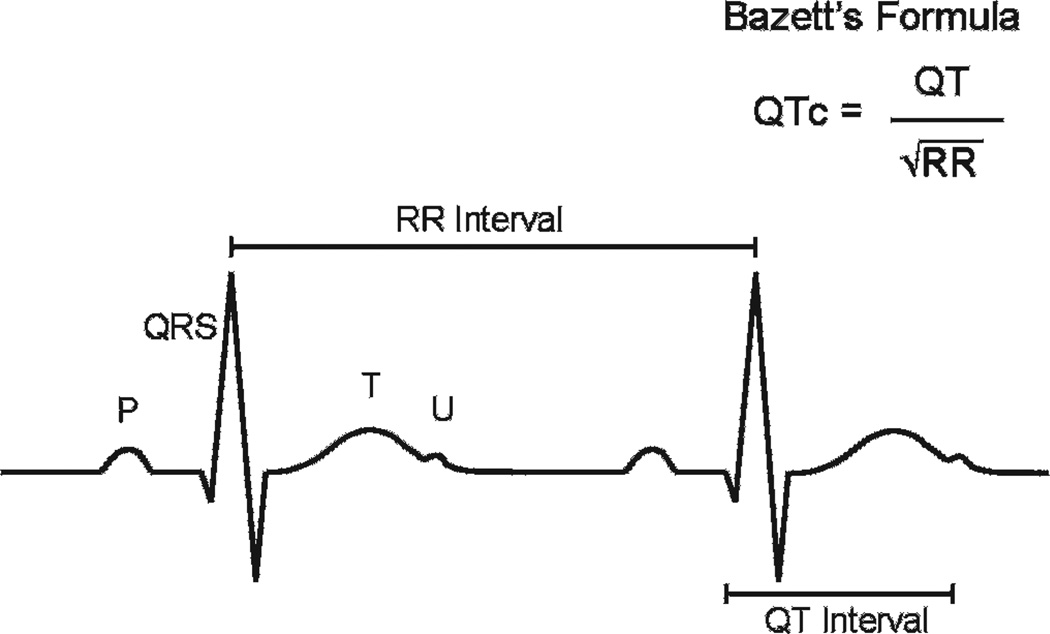
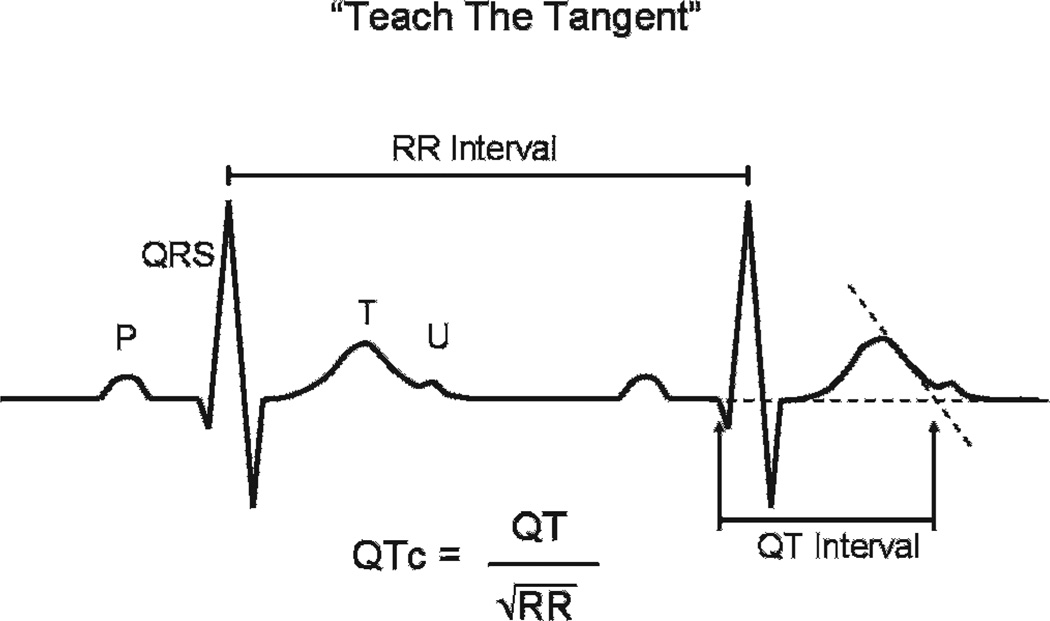
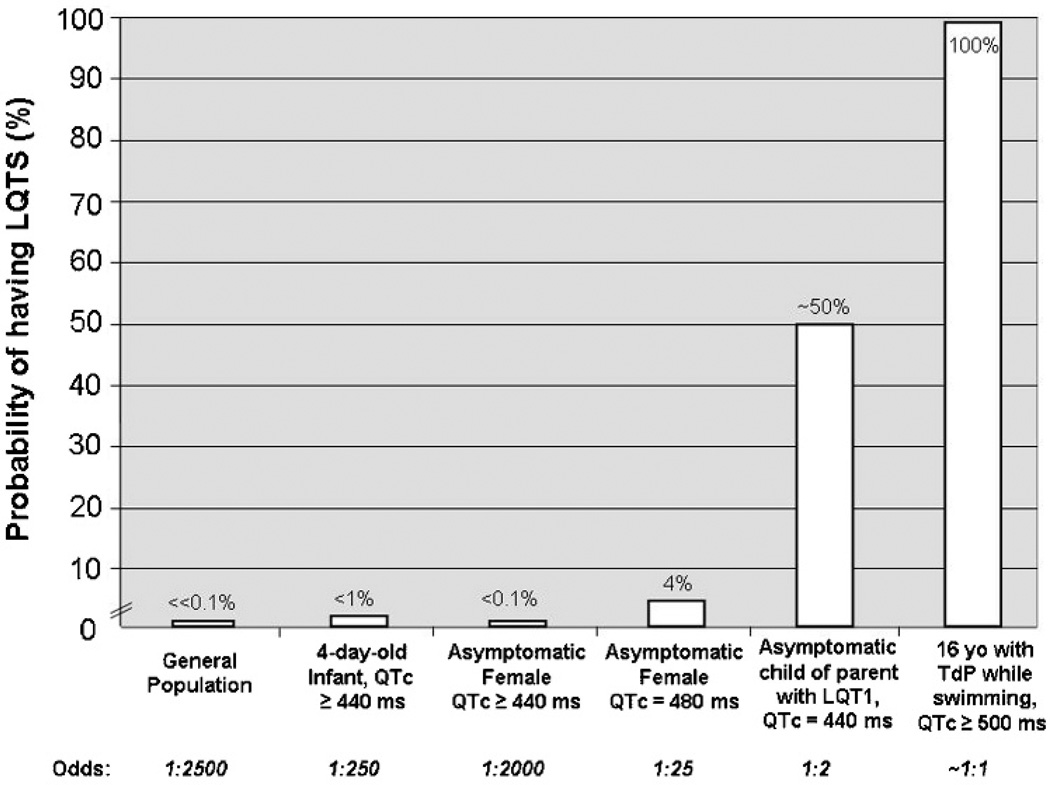
Congenital long QT syndrome (LQTS) affects an estimated 1 in 2500 people and typically presents with syncope, seizures or sudden death. Whereas someone exhibiting marked prolongation of the QT interval with QTc exceeding 500 ms who was just externally defibrillated from torsades de pointes while swimming poses negligible diagnostic challenge as to the unequivocal probability of LQTS, the certainty is considerably less for the otherwise asymptomatic person who happens to host a QTc value coined "borderline" (QTc > or = 440 ms). Although a normal QT interval imparts a much lower risk of life-threatening events, it does not preclude a patient from nevertheless harbouring a potentially lethal LQTS-causing genetic mutation. Indeed, genetic testing exerts significant diagnostic, prognostic and therapeutic implications. However, the 12-lead ECG remains the universal initial diagnostic test in the evaluation of LQTS and is subject to miscalculation, misinterpretation and mishandling. This review discusses the components of accurate QTc measurement and diagnosis, re-examines what is known about factors affecting QT interval measurement, and clarifies current recommendations regarding diagnosis of so-called "borderline" QT interval prolongation. The current guideline recommendations for the athlete with LQTS are also summarised.
Figures

References
-
- Jervell A, Lange-Nielsen F. Congenital deaf-mutism, functional heart disease with prolongation of the Q-T interval and sudden death. Am Heart J. 1957;54:59–68. - PubMed
-
- Romano C, Gemme G, Pongiglione R. [Rare cardiac arrythmias of the pediatric age. Ii. Syncopal attacks due to paroxysmal ventricular fibrillation. (Presentation of 1st case in Italian pediatric literature)]. (In Italian.) Clin Pediatr (Bologna) 1963;45:656–683. - PubMed
-
- Ward OC. A New familial cardiac syndrome in children. J Ir Med Assoc. 1964;54:103–106. - PubMed
-
- Ackerman MJ. Cardiac channelopathies: it’s in the genes. Nat Med. 2004;10:463–464. - PubMed
-
- Moss AJ. Long QT syndrome. JAMA. 2003;289:2041–2044. - PubMed
Publication types
MeSH terms
Grants and funding
LinkOut - more resources
Full Text Sources
Medical
