Randomized Controlled Trial
. 2009 Oct;250(4):514-23.
doi: 10.1097/SLA.0b013e3181b8f9ca.

Randomized controlled trial to determine the efficacy of long-term growth hormone treatment in severely burned children

Affiliations
Randomized Controlled Trial

Randomized controlled trial to determine the efficacy of long-term growth hormone treatment in severely burned children

Ludwik K Branski et al. Ann Surg. 2009 Oct.

Abstract

Background: Recovery from a massive burn is characterized by catabolic and hypermetabolic responses that persist up to 2 years and impair rehabilitation and reintegration. The objective of this study was to determine the effects of long-term treatment with recombinant human growth hormone (rhGH) on growth, hypermetabolism, body composition, bone metabolism, cardiac work, and scarring in a large prospective randomized single-center controlled clinical trial in pediatric patients with massive burns.

Patients and methods: A total of 205 pediatric patients with massive burns over 40% total body surface area were prospectively enrolled between 1998 and 2007 (clinicaltrials.gov ID NCT00675714). Patients were randomized to receive either placebo (n = 94) or long-term rhGH at 0.05, 0.1, or 0.2 mg/kg/d (n = 101). Changes in weight, body composition, bone metabolism, cardiac output, resting energy expenditure, hormones, and scar development were measured at patient discharge and at 6, 9, 12, 18, and 24 months postburn. Statistical analysis used Tukey t test or ANOVA followed by Bonferroni correction. Significance was accepted at P < 0.05.

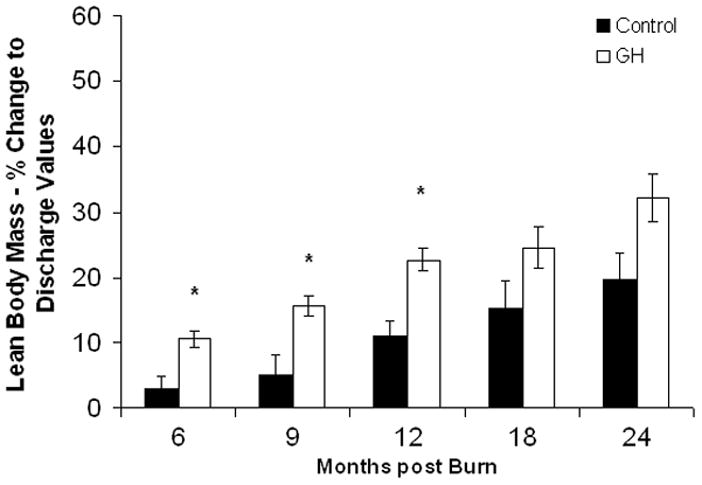
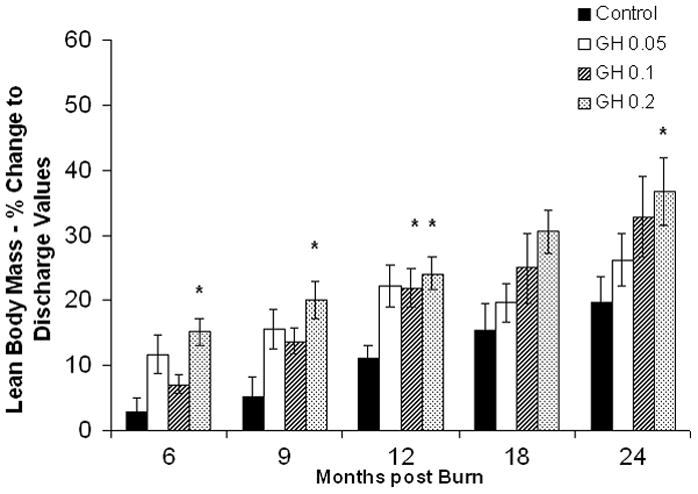
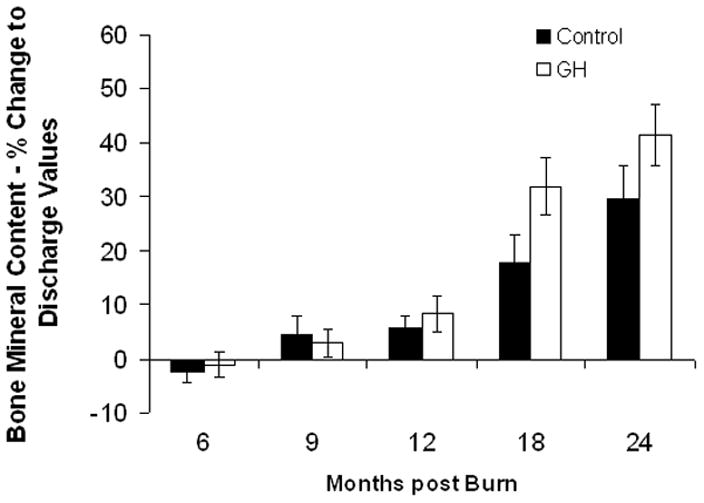
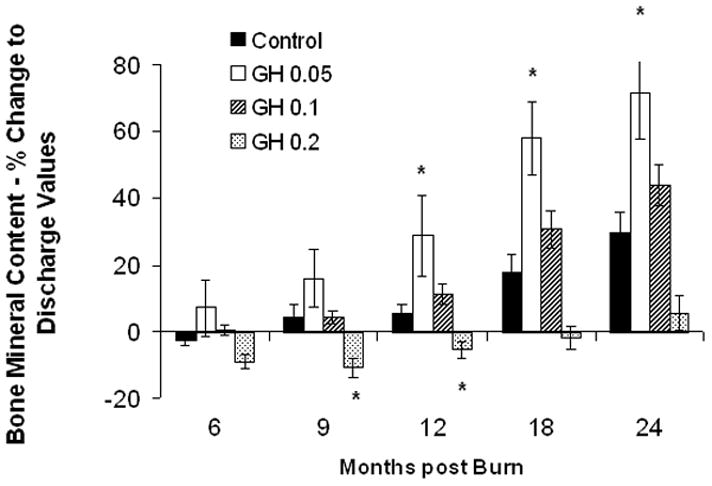
Results: RhGH administration markedly improved growth and lean body mass, whereas hypermetabolism was significantly attenuated. Serum growth hormone, insulin-like growth factor-I, and IGFBP-3 was significantly increased, whereas percent body fat content significantly decreased when compared with placebo, P < 0.05. A subset analysis revealed most lean body mass gain in the 0.2 mg/kg group, P < 0.05. Bone mineral content showed an unexpected decrease in the 0.2 mg/kg group, along with a decrease in PTH and increase in osteocalcin levels, P < 0.05. Resting energy expenditure improved with rhGH administration, most markedly in the 0.1 mg/kg/d rhGH group, P < 0.05. Cardiac output was decreased at 12 and 18 months postburn in the rhGH group. Long-term administration of 0.1 and 0.2 mg/kg/d rhGH significantly improved scarring at 12 months postburn, P < 0.05.

Conclusion: This large prospective clinical trial showed that long-term treatment with rhGH effectively enhances recovery of severely burned pediatric patients.


Figures
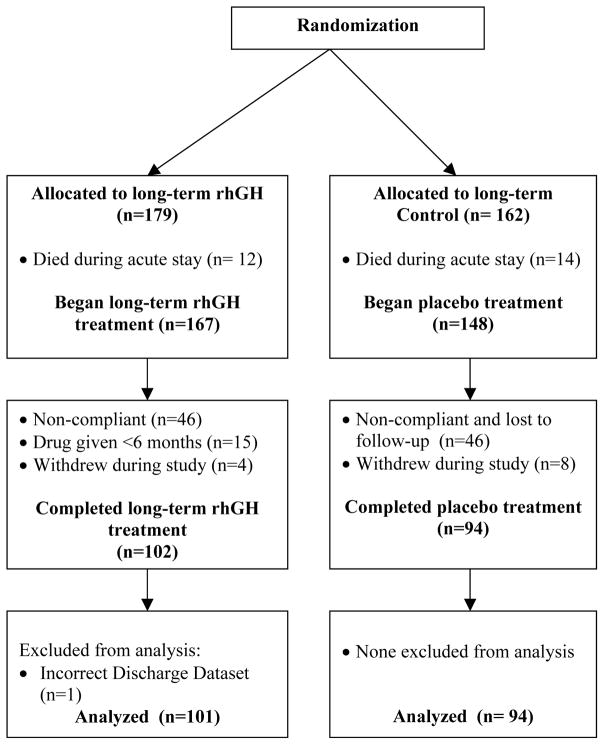
Figure 1
Figure 1
Randomization chart. Study Flowchart
Figure 2
Figure 2
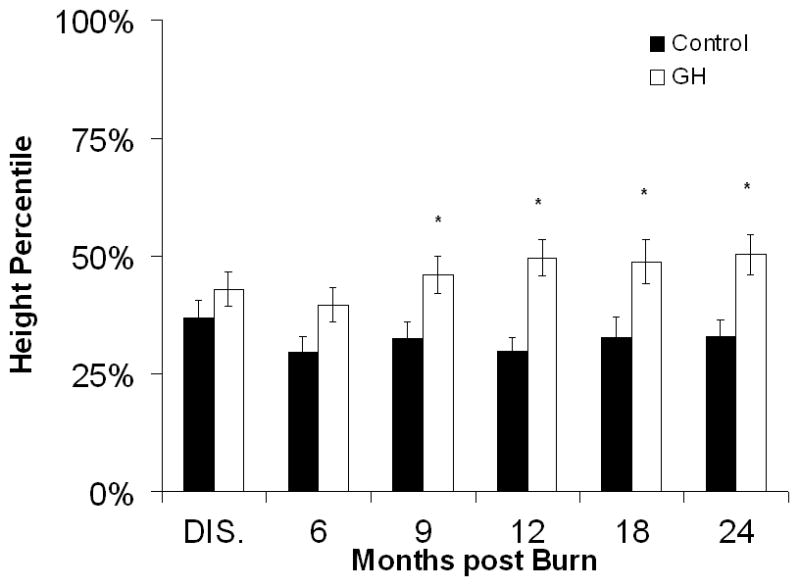
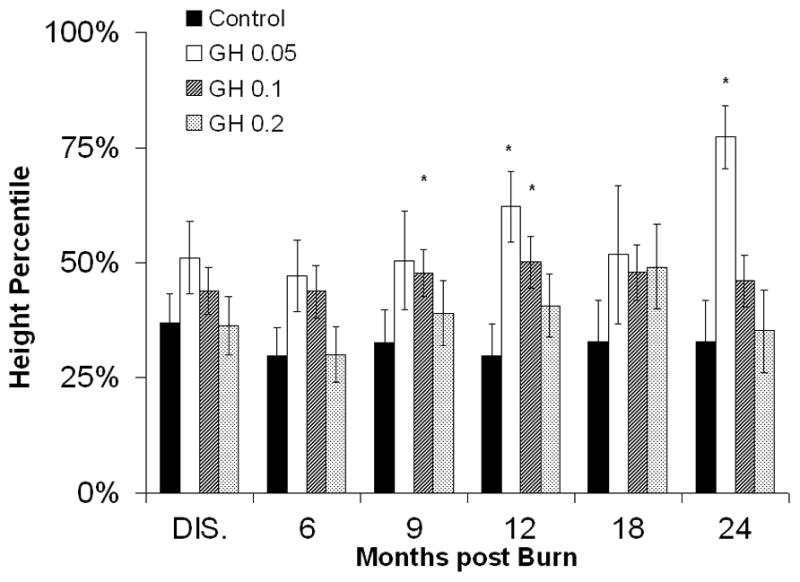
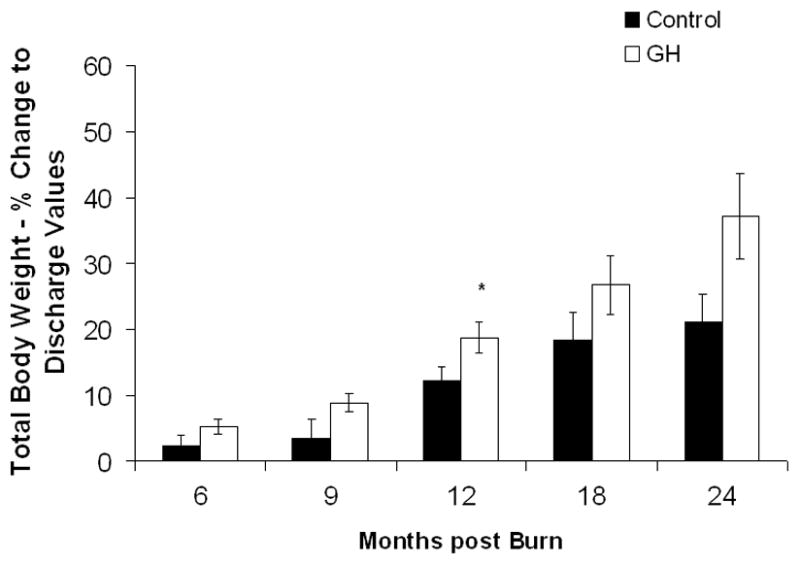
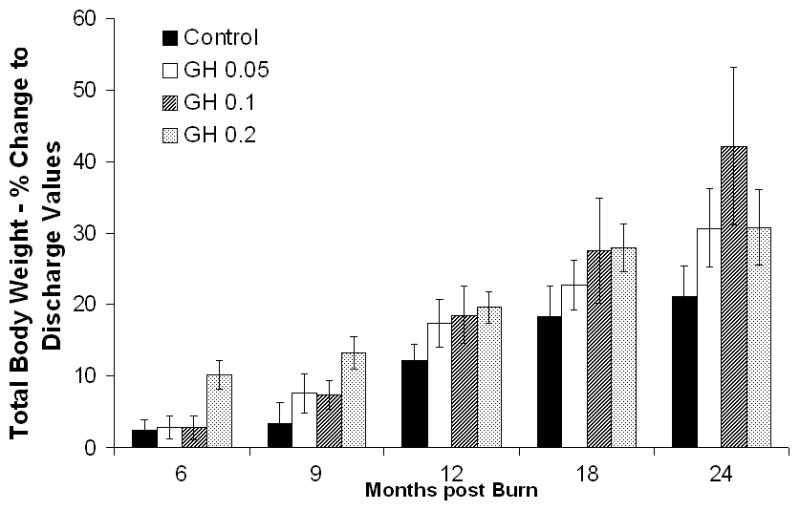
Heights and Weights. A and B, Height percentiles measured at patient discharge (Dis.), 6, 9, 12, 18, and 24 months post burn. C and D, Total Body Weights. Data are shown as percent change from hospital discharge to 24 months after burn. *Significant difference between rhGH group(s) and placebo, P < 0.05.
Figure 2
Figure 2
Heights and Weights. A and B, Height percentiles measured at patient discharge (Dis.), 6, 9, 12, 18, and 24 months post burn. C and D, Total Body Weights. Data are shown as percent change from hospital discharge to 24 months after burn. *Significant difference between rhGH group(s) and placebo, P < 0.05.
Figure 2
Figure 2
Heights and Weights. A and B, Height percentiles measured at patient discharge (Dis.), 6, 9, 12, 18, and 24 months post burn. C and D, Total Body Weights. Data are shown as percent change from hospital discharge to 24 months after burn. *Significant difference between rhGH group(s) and placebo, P < 0.05.
Figure 2
Figure 2
Heights and Weights. A and B, Height percentiles measured at patient discharge (Dis.), 6, 9, 12, 18, and 24 months post burn. C and D, Total Body Weights. Data are shown as percent change from hospital discharge to 24 months after burn. *Significant difference between rhGH group(s) and placebo, P < 0.05.
Figure 3
Figure 3
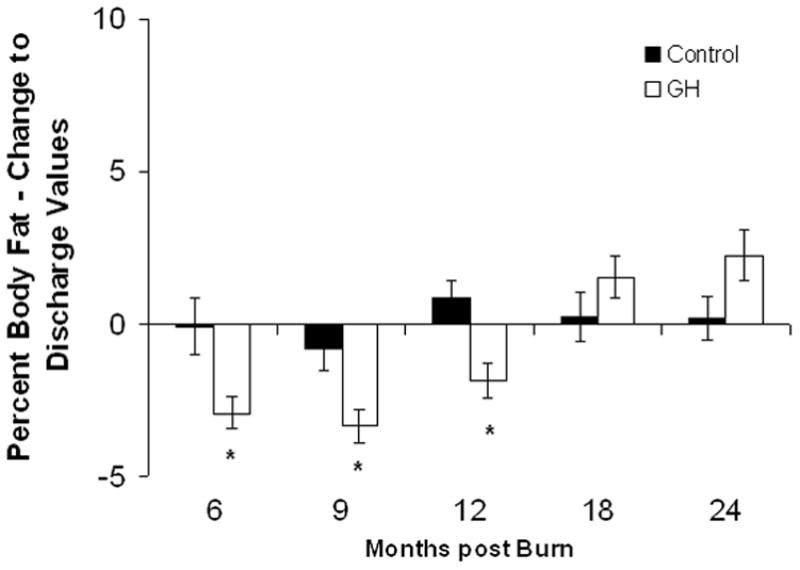
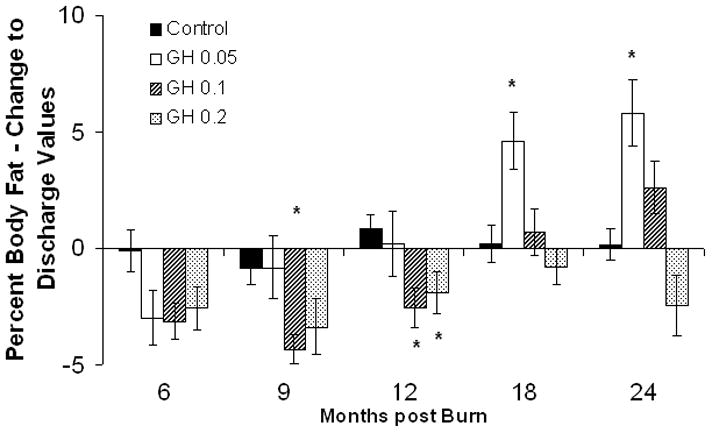
Body composition. Data are shown as percent change from hospital discharge to 24 months after burn. A and B, Lean body mass. C and D, Bone mineral content. E and F, Percent body fat. Values are means±SEM. *Significant difference between rhGH group(s) and placebo, P < 0.05.
Figure 3
Figure 3
Body composition. Data are shown as percent change from hospital discharge to 24 months after burn. A and B, Lean body mass. C and D, Bone mineral content. E and F, Percent body fat. Values are means±SEM. *Significant difference between rhGH group(s) and placebo, P < 0.05.
Figure 3
Figure 3
Body composition. Data are shown as percent change from hospital discharge to 24 months after burn. A and B, Lean body mass. C and D, Bone mineral content. E and F, Percent body fat. Values are means±SEM. *Significant difference between rhGH group(s) and placebo, P < 0.05.
Figure 3
Figure 3
Body composition. Data are shown as percent change from hospital discharge to 24 months after burn. A and B, Lean body mass. C and D, Bone mineral content. E and F, Percent body fat. Values are means±SEM. *Significant difference between rhGH group(s) and placebo, P < 0.05.
Figure 3
Figure 3
Body composition. Data are shown as percent change from hospital discharge to 24 months after burn. A and B, Lean body mass. C and D, Bone mineral content. E and F, Percent body fat. Values are means±SEM. *Significant difference between rhGH group(s) and placebo, P < 0.05.
Figure 3
Figure 3
Body composition. Data are shown as percent change from hospital discharge to 24 months after burn. A and B, Lean body mass. C and D, Bone mineral content. E and F, Percent body fat. Values are means±SEM. *Significant difference between rhGH group(s) and placebo, P < 0.05.
Figure 4
Figure 4
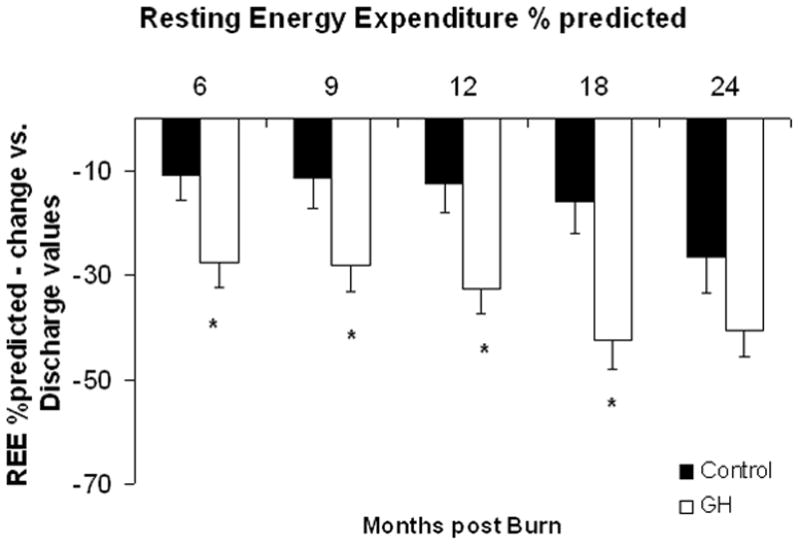
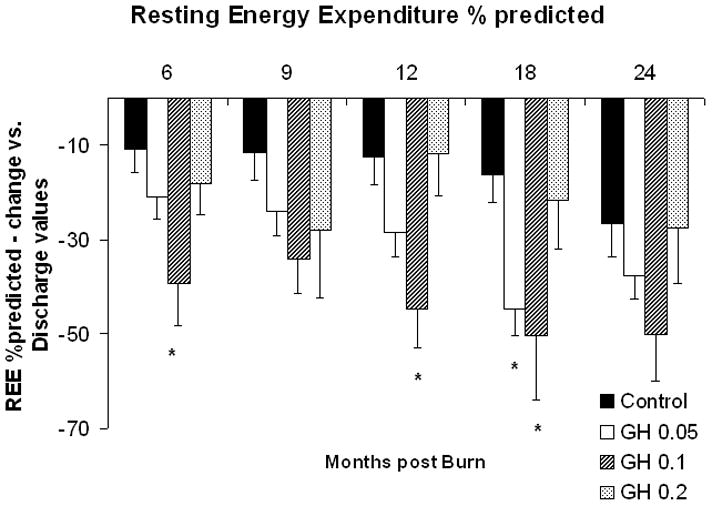
Resting Energy Expenditure. A and B, Resting energy expenditure (REE), depicted as percent of predicted at patient discharge (Dis.), 6, 9, 12, 18, and 24 months postburn. Values are means±SEM. *Significant difference between rhGH group(s) and placebo, P < 0.05.
Figure 4
Figure 4
Resting Energy Expenditure. A and B, Resting energy expenditure (REE), depicted as percent of predicted at patient discharge (Dis.), 6, 9, 12, 18, and 24 months postburn. Values are means±SEM. *Significant difference between rhGH group(s) and placebo, P < 0.05.
Figure 5
Figure 5
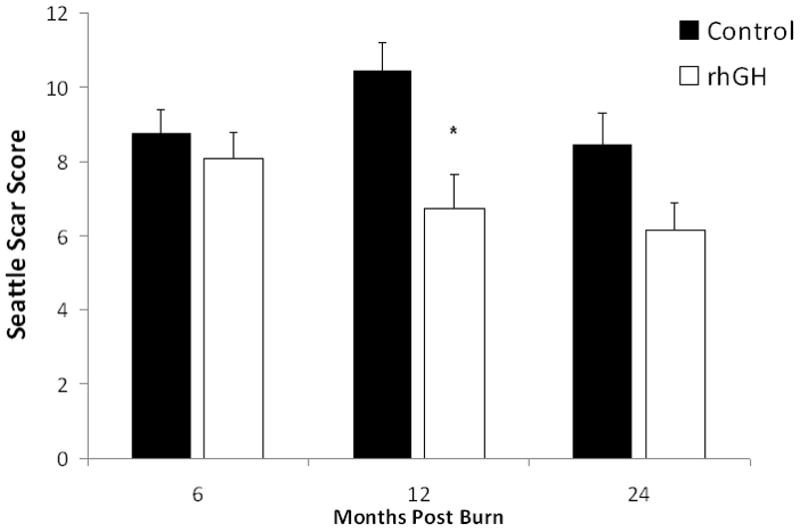
Scarring. Scar quality was assessed in both patient groups using the modified Seattle Scar Score. Scar surface, thickness, border height, and color differences were assessed from representative patient photographs; each parameter is scored from 0 to 4, 0 being the normal value and 4 the most severe, for a total possible score from 0 to 16. Values are means of total scar scores±SEM, measured at 6, 12 to 18, and 24 months postburn. *Significant difference between rhGH group(s) and placebo, P<0.05.

References

    1. Herndon DN, Tompkins RG. Support of the metabolic response to burninjury. Lancet. 2004;363:1895–1902. - PubMed
    1. Rutan RL, Herndon DN. Growth delay in postburn pediatric patients. Arch Surg. 1990;125:392–395. - PubMed
    1. Jeschke MG, Mlcak RP, Finnerty CC, et al. Burn size determines the inflammatory and hypermetabolic response. Crit Care. 2007;11:R90. - PMC - PubMed
    1. Gore DC, Honeycutt D, Jahoor F, et al. Effect of exogenous growth hormone on glucose utilization in burn patients. J Surg Res. 1991;51:518–523. - PubMed
    1. Gore DC, Honeycutt D, Jahoor F, et al. Effect of exogenous growth hormone on whole-body and isolated-limb protein kinetics in burned patients. Arch Surg. 1991;126:38–43. - PubMed

Publication types

MeSH terms

Associated data