


doi: 10.1038/ncb1971.
Epub 2009 Sep 6.
Ageing-related chromatin defects through loss of the NURD complex
Affiliations
- PMID: 19734887
- PMCID: PMC2779731
- DOI: 10.1038/ncb1971
Item in Clipboard
Ageing-related chromatin defects through loss of the NURD complex
Nat Cell Biol.
2009 Oct.
Abstract
Physiological and premature ageing are characterized by multiple defects in chromatin structure and accumulation of persistent DNA damage. Here we identify the NURD chromatin remodelling complex as a key modulator of these ageing-associated chromatin defects. We demonstrate loss of several NURD components during premature and normal ageing and we find an ageing-associated reduction in HDAC1 activity. Silencing of individual NURD subunits recapitulated chromatin defects associated with ageing and we provide evidence that structural chromatin defects precede DNA damage accumulation. These results outline a molecular mechanism for chromatin defects during ageing.
Figures
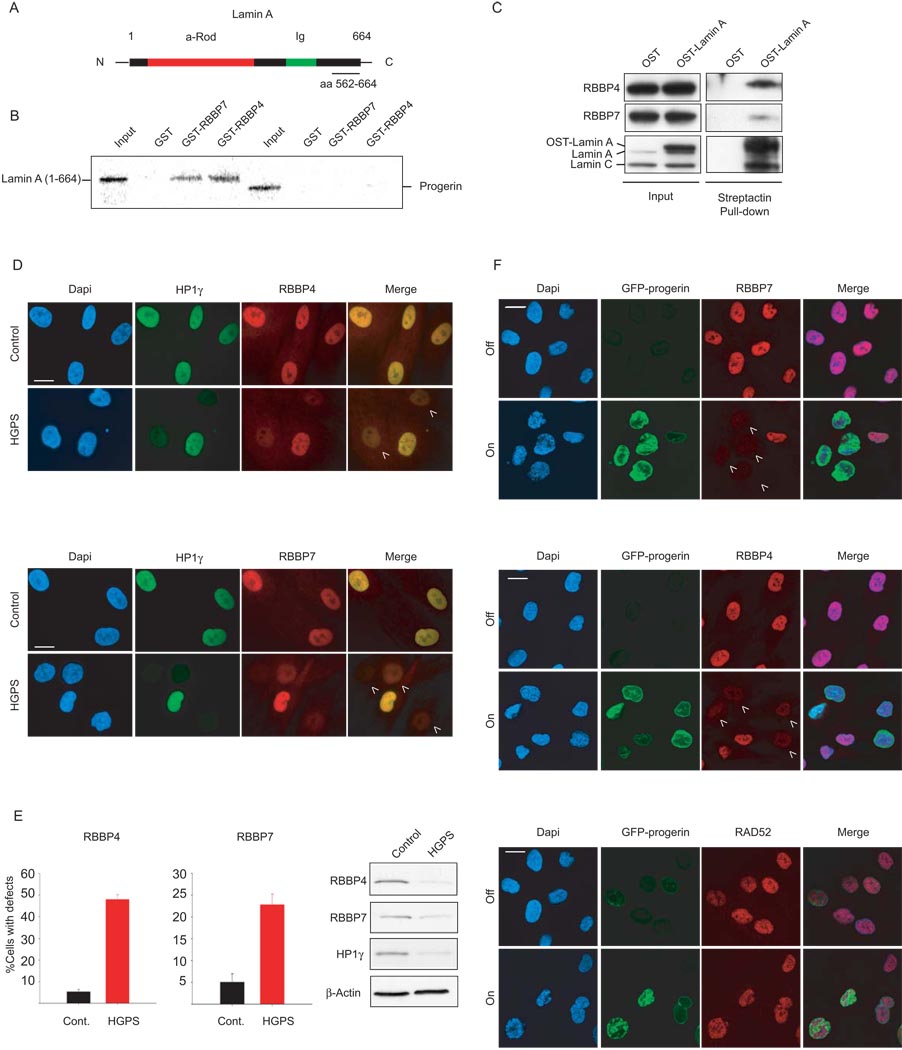
(A) Schematic representation of lamin A. The fragment used as a bait in the Y2H assay (aa 562–664) is underlined. (B) GST pulldown assays with recombinant GST-RBBP4/7 and in vitro transcribed and translated lamin A (aa 1–664) or progerin. (C) Crosslinked protein lysates were prepared from U2OS cells expressing One-Strep (OST)-tagged lamin A and then incubated with Streptactin beads. Input and pulled down material was probed by Western blot with antibodies against the indicated endogenous proteins. (D) Immunofluorescence staining on control and HGPS primary dermal fibroblasts with the indicated antibodies. DAPI, 4′, 6′-diamidino-2-phenylindole. Quantitative analysis of fluorescence intensity signal in control and HGPS patient cells. The percentages of cells with reduced protein level are indicated. N>200; values represent averages ± S.D from at least three experiments. Cells were analyzed around population doubling (PD) 25 in the RBBP4 experiments and around PD 20 in the RBBP7 experiments. Control cells were passage-matched to HGPS cells in each experiment. Western blot of cell lysates prepared from control and HGPS dermal fibroblasts. (E) Immunofluorescence with indicated antibodies in wt fibroblasts that were either induced (on) or not induced (off) to express a GFP-tagged version of progerin. Arrowheads indicate cells with reduced levels of heterochromatin proteins. Scale bars: 10 µm.
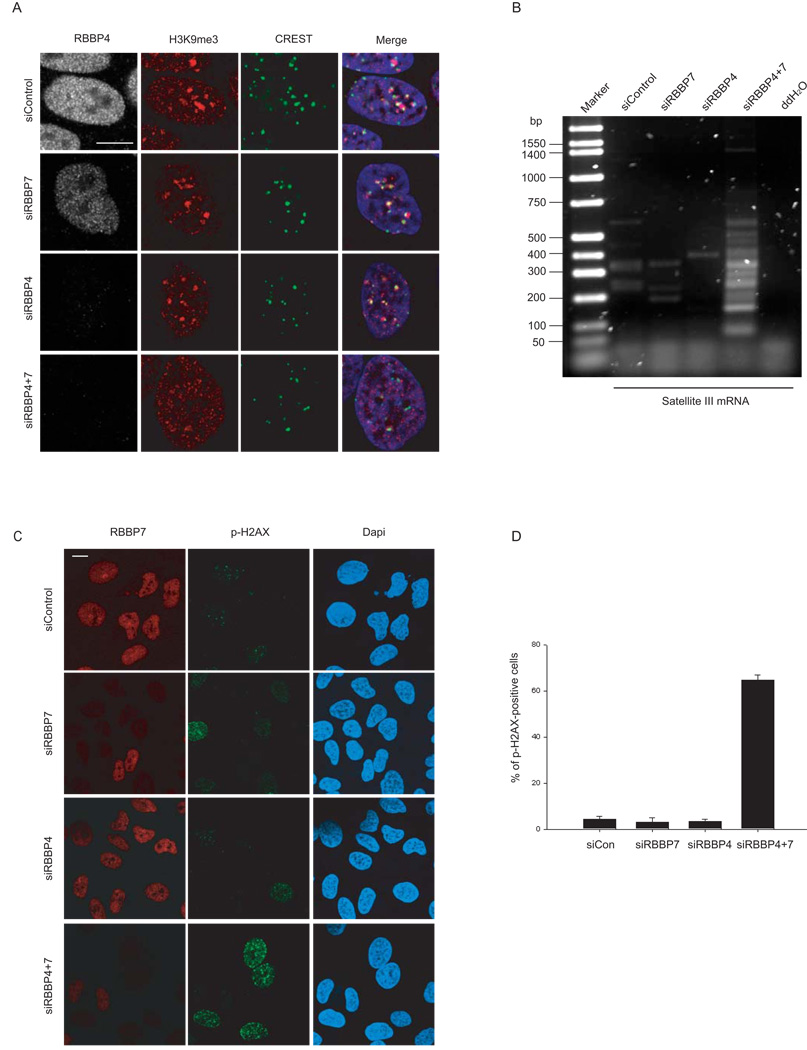
(A) HeLa cells were transfected with the indicated combinations of siRNA for 144 hrs and processed for immunofluorescence staining with the indicated antibodies. (B) Semi-quantitative, strand specific RT-PCR analysis of SatIII G-rich transcripts in cells knocked down for the indicated gene. (C) Detection of DNA damage in knock-down cells using α-phospho-H2AX antibody. (D) Quantitative analysis of the percentage of p-H2AX positive cells (defined as containing more than 8 foci per cell).Values represent averages ± S.D. from three experiments. N>200. Scale bars: 10 µm.
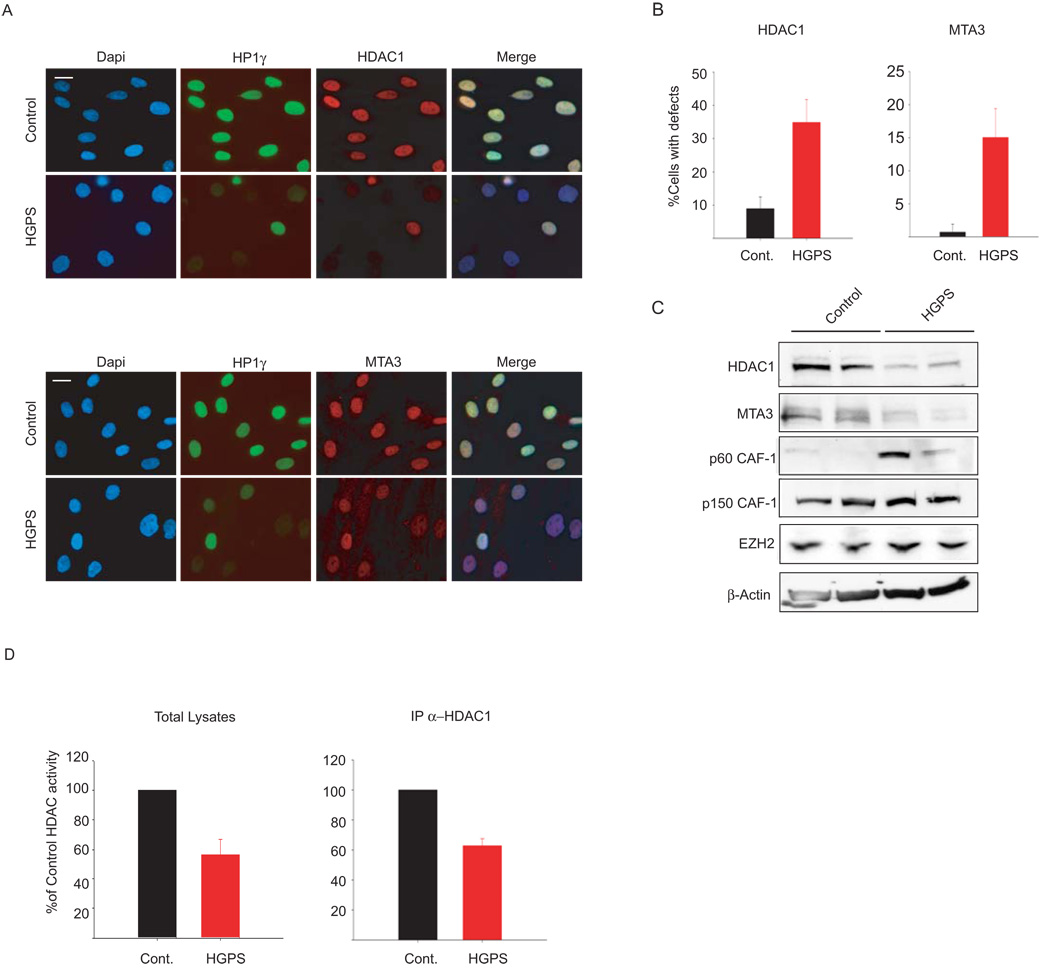
(A) Immunofluorescence staining of control and HGPS primary dermal fibroblasts with the indicated antibodies. (B) Quantitative analysis of the fluorescence intensity signal in control and HGPS cells. N>200; Values represent averages ± S.D. from three experiments. (C) Western blot with the indicated antibodies on total cell lysates prepared from dermal fibroblast from two unaffected individuals and two HGPS patients. (D) HDAC activity measured in total lysates or in HDAC1 immunoprecipitates prepared from primary fibroblasts. Values represent averages ± S.D. from three experiments. Scale bar: 10 µm.
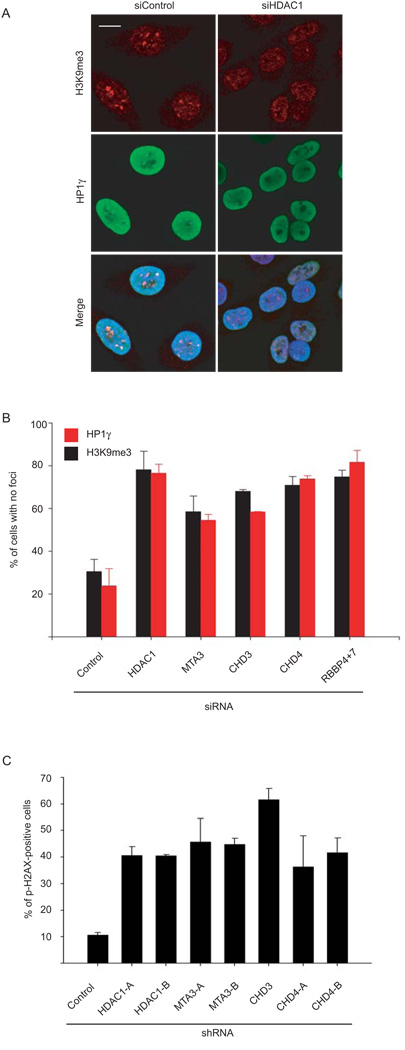
(A) HeLa cells were transfected with the indicated siRNA for 96 hrs and processed for immunofluorescence staining with the indicated antibodies. Scale bar: 10 µm. (B) Quantitation of the percentage of siRNA treated Hela cells in which H3K9me3 or HP1γ foci are absent. Values represent averages ± S.D. from two experiments. N>200. (C) Quantitation of the percentage of phospho-H2AX positive cells (defined as containing more than 8 foci per cell).Values represent averages ± S.D. from three experiments. N>200. Scale bar: 10 µm.
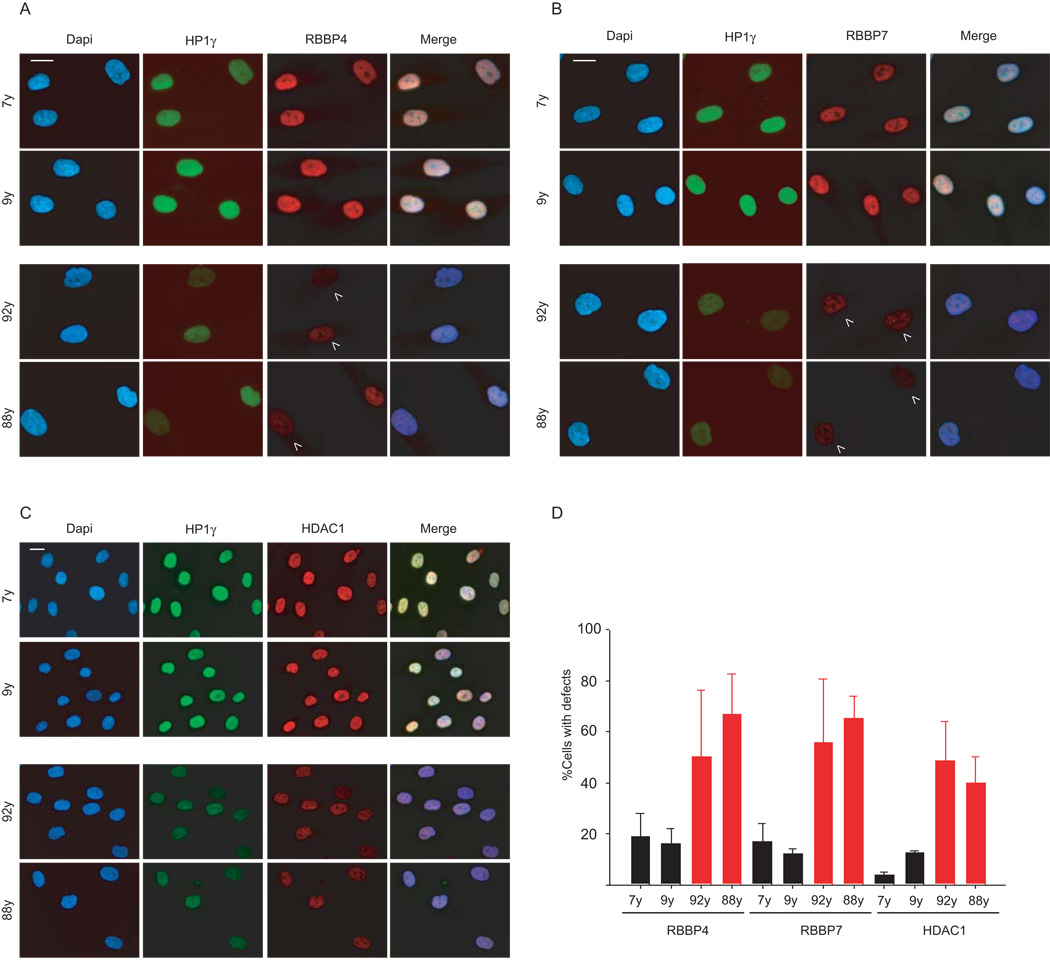
(A), (B) and (C) Immunofluorescence microscopy of passage-matched primary dermal fibroblasts from healthy young (7 yrs and 9 yrs) or old (92 yrs and 88 yrs) donors were fixed and stained with the indicated antibodies. (D) Quantitative analysis of the fluorescence intensity signal measured in dermal fibroblasts from young and old individuals. N>200; Values represent averages ± S.D. from three experiments. Arrowheads indicate cells with reduced levels of heterochromatin proteins. Scale bars: 10 µm.
Comment in
-
NURD keeps chromatin young.Nat Cell Biol. 2009 Oct;11(10):1176-7. doi: 10.1038/ncb1009-1176. Nat Cell Biol. 2009. PMID: 19794502 No abstract available.
References
-
- Liu B, et al. Genomic instability in laminopathy-based premature aging. Nature Medicine. 2005;11:780–785. - PubMed
Publication types
MeSH terms
Substances
Grants and funding
LinkOut - more resources
Full Text Sources
Other Literature Sources
Medical
Research Materials
Miscellaneous
