


Isodicentric Y chromosomes and sex disorders as byproducts of homologous recombination that maintains palindromes
- PMID: 19737515
- PMCID: PMC3616640
- DOI: 10.1016/j.cell.2009.07.042
Isodicentric Y chromosomes and sex disorders as byproducts of homologous recombination that maintains palindromes
Abstract
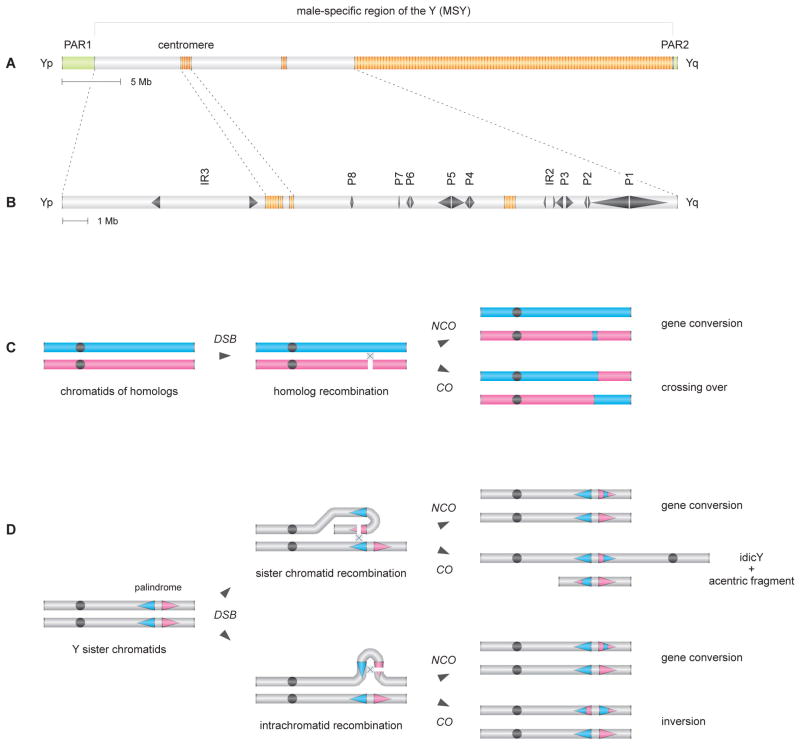
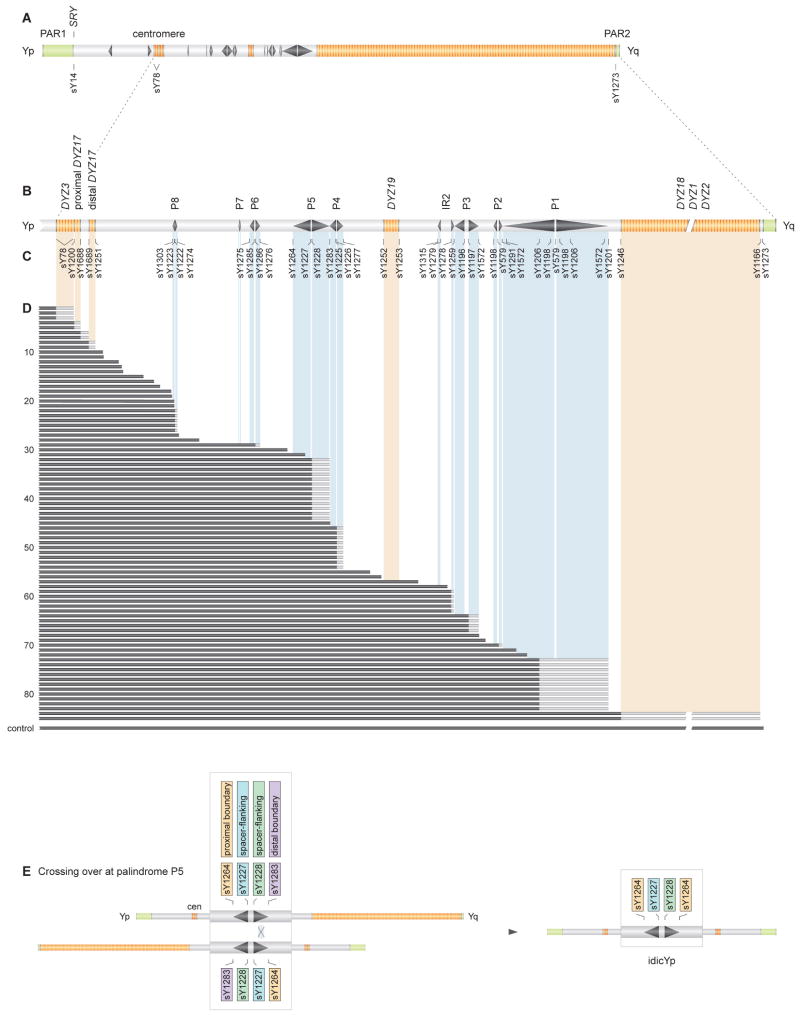
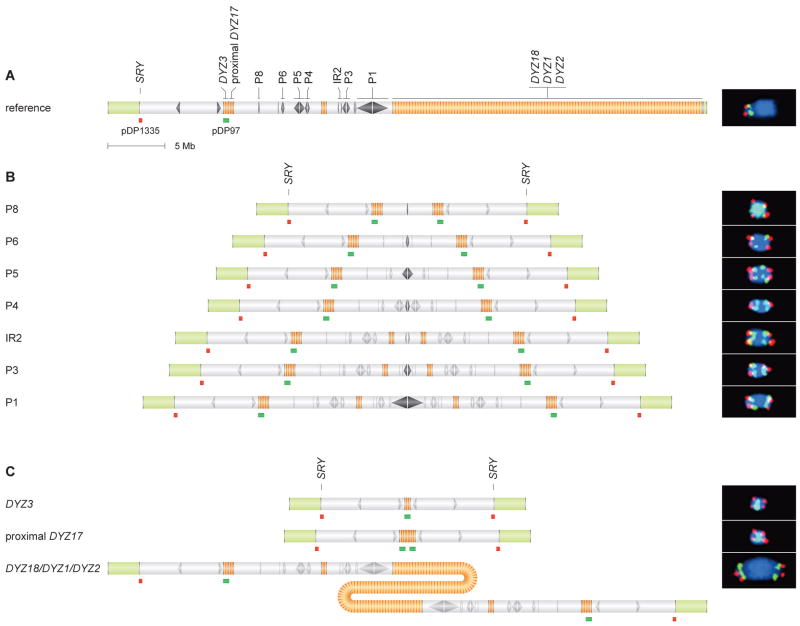
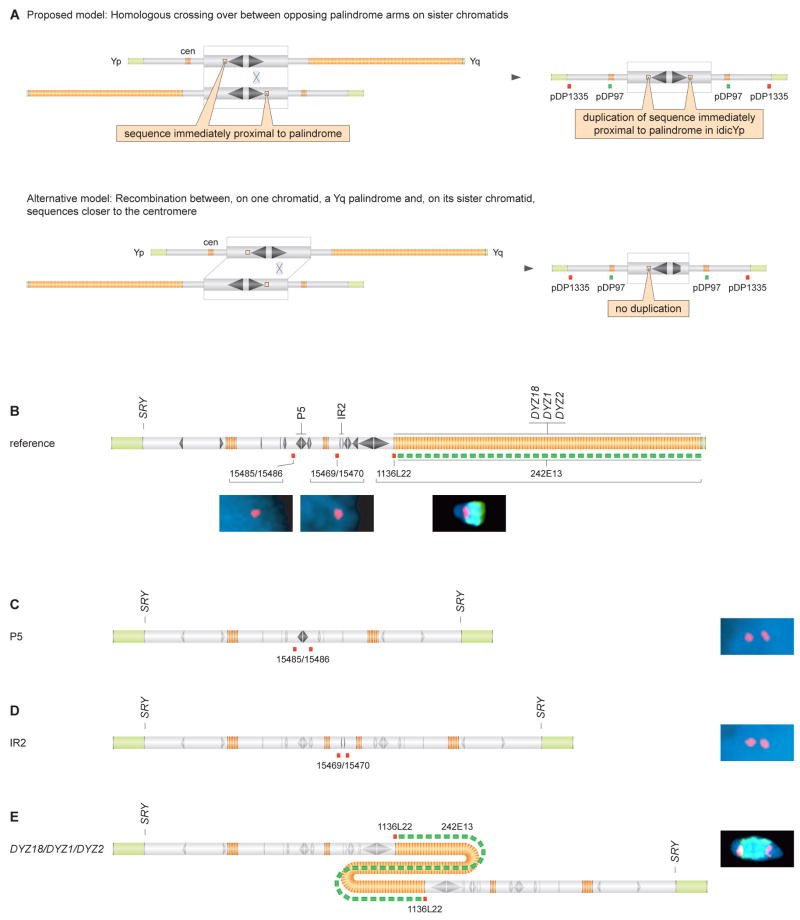
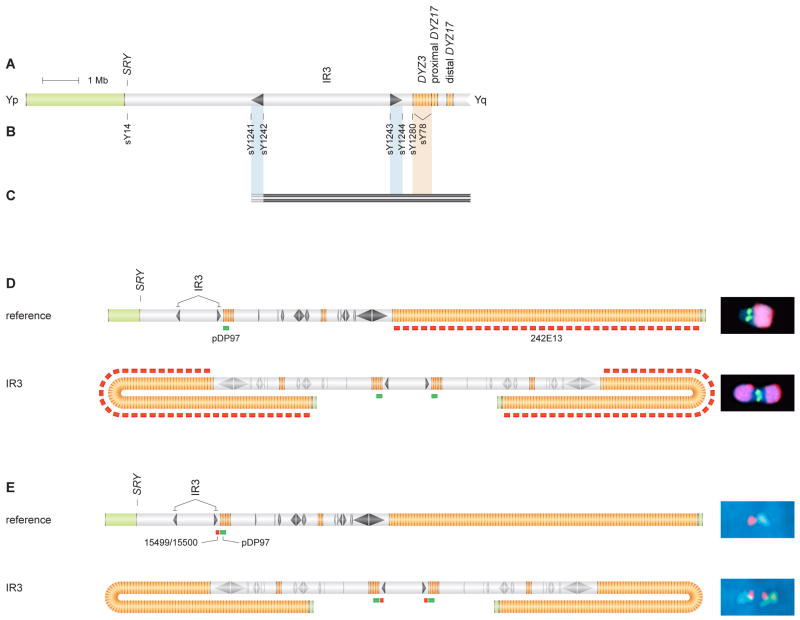
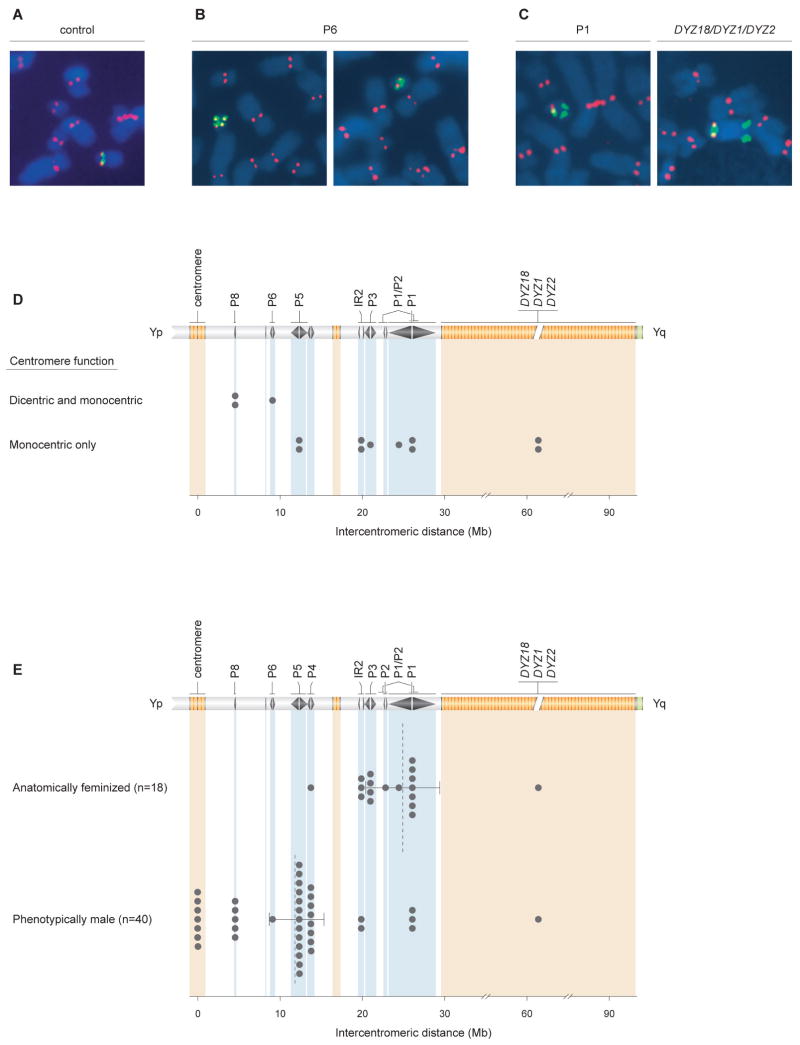
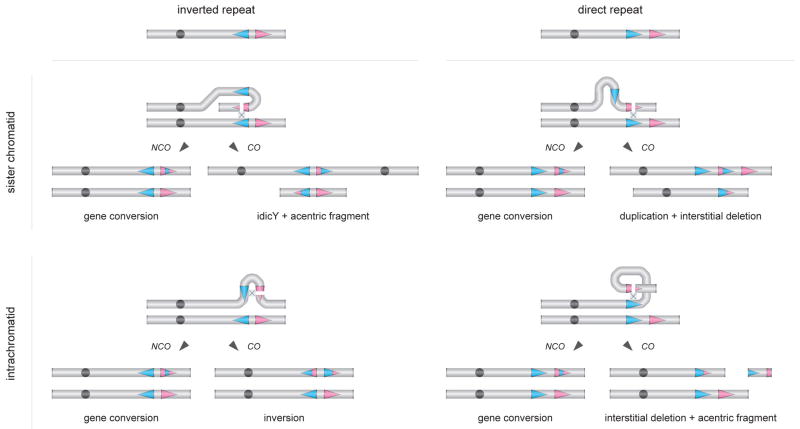
Massive palindromes in the human Y chromosome harbor mirror-image gene pairs essential for spermatogenesis. During evolution, these gene pairs have been maintained by intrapalindrome, arm-to-arm recombination. The mechanism of intrapalindrome recombination and risk of harmful effects are unknown. We report 51 patients with isodicentric Y (idicY) chromosomes formed by homologous crossing over between opposing arms of palindromes on sister chromatids. These ectopic recombination events occur at nearly all Y-linked palindromes. Based on our findings, we propose that intrapalindrome sequence identity is maintained via noncrossover pathways of homologous recombination. DNA double-strand breaks that initiate these pathways can be alternatively resolved by crossing over between sister chromatids to form idicY chromosomes, with clinical consequences ranging from spermatogenic failure to sex reversal and Turner syndrome. Our observations imply that crossover and noncrossover pathways are active in nearly all Y-linked palindromes, exposing an Achilles' heel in the mechanism that preserves palindrome-borne genes.
Figures
Comment in
-
The hows and Ys of genome integrity.Cell. 2009 Sep 4;138(5):830-2. doi: 10.1016/j.cell.2009.08.022. Cell. 2009. PMID: 19737510
References
-
- Berta P, Hawkins JR, Sinclair AH, Taylor A, Griffiths BL, Goodfellow PN, Fellous M. Genetic evidence equating SRY and the testis-determining factor. Nature. 1990;348:448–450. - PubMed
-
- Börner GV, Kleckner N, Hunter N. Crossover/noncrossover differentiation, synaptonemal complex formation, and regulatory surveillance at the leptotene/zygotene transition of meiosis. Cell. 2004;117:29–45. - PubMed
-
- Burgoyne PS, Buehr M, Koopman P, Rossant J, McLaren A. Cell-autonomous action of the testis-determining gene: Sertoli cells are exclusively XY in XX← →XY chimaeric mouse testes. Development. 1988;102:443–450. - PubMed
-
- Camargo M, Cervenka J. DNA replication and inactivation patterns in structural abnormality of sex chromosomes. I.X-A translocations, rings, fragments, isochromosomes, and pseudo-isodicentrics. Hum Genet. 1984;67:37–47. - PubMed
Publication types
MeSH terms
Grants and funding
LinkOut - more resources
Full Text Sources
