Modeling source-filter interaction in belting and high-pitched operatic male singing
- PMID: 19739766
- PMCID: PMC2757425
- DOI: 10.1121/1.3160296
Modeling source-filter interaction in belting and high-pitched operatic male singing
Abstract
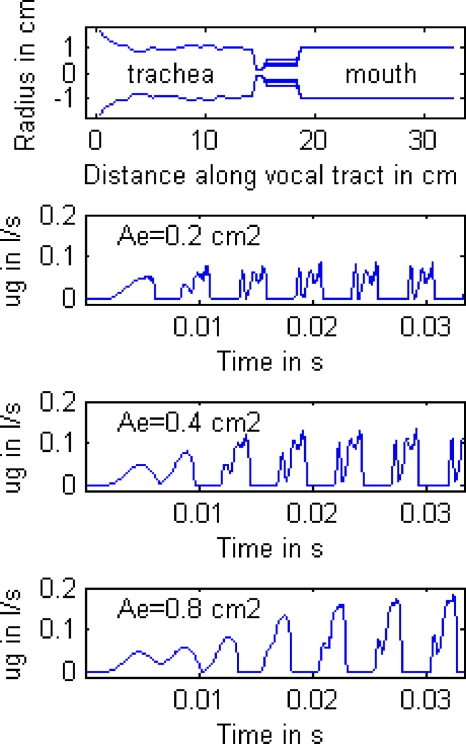
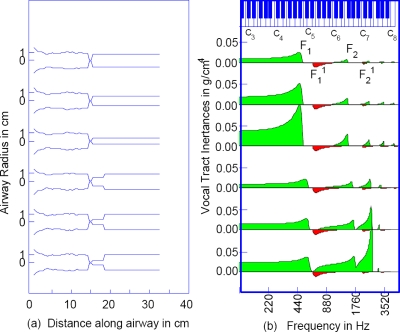
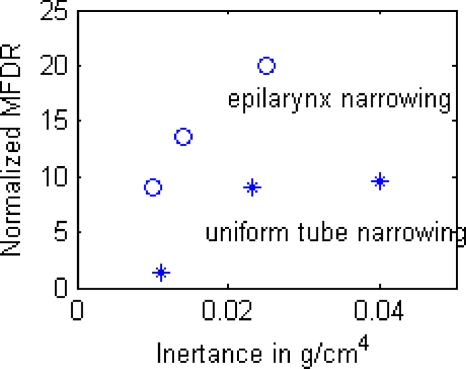
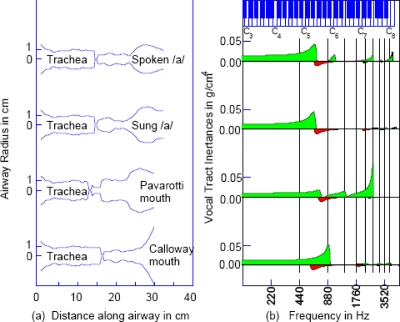
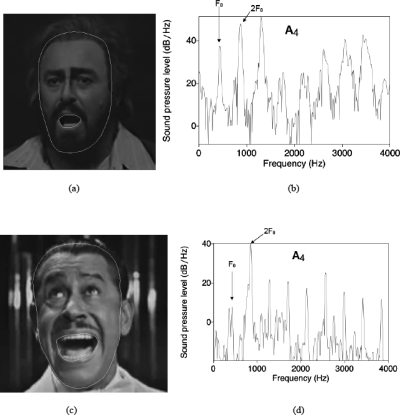
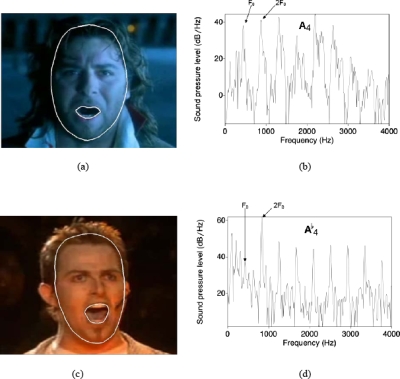
Nonlinear source-filter theory is applied to explain some acoustic differences between two contrasting male singing productions at high pitches: operatic style versus jazz belt or theater belt. Several stylized vocal tract shapes (caricatures) are discussed that form the bases of these styles. It is hypothesized that operatic singing uses vowels that are modified toward an inverted megaphone mouth shape for transitioning into the high-pitch range. This allows all the harmonics except the fundamental to be "lifted" over the first formant. Belting, on the other hand, uses vowels that are consistently modified toward the megaphone (trumpet-like) mouth shape. Both the fundamental and the second harmonic are then kept below the first formant. The vocal tract shapes provide collective reinforcement to multiple harmonics in the form of inertive supraglottal reactance and compliant subglottal reactance. Examples of lip openings from four well-known artists are used to infer vocal tract area functions and the corresponding reactances.
Figures
References
-
- Adachi, S., and Sato, M. (1996). “Trumpet sound simulation using a two-dimensional lip vibration model,” J. Acoust. Soc. Am. JASMAN 99, 1200–1209.10.1121/1.414601 - DOI
-
- Alagna, R. (2000). “E lucevan le stele” from Puccini’s opera Tosca was analyzed. The video is from a filmed performance in 2000, freely available on YouTube retrieved from http://www.youtube.com/watch?v=f6urNGBR95w (Last viewed 2∕4∕2009).
-
- Appelman, D. R. (1967). The Science of Vocal Pedagogy: Theory and Application (Indiana University Press, Bloomington, IN: ).
-
- Ayers, D. (1998). “Observation of the brass player’s lips in motion,” J. Acoust. Soc. Am. JASMAN 103, 2873–2874.10.1121/1.421530 - DOI
Publication types
MeSH terms
Grants and funding
LinkOut - more resources
Full Text Sources