The influence of facial masking and sex on older adults' impressions of individuals with Parkinson's disease
- PMID: 19739910
- PMCID: PMC2761205
- DOI: 10.1037/a0016105
The influence of facial masking and sex on older adults' impressions of individuals with Parkinson's disease
Abstract
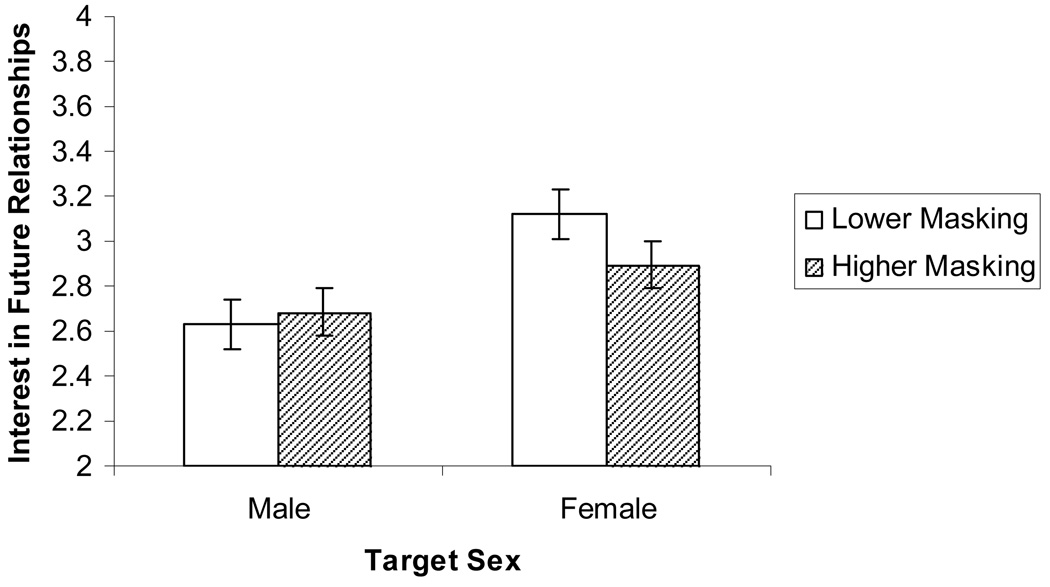
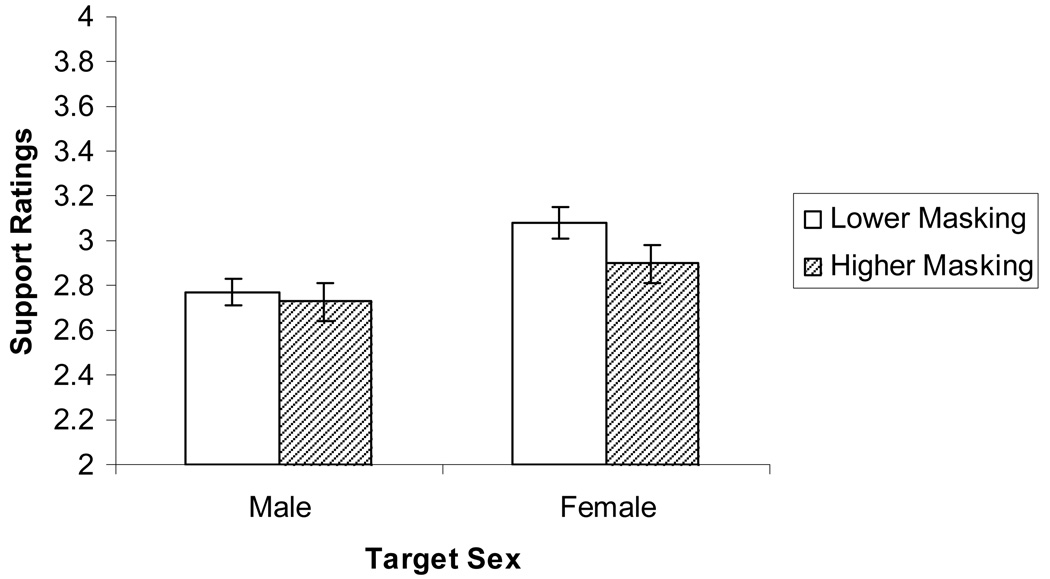
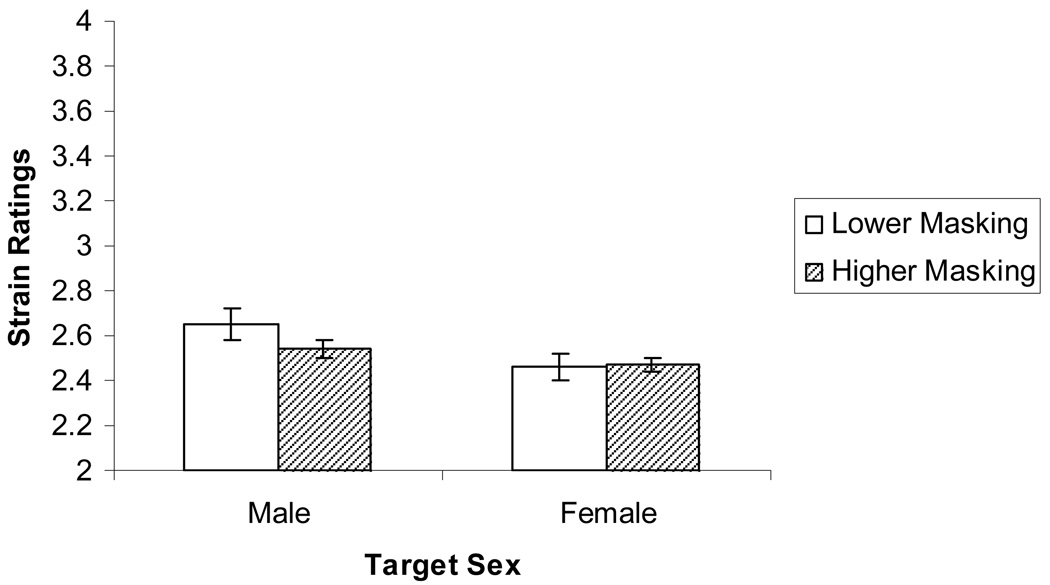
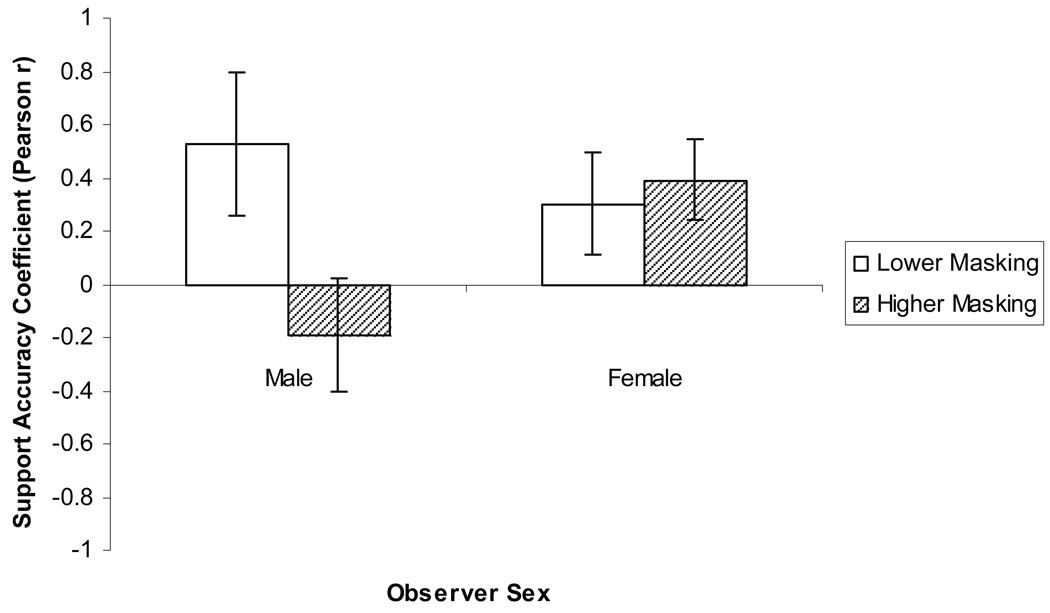
Parkinson's disease (PD) involves facial masking, which may impair social interaction. Older adult observers who viewed segments of videotaped interviews of individuals with PD expressed less interest in relationships with women with higher masking and judged them as less supportive. Masking did not affect ratings of men in these domains, possibly because higher masking violates gender norms for expressivity in women but not in men. Observers formed less accurate ratings of the social supportiveness and social strain of women than men, and higher masking decreased accuracy for ratings of strain. Results suggest that some of the problems with social relationships in PD may be due to inaccurate impressions and reduced desire to interact with individuals with higher masking, especially women.
(c) 2009 APA, all rights reserved.
Figures
References
-
- Ambady N, LaPlante D, Johnson E. Thin-slice judgments as a measure of interpersonal sensitivity. In: Hall JA, Bernieri FJ, editors. Interpersonal sensitivity: Theory and measurement. Mahwah, NJ: Lawrence Erlbaum Associates; 2001. pp. 89–101.
-
- Ambady N, Rosenthal R. Thin slices of expressive behavior as predictors of interpersonal consequences: A meta-analysis. Psychological Bulletin. 1992;111:256–274.
-
- Antonucci TC, Jackson JS. The role of reciprocity in social support. In: Sarason BR, Sarason IG, Pierce GR, editors. Social support: An interactional view. New York: John Wiley & Sons; 1990. pp. 173–198.
-
- Becker DV, Kenrick DT, Neuberg SL, Blackwell KC, Smith DM. The confounded nature of angry men and happy women. Journal of Personality and Social Psychology. 2007;92:179–190. - PubMed
-
- Blieszner R. A lifetime of caring: Dimensions and dynamics in late-life close relationships. Personal Relationships. 2006;13:1–18.