


The hypothalamic GnRH pulse generator: multiple regulatory mechanisms
- PMID: 19740674
- PMCID: PMC2769988
- DOI: 10.1016/j.tem.2009.05.002
The hypothalamic GnRH pulse generator: multiple regulatory mechanisms
Abstract
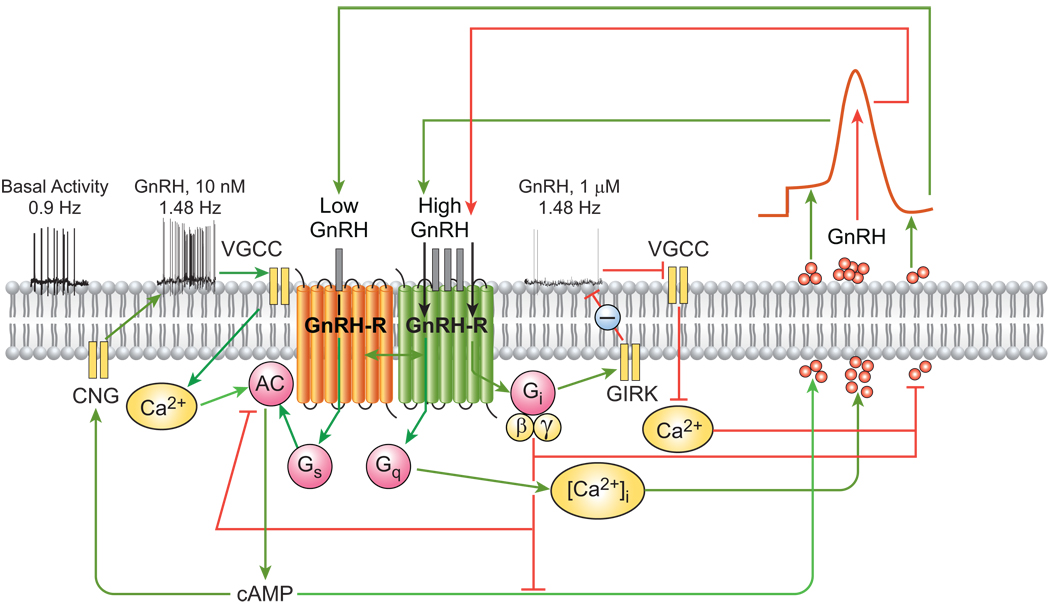
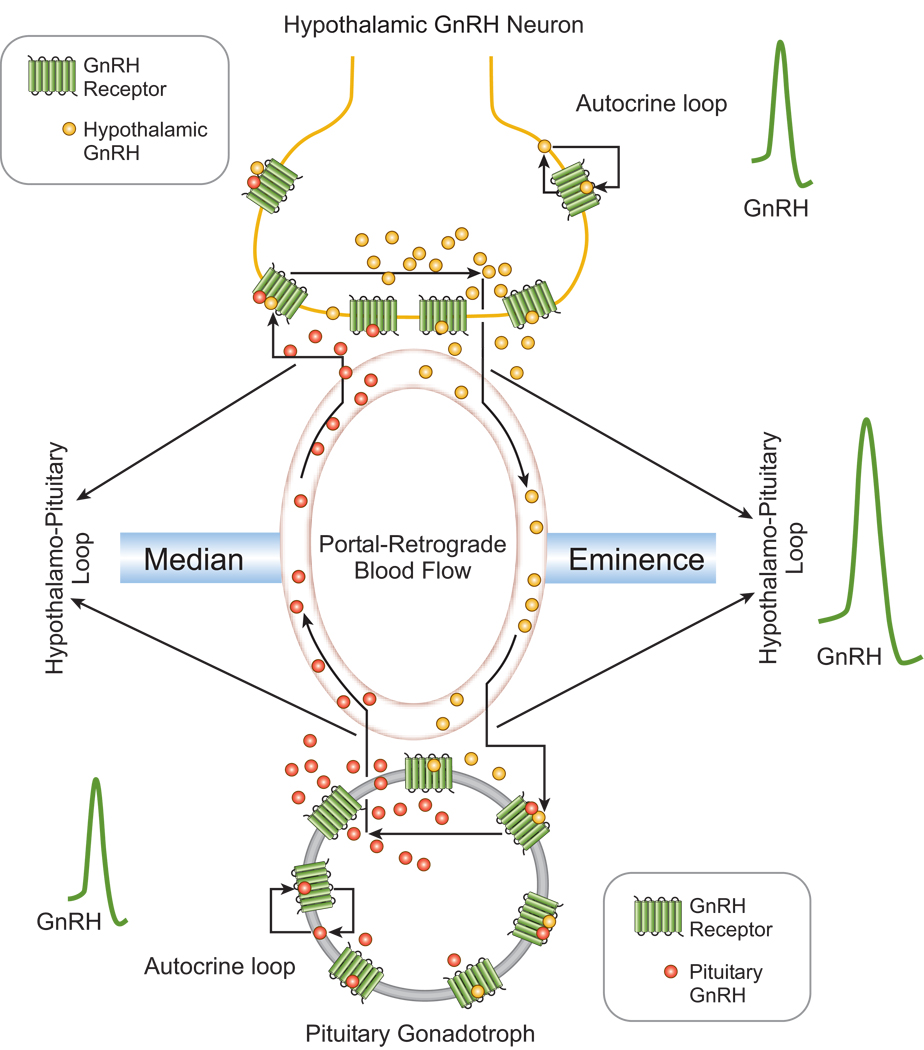
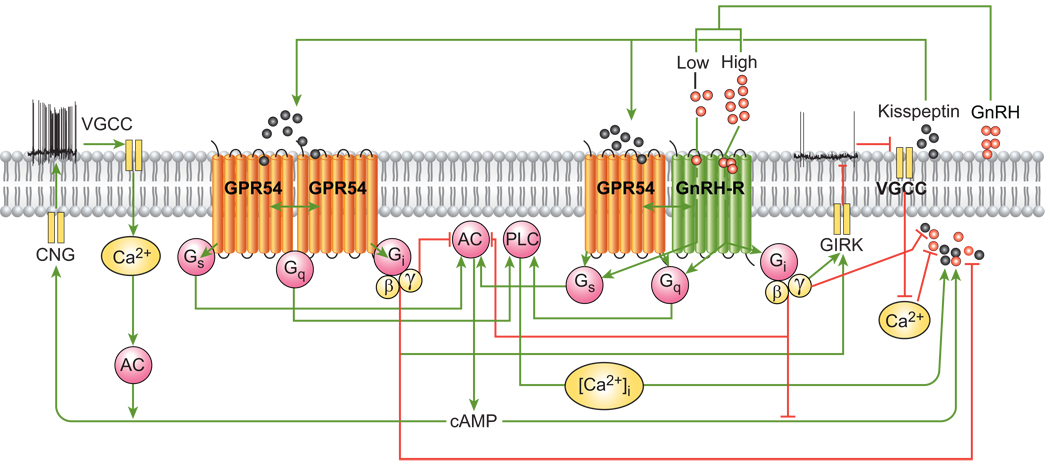
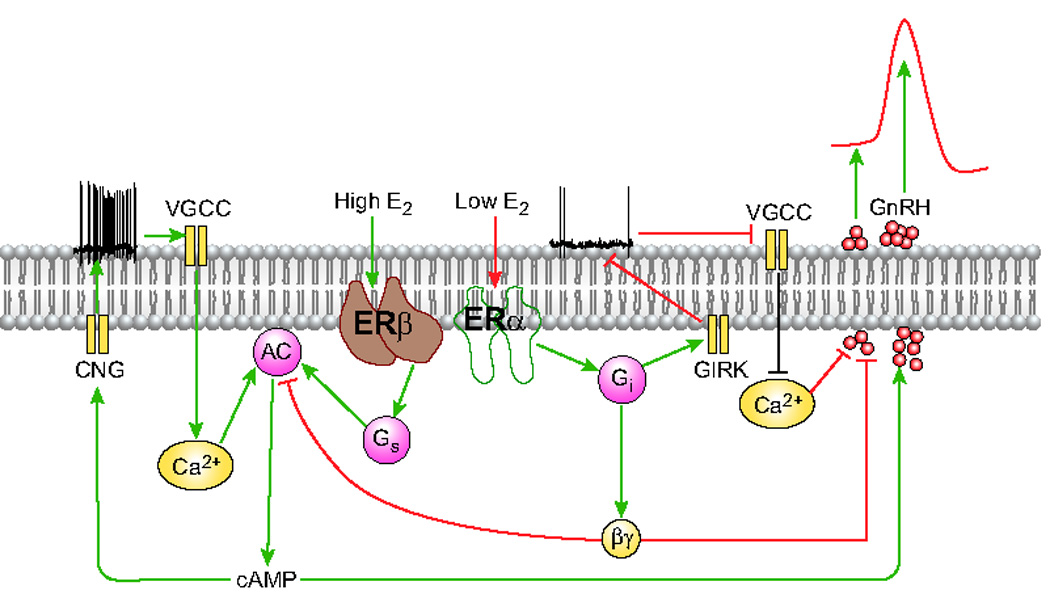
Pulsatile secretion of gonadotropin-releasing hormone (GnRH) release is an intrinsic property of hypothalamic GnRH neurons. Pulse generation has been attributed to multiple specific mechanisms, including spontaneous electrical activity of GnRH neurons, calcium and cAMP signaling, a GnRH receptor autocrine regulatory component, a GnRH concentration-dependent switch in GnRH receptor (GnRH-R) coupling to specific G proteins, the expression of G protein-coupled receptors (GPCRs) and steroid receptors, and homologous and heterologous interactions between cell membrane receptors expressed in GnRH neurons. The coexistence of multiple regulatory mechanisms for pulsatile GnRH secretion provides a high degree of redundancy in maintaining this crucial component of the mammalian reproductive process. These studies provide insights into the basic cellular and molecular mechanisms involved in GnRH neuronal function.
Figures
References
-
- Catt KJ, et al. GnRH receptors and actions in the control of reproductive function. J Steroid Biochem. 1985;23:677–689. - PubMed
-
- Rasmussen DD. Episodic gonadotropin-releasing hormone release from the rat isolated median eminence in vitro. Neuroendocrinology. 1993;58:511–518. - PubMed
-
- Krsmanovic LZ, et al. Pulsatile gonadotropin-releasing hormone release and its regulation. Trends Endocrinol Metab. 1996;7:56–59. - PubMed
-
- Terasawa E. Cellular mechanism of pulsatile LHRH release. Gen Comp Endocrinol. 1998;112:283–295. - PubMed
-
- Moenter SM, et al. Mechanisms underlying episodic gonadotropin-releasing hormone secretion. Front Neuroendocrinol. 2003;24:79–93. - PubMed
Publication types
MeSH terms
Substances
Grants and funding
LinkOut - more resources
Full Text Sources
