


Identifying genetic determinants needed to establish a human gut symbiont in its habitat
- PMID: 19748469
- PMCID: PMC2895552
- DOI: 10.1016/j.chom.2009.08.003
Identifying genetic determinants needed to establish a human gut symbiont in its habitat
Abstract
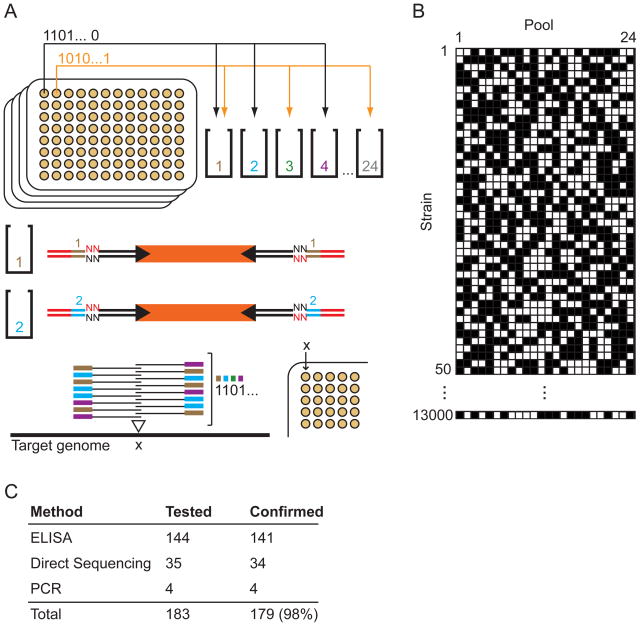
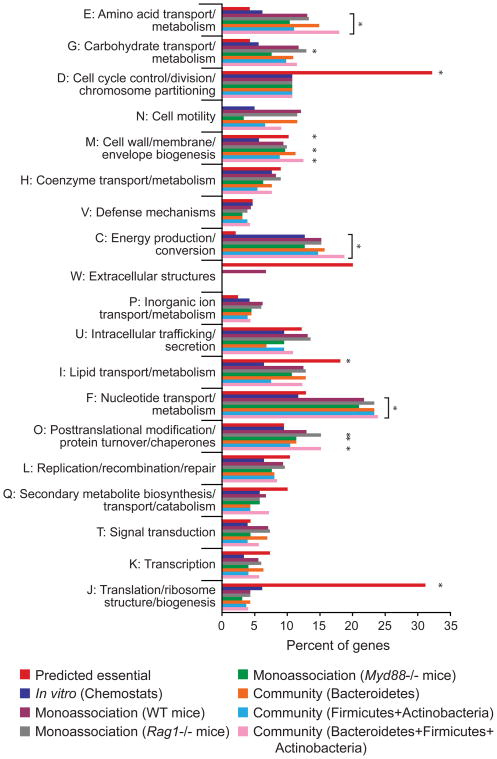
The human gut microbiota is a metabolic organ whose cellular composition is determined by a dynamic process of selection and competition. To identify microbial genes required for establishment of human symbionts in the gut, we developed an approach (insertion sequencing, or INSeq) based on a mutagenic transposon that allows capture of adjacent chromosomal DNA to define its genomic location. We used massively parallel sequencing to monitor the relative abundance of tens of thousands of transposon mutants of a saccharolytic human gut bacterium, Bacteroides thetaiotaomicron, as they established themselves in wild-type and immunodeficient gnotobiotic mice, in the presence or absence of other human gut commensals. In vivo selection transforms this population, revealing functions necessary for survival in the gut: we show how this selection is influenced by community composition and competition for nutrients (vitamin B(12)). INSeq provides a broadly applicable platform to explore microbial adaptation to the gut and other ecosystems.
Figures





References
-
- Breiman L. Random Forests. Machine Learning. 2001;45:5–32.
Publication types
MeSH terms
Associated data
- Actions
Grants and funding
LinkOut - more resources
Full Text Sources
Other Literature Sources
Molecular Biology Databases
Research Materials
