


Nuclear factor I-C links platelet-derived growth factor and transforming growth factor beta1 signaling to skin wound healing progression
- PMID: 19752192
- PMCID: PMC2772573
- DOI: 10.1128/MCB.01921-08
Nuclear factor I-C links platelet-derived growth factor and transforming growth factor beta1 signaling to skin wound healing progression
Abstract
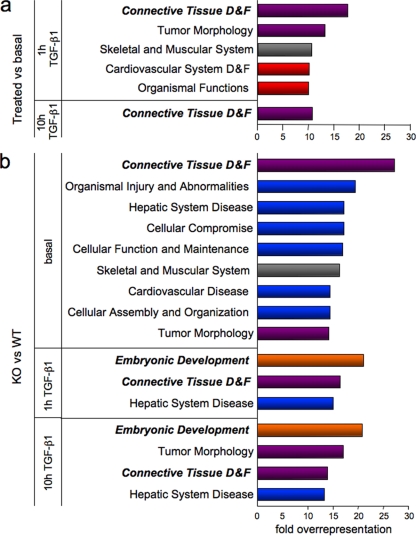
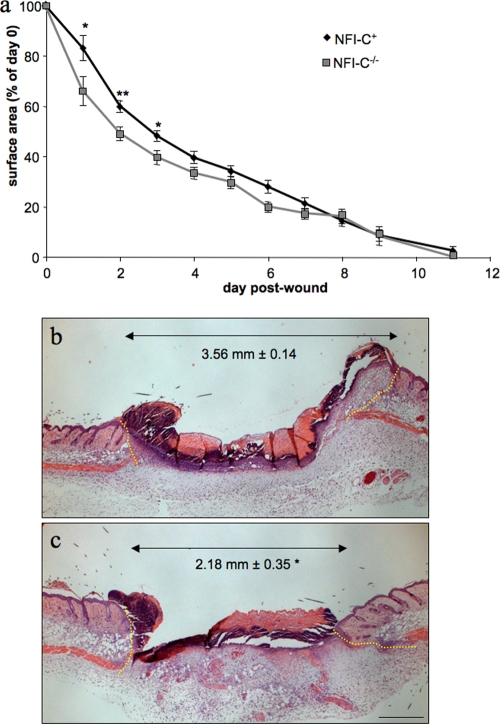
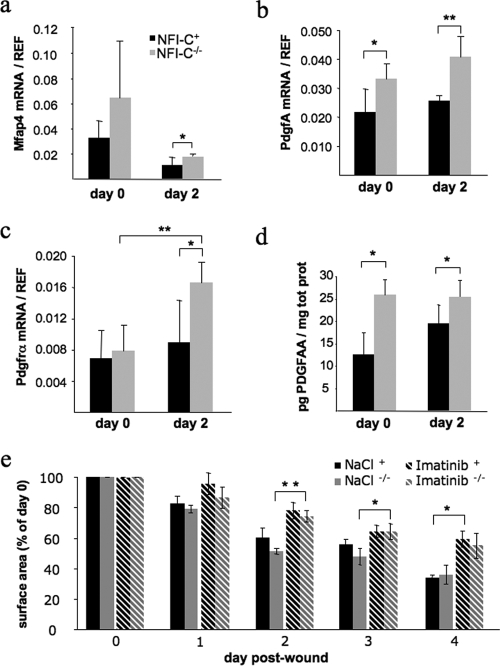
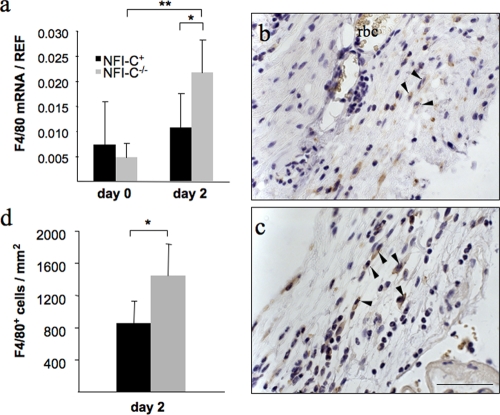
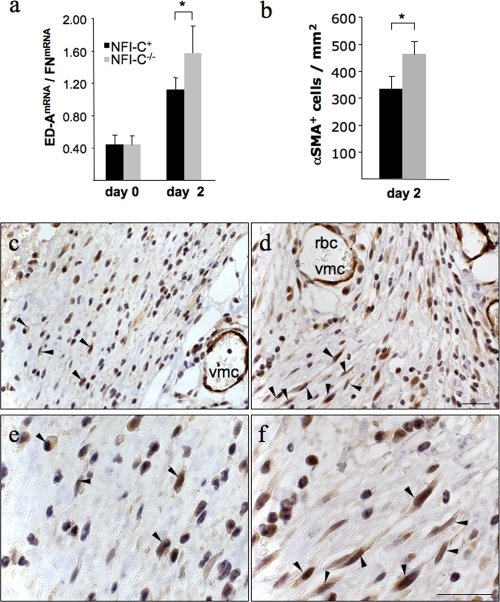
Transforming growth factor beta (TGF-beta) and platelet-derived growth factor A (PDGFAlpha) play a central role in tissue morphogenesis and repair, but their interplay remain poorly understood. The nuclear factor I C (NFI-C) transcription factor has been implicated in TGF-beta signaling, extracellular matrix deposition, and skin appendage pathologies, but a potential role in skin morphogenesis or healing had not been assessed. To evaluate this possibility, we performed a global gene expression analysis in NFI-C(-/-) and wild-type embryonic primary murine fibroblasts. This indicated that NFI-C acts mostly to repress gene expression in response to TGF-beta1. Misregulated genes were prominently overrepresented by regulators of connective tissue inflammation and repair. In vivo skin healing revealed a faster inflammatory stage and wound closure in NFI-C(-/-) mice. Expression of PDGFA and PDGF-receptor alpha were increased in wounds of NFI-C(-/-) mice, explaining the early recruitment of macrophages and fibroblasts. Differentiation of fibroblasts to contractile myofibroblasts was also elevated, providing a rationale for faster wound closure. Taken together with the role of TGF-beta in myofibroblast differentiation, our results imply a central role of NFI-C in the interplay of the two signaling pathways and in regulation of the progression of tissue regeneration.
Figures
References
-
- Alevizopoulos, A., Y. Dusserre, M. Tsai-Pflugfelder, T. von der Weid, W. Wahli, and N. Mermod. 1995. A proline-rich TGF-beta-responsive transcriptional activator interacts with histone H3. Genes Dev. 9:3051-3066. - PubMed
-
- Alonso, C. R., C. G. Pesce, and A. R. Kornblihtt. 1996. The CCAAT-binding proteins CP1 and NF-I cooperate with ATF-2 in the transcription of the fibronectin gene. J. Biol. Chem. 271:22271-22279. - PubMed
-
- Arici, A., P. C. MacDonald, and M. L. Casey. 1996. Modulation of the levels of transforming growth factor beta messenger ribonucleic acids in human endometrial stromal cells. Biol. Reprod. 54:463-469. - PubMed
-
- Baker, J., J. P. Liu, E. J. Robertson, and A. Efstratiadis. 1993. Role of insulin-like growth factors in embryonic and postnatal growth. Cell 75:73-82. - PubMed
-
- Balza, E., L. Borsi, G. Allemanni, and L. Zardi. 1988. Transforming growth factor beta regulates the levels of different fibronectin isoforms in normal human cultured fibroblasts. FEBS Lett. 228:42-44. - PubMed
Publication types
MeSH terms
Substances
LinkOut - more resources
Full Text Sources
Molecular Biology Databases
