


Lung cancer in never smokers: molecular profiles and therapeutic implications
- PMID: 19755392
- PMCID: PMC2950319
- DOI: 10.1158/1078-0432.CCR-09-0377
Lung cancer in never smokers: molecular profiles and therapeutic implications
Abstract
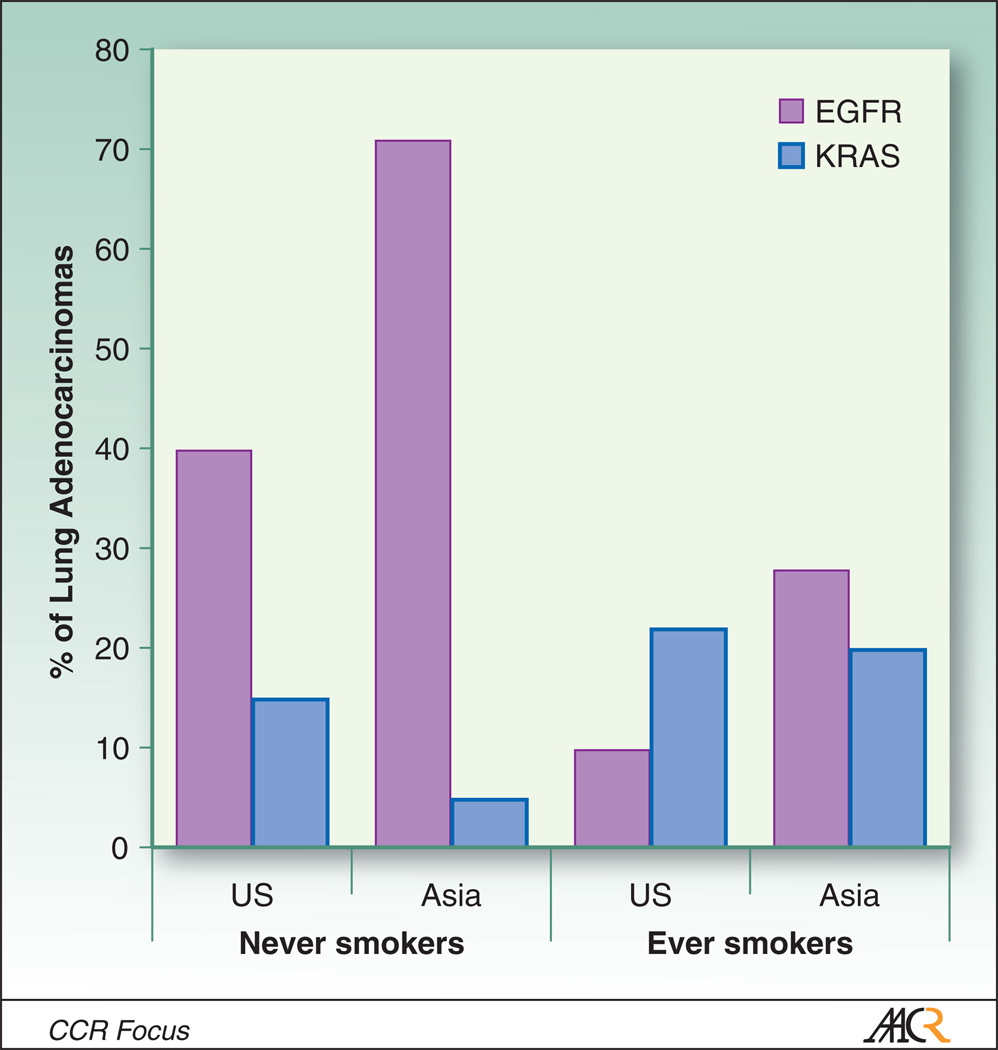
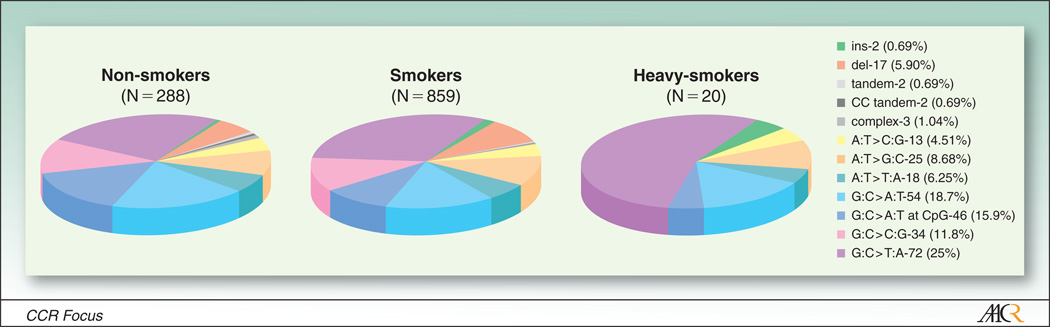
The majority of lung cancers are caused by long term exposure to the several classes of carcinogens present in tobacco smoke. Although a significant fraction of lung cancers in never smokers may also be attributable to tobacco, many such cancers arise in the absence of detectable tobacco exposure, and may follow a very different cellular and molecular pathway of malignant transformation. Recent studies summarized here suggest that lung cancers arising in never smokers have a distinct natural history, profile of oncogenic mutations, and response to targeted therapy. The majority of molecular analyses of lung cancer have focused on genetic profiling of pathways responsible for metabolism of primary tobacco carcinogens. Limited research has been conducted evaluating familial aggregation and genetic linkage of lung cancer, particularly among never smokers in whom such associations might be expected to be strongest. Data emerging over the past several years show that lung cancers in never smokers are much more likely to carry activating mutations of the epidermal growth factor receptor (EGFR), a key oncogenic factor and direct therapeutic target of several newer anticancer drugs. EGFR mutant lung cancers may represent a distinct class of lung cancers, enriched in the never-smoking population, and less clearly linked to direct tobacco carcinogenesis. These insights followed initial testing and demonstration of efficacy of EGFR-targeted drugs. Focused analysis of molecular carcinogenesis in lung cancers in never smokers is needed, and may provide additional biologic insight with therapeutic implications for lung cancers in both ever smokers and never smokers.
Figures
References
-
- Tan YK, Wee TC, Koh WP, et al. Survival among Chinese women with lung cancer in Singapore: a comparison by stage, histology and smoking status. Lung Cancer. 2003;40:237–246. - PubMed
-
- Nordquist LT, Simon GR, Cantor A, Alberts WM, Bepler G. Improved survival in never-smokers vs current smokers with primary adenocarcinoma of the lung. Chest. 2004;126:347–351. - PubMed
-
- Toh CK, Gao F, Lim WT, et al. Never-smokers with lung cancer: epidemiologic evidence of a distinct disease entity. J Clin Oncol. 2006;24:2245–2251. - PubMed
Publication types
MeSH terms
Substances
Grants and funding
LinkOut - more resources
Full Text Sources
Other Literature Sources
Medical
Research Materials
Miscellaneous
