Review
. 2009 Nov;66(22):3575-82.
doi: 10.1007/s00018-009-0142-z. Epub 2009 Sep 10.

Erythropoietin modulates the neural control of hypoxic ventilation

Affiliations
Review

Erythropoietin modulates the neural control of hypoxic ventilation

Max Gassmann et al. Cell Mol Life Sci. 2009 Nov.

Abstract

Numerous factors involved in general homeostasis are able to modulate ventilation. Classically, this comprises several kind of molecules, including neurotransmitters and steroids that are necessary for fine tuning ventilation under different conditions such as sleep, exercise, and acclimatization to high altitude. Recently, however, we have found that erythropoietin (Epo), the main regulator of red blood cell production, influences both central (brainstem) and peripheral (carotid bodies) respiratory centers when the organism is exposed to hypoxic conditions. Here, we summarize the effect of Epo on the respiratory control in mammals and highlight the potential implication of Epo in the ventilatory acclimatization to high altitude, as well as in the several respiratory sickness and syndromes occurring at low and high altitude.


Figures
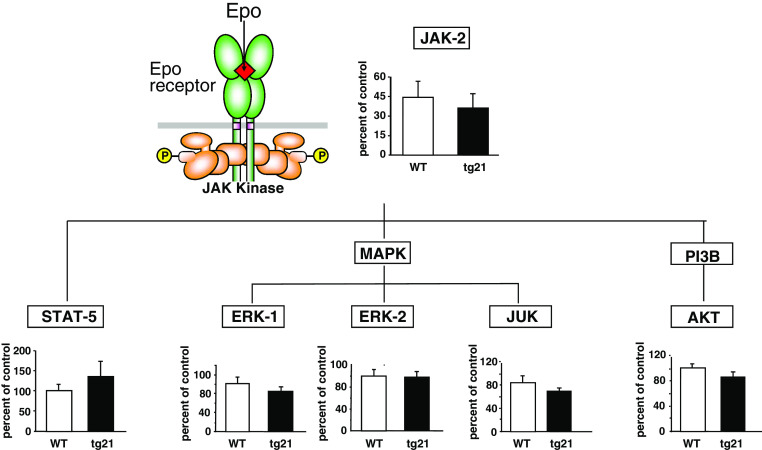
Fig. 1
Fig. 1
Transgenic mice overexpressing human Epo only in brain (tg21) does not show activation of Janus tyrosine kinase 2 (JAK-2) or corresponding downstream signal factors such as signal transducers and activators of transcription (STAT-5), extracellular-regulated kinase (ERK-1/-2), jun kinase (JNK), or serin/threonin kinase (AKT)
Fig. 2
Fig. 2
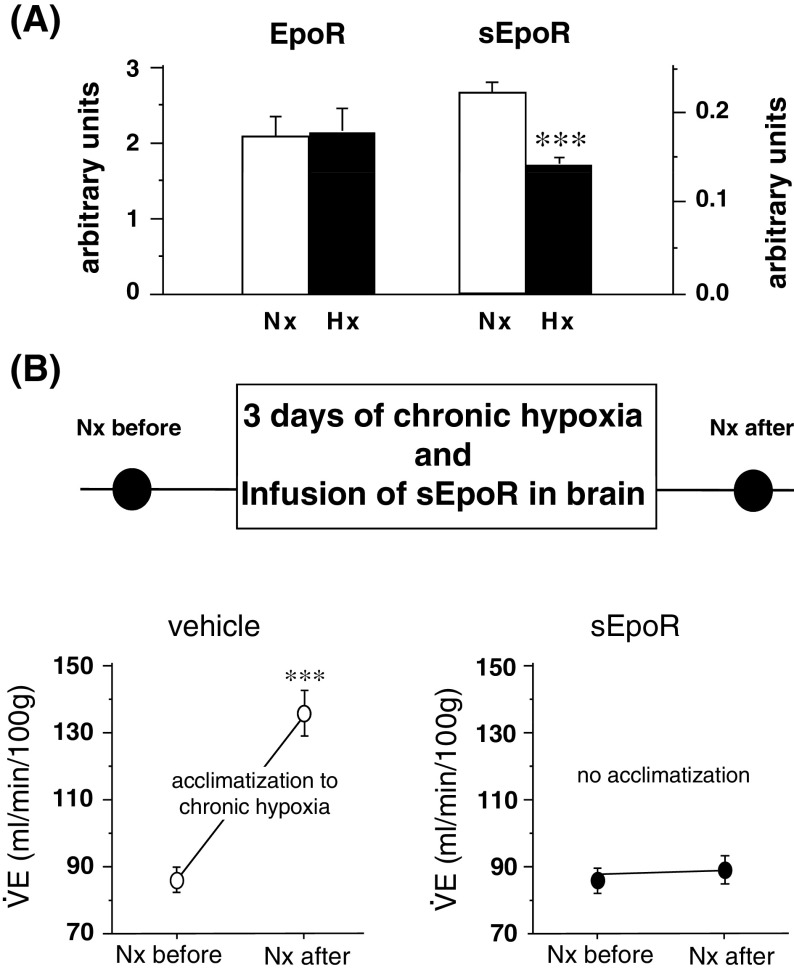
a Western blot analysis shows that Epo and sEpoR are expressed in the mouse brain. b Intracerebral infusion of sEpoR abolishes ventilatory acclimatization to chronic hypoxia. Normoxic minute ventilation was evaluated before and after animals were exposed chronically to hypoxia of 10% O2 during 3 days. After acclimatization, control animals showed large increase of normoxic ventilation. In contrast, this elevation was abolished in sEpoR-treated mice
Fig. 3
Fig. 3
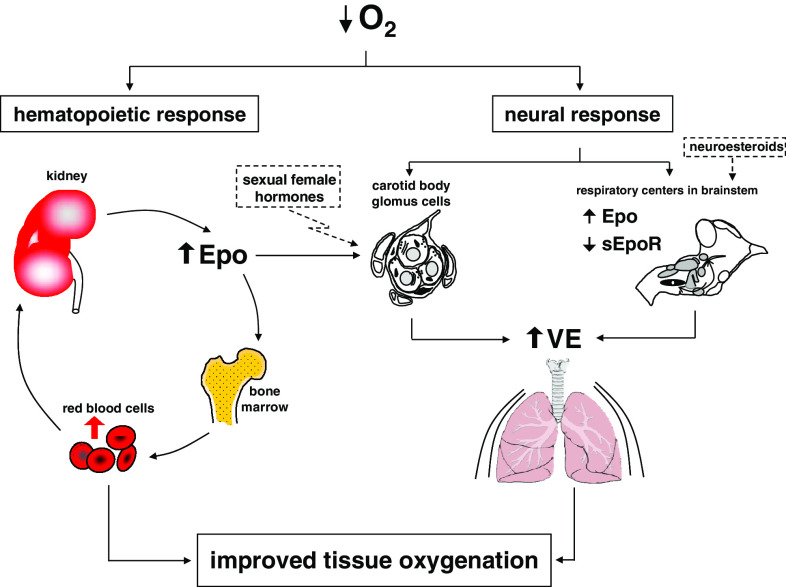
Model of ventilatory response to hypoxia showing the contribution of cerebral and plasma Epo. During the first minutes of hypoxia, carotid bodies sense the drop of arterial oxygen pressure thus leading to a fast response to hypoxia. Longer exposure to hypoxia promotes a higher secretion of Epo by the kidney. An increased level of plasma Epo augments the oxygen carrying capacity (by gradual increase of the hematocrit), but also contributes to the regulation of ventilation (VE) by regulating the activity of the carotid body glomus cells. In parallel, the level of cerebral Epo is increased in brainstem (and decreased the level of sEpoR), thus contributing to the regulation of central ventilation

References

    1. Fisher JW. Erythropoietin: physiologic, pharmacologic aspects. Proc Soc Exp Biol Med. 1997;216:358–369. - PubMed
    1. Jelkmann W. Erythropoietin: structure, control of production, function. Physiol Rev. 1992;72:449–489. - PubMed
    1. Sasaki R, Masuda S, Nagao M. Pleiotropic functions and tissue-specific expression of erythropoietin. News Physiol Sci. 2001;16:110–113. - PubMed
    1. Digicaylioglu M, Bichet S, Marti HH, Wenger RH, Rivas LA, Bauer C, Gassmann M. Localization of specific erythropoietin binding sites in defined areas of the mouse brain. Proc Natl Acad Sci USA. 1995;92:3717–3720. doi: 10.1073/pnas.92.9.3717. - DOI - PMC - PubMed
    1. Bernaudin M, Marti HH, Roussel S, Divoux D, Nouvelot A, MacKenzie ET, Petit E. A potential role for erythropoietin in focal permanent cerebral ischemia in mice. J Cereb Blood Flow Metab. 1999;19:643–651. doi: 10.1097/00004647-199906000-00007. - DOI - PubMed

MeSH terms