


Antidepressant actions of histone deacetylase inhibitors
- PMID: 19759294
- PMCID: PMC2775805
- DOI: 10.1523/JNEUROSCI.1758-09.2009
Antidepressant actions of histone deacetylase inhibitors
Abstract
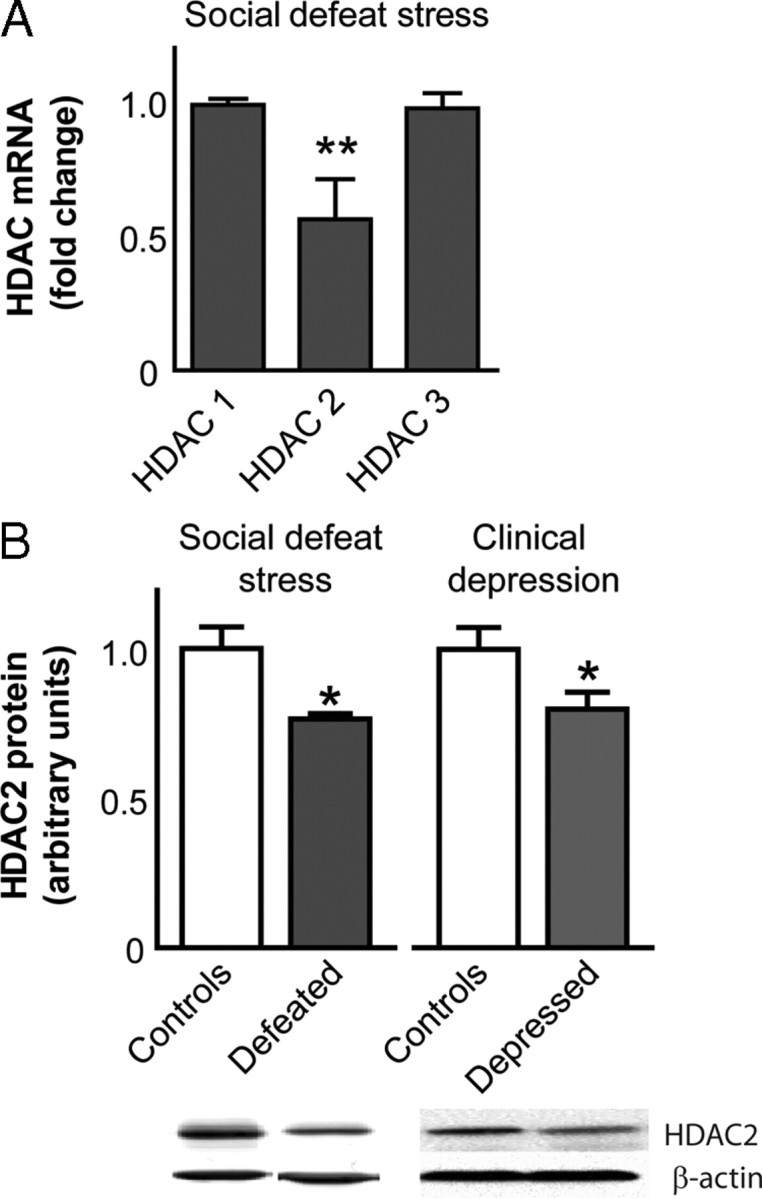
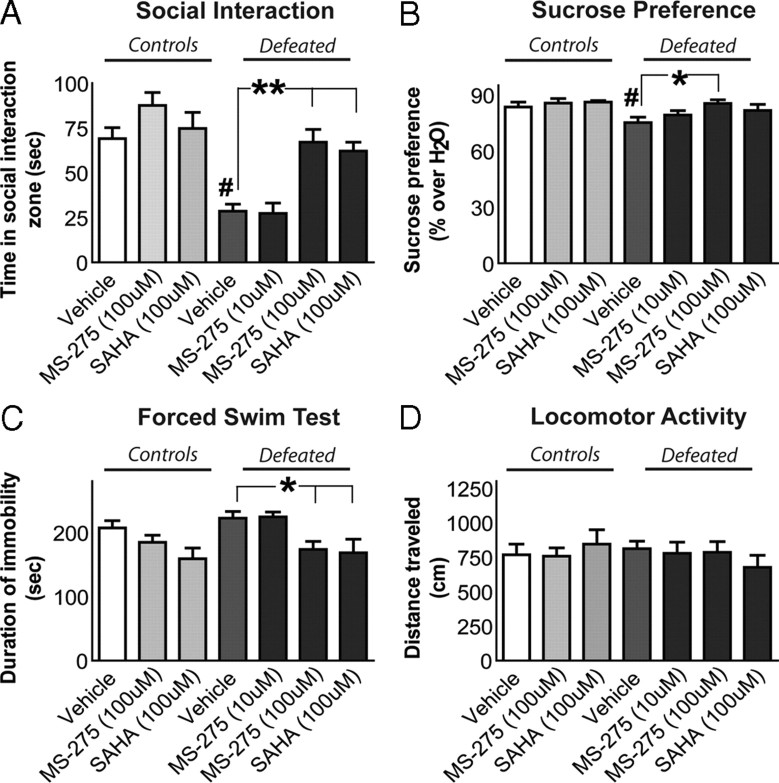
Persistent symptoms of depression suggest the involvement of stable molecular adaptations in brain, which may be reflected at the level of chromatin remodeling. We find that chronic social defeat stress in mice causes a transient decrease, followed by a persistent increase, in levels of acetylated histone H3 in the nucleus accumbens, an important limbic brain region. This persistent increase in H3 acetylation is associated with decreased levels of histone deacetylase 2 (HDAC2) in the nucleus accumbens. Similar effects were observed in the nucleus accumbens of depressed humans studied postmortem. These changes in H3 acetylation and HDAC2 expression mediate long-lasting positive neuronal adaptations, since infusion of HDAC inhibitors into the nucleus accumbens, which increases histone acetylation, exerts robust antidepressant-like effects in the social defeat paradigm and other behavioral assays. HDAC inhibitor [N-(2-aminophenyl)-4-[N-(pyridine-3-ylmethoxy-carbonyl)aminomethyl]benzamide (MS-275)] infusion also reverses the effects of chronic defeat stress on global patterns of gene expression in the nucleus accumbens, as determined by microarray analysis, with striking similarities to the effects of the standard antidepressant fluoxetine. Stress-regulated genes whose expression is normalized selectively by MS-275 may provide promising targets for the future development of novel antidepressant treatments. Together, these findings provide new insight into the underlying molecular mechanisms of depression and antidepressant action, and support the antidepressant potential of HDAC inhibitors and perhaps other agents that act at the level of chromatin structure.
Figures



References
-
- Anisman H, Zacharko RM. Behavioral and neurochemical consequences associated with stressors. Ann N Y Acad Sci. 1986;467:205–225. - PubMed
-
- Bellocchio EE, Reimer RJ, Fremeau RT, Jr, Edwards RH. Uptake of glutamate into synaptic vesicles by an inorganic phosphate transporter. Science. 2000;289:957–960. - PubMed
-
- Bennett SA, Arnold JM, Chen J, Stenger J, Paul DL, Roberts DC. Long-term changes in connexin32 gap junction protein and mRNA expression following cocaine self-administration in rats. Eur J Neurosci. 1999;11:3329–3338. - PubMed
-
- Berton O, Nestler EJ. New approaches to antidepressant drug discovery: beyond monoamines. Nat Rev Neurosci. 2006;7:137–151. - PubMed
-
- Berton O, McClung CA, Dileone RJ, Krishnan V, Renthal W, Russo SJ, Graham D, Tsankova NM, Bolanos CA, Rios M, Monteggia LM, Self DW, Nestler EJ. Essential role of BDNF in the mesolimbic dopamine pathway in social defeat stress. Science. 2006;311:864–868. - PubMed
Publication types
MeSH terms
Substances
Grants and funding
LinkOut - more resources
Full Text Sources
Other Literature Sources
Medical
Molecular Biology Databases
