. 2010 Jan 25;141(2):177-82.
doi: 10.1016/j.jconrel.2009.09.007. Epub 2009 Sep 15.

Human growth hormone-transferrin fusion protein for oral delivery in hypophysectomized rats

Affiliations

Human growth hormone-transferrin fusion protein for oral delivery in hypophysectomized rats

Nurmamet Amet et al. J Control Release. .

Abstract

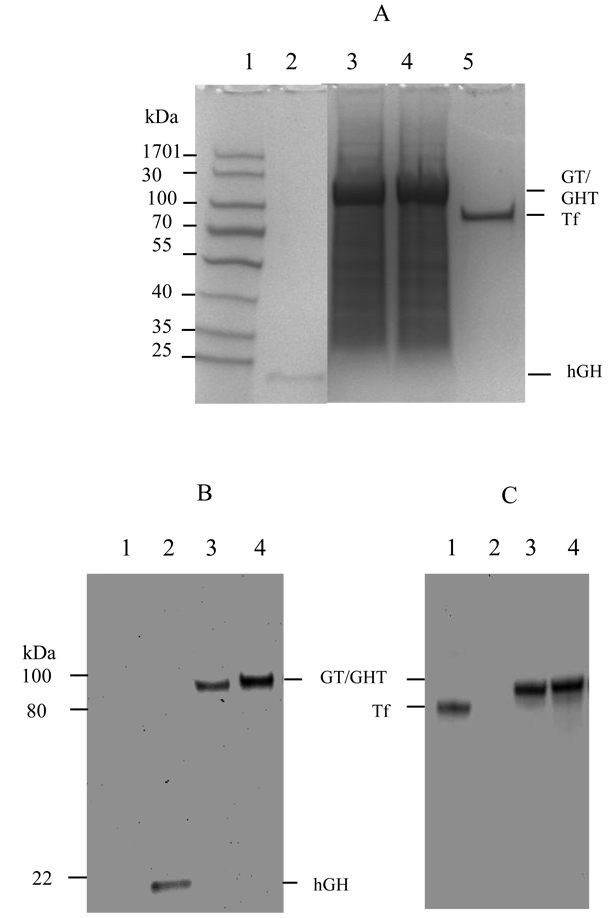
Transferrin (Tf)-based recombinant fusion protein approach was investigated to achieve oral delivery for human growth hormone (hGH). Plasmid constructs expressing the fusion proteins were established by fusing coding sequences of both hGH and Tf in frame. Fusion proteins were produced in serum free media by transient transfection of human embryonic kidney HEK293 cells. The SDS-PAGE analysis of conditioned media showed that fusion proteins expressed at high purity with a 100 kDa molecular weight; the Western blot analysis with anti-hGH and anti-Tf antibodies verified the identity of fusion proteins. The Nb2 cell proliferation and Caco-2 cell Tf receptor (TfR) binding assays demonstrated that fusion proteins retained bioactivity of both hGH and Tf, respectively. A helical linker was inserted as spacer between hGH- and Tf-domain to enhance the bioactivity and the yield of the fusion protein. Two fusion proteins, hGH-Tf (GT) and hGH-(H4)(2)-Tf (GHT) were obtained and assessed in hGH-deficient hypophysectomized rats for in vivo biological activity. Results from seven-day subcutaneous dosing (1.25mg/kg/day) demonstrated that both GT and GHT fusion proteins were bioactive in vivo, comparable to native hGH. However, only the GHT, but not GT, fusion protein promoted a modest but statistically significant weight gain after oral dosing with 12.5mg/kg/day.


Figures

Fig. 1
Fig. 1
Expression and confirmation of GT and GHT fusion protein by SDS-PAGE (A) and Western blot (B and C) analysis. A. Samples from conditioned media were analyzed for fusion protein expression on a SDS-PAGE gel, stained with Coomassie blue. Lane 1: molecular weight marker; lane 2: hGH; lane 3: GT fusion protein; lane 4: GHT fusion protein; lane 5:Tf. B. Samples from conditioned media were analyzed by Western blot using anti-hGH (B) and anti-Tf antibody (C). Lane 1: Tf; lane 2: hGH; lane 3: GT fusion protein; lane 4: GHT fusion protein.
Fig. 2
Fig. 2
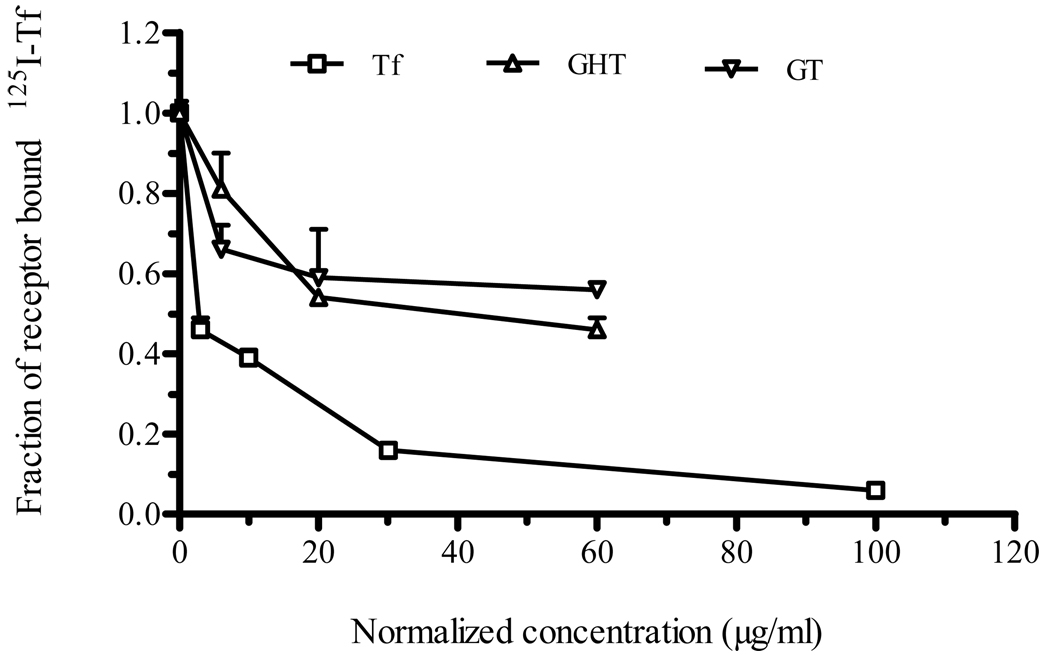
Fusion protein demonstrated TfR binding activity. Both GT and GHT fusion proteins were assessed for Tf bioactivity using a TfR competition binding assay in which different doses of GT or GHT fusion protein was added to CaCo-2 cells in the presence of radioactively labeled-Tf (125I-Tf). Data were collected as triplicates and represent one of several independent experiments; each data point is mean ± SEM (n = 3).
Fig. 3
Fig. 3
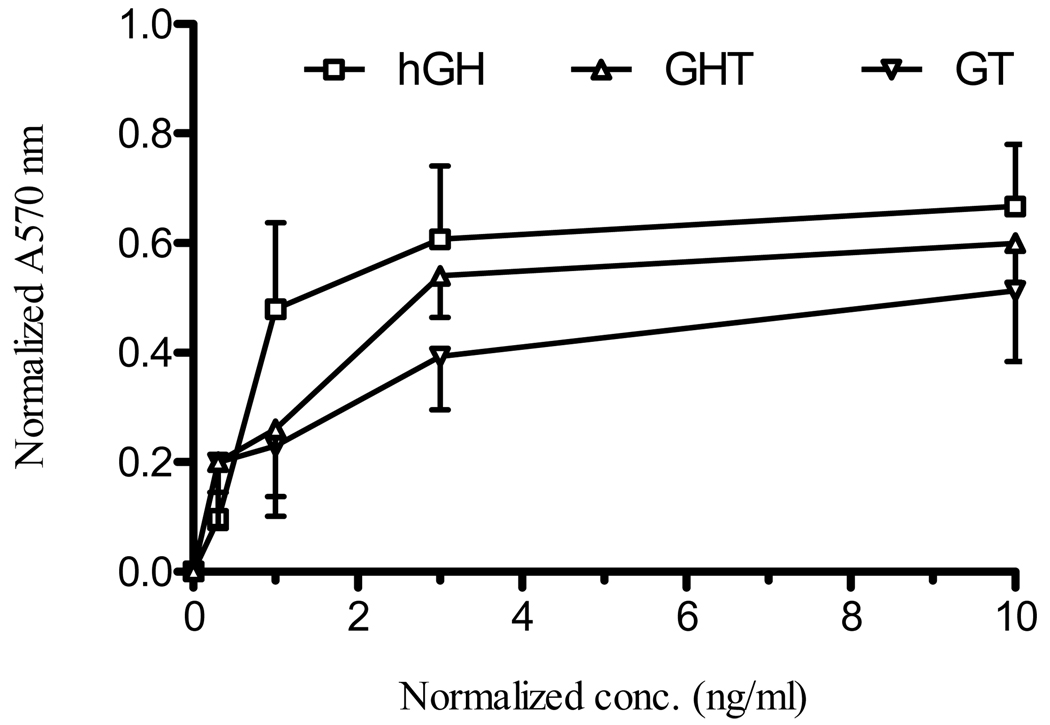
Stimulation with fusion protein triggered Nb2 cell proliferation. To further assess GT and GHT fusion proteins for hGH bioactivity, Nb2 cells were starved for 24 hr in assay media and treated with different doses of hGH, GT or GHT fusion protein. After four day incubation, Nb2 cells were stained with alamar-blue dye overnight and UV absorbance was measured at 570 nm. The absorbance values were then normalized to that of un-treated control. Data represent mean ± SEM (n = 3).
Fig. 4
Fig. 4
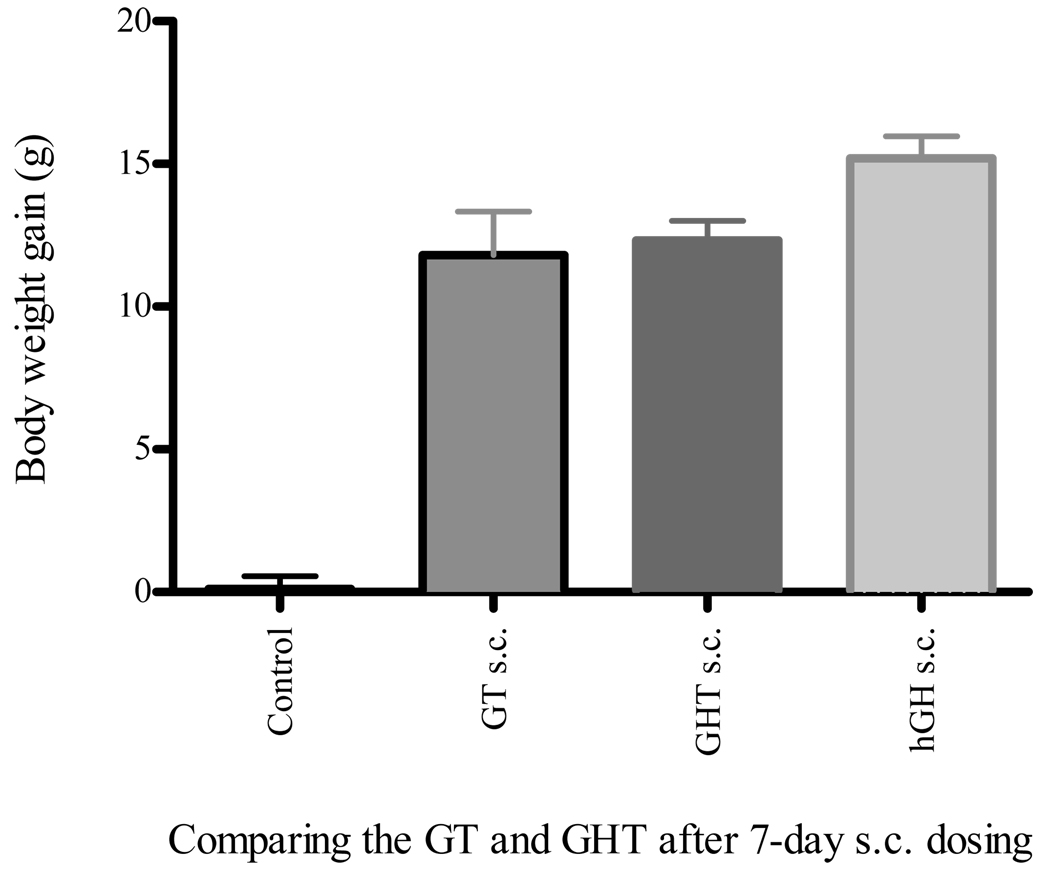
Both GT and GHT fusion proteins showed intrinsic in vivo bioactivity after subcutaneous dosing. The hypophysectomized rats that did not gain body weight during the pre-screening period were randomized to four groups and evaluated for intrinsic bioactivity. The fasted rats were then subcutaneously administered (s.c.) with vehicle control, hGH (0.25 mg/kg), GT (1.25 mg/kg), or GHT (1.25 mg/kg), for 7-consecutive days, respectively. The weight gain was determined by subtracting the weight on the day of dosing (day 1) from that of last day of dosing (day 8). Data represent mean of body weight gain ± SEM (n = 5, except GHT s.c. where n = 4).
Fig. 5
Fig. 5
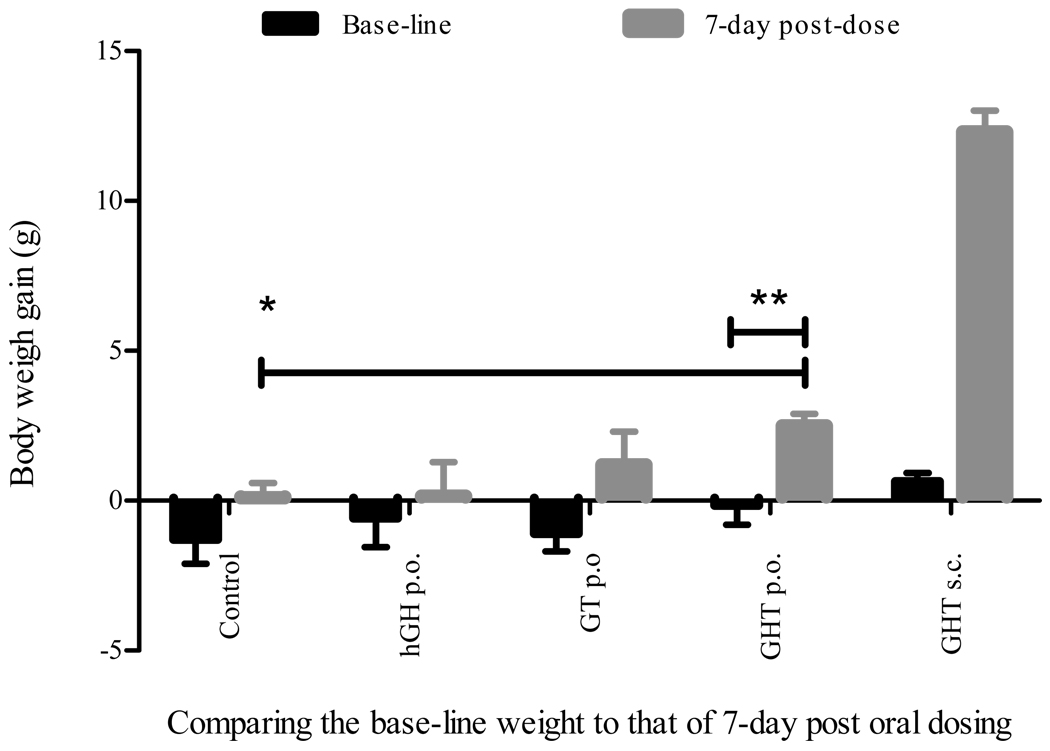
Oral administration of the GHT fusion protein led to body weight gain. Body weight of the hypophysectomized rats were monitored for 7-days and the base-line weight were established for five experimental groups. The fasted rats were orally administered (p.o.) with GHT fusion protein (12.5 mg/kg), GT fusion protein (12.5 mg/kg), hGH (2.5 mg/kg), and vehicle control for 7-consecutive days, respectively, and one group of rats were given GHT fusion protein s.c. as a positive control. The body weight gain was determined by subtracting the weight on the day of dosing (day 1) from that of one day after last dosing (day 8), and then compared to that of base-line weight. Data represent mean of body weight gain ± SEM (n = 5, except GHT s.c. where n = 4 and vehicle control where n = 3). The two-tailed t-test showed that the differences of base line weight gain versus oral GHT weight gain and of the vehicle control versus oral GHT weight gain were both statistically significant (**p < 0.01, *p < 0.01). However, the difference between base line weight versus 7-day oral dosing with GT, hGH, or control was not significant (p > 0.1).

References

    1. Chen Y, Shen Y, Guo X, Zhang C, Yang W, Ma M, Liu S, Zhang M, Wen LP. Transdermal protein delivery by a coadministered peptide identified via phage display. Nat Biotechnol. 2006;24:455–460. - PubMed
    1. Bosquillon C, Préat V, Vanbever R. Pulmonary delivery of growth hormone using dry powders and visualization of its local fate in rats. J Control Release. 2004;96(2):233–244. - PubMed
    1. Hussain A, Arnold JJ, Khan MA, Ahsan F. Absorption enhancers in pulmonary protein delivery. J Control Release. 2004;94(1):15–24. - PubMed
    1. Shen WC. Oral peptide and protein delivery: unfulfilled promises? Drug Discov Today. 2003;8(14):607–608. - PubMed
    1. Mehta NM. Oral delivery and recombinant production of peptide hormones. Part I: Making oral delivery possible. Biopharm Int. 2004;17(6):38–43.

Publication types

MeSH terms