


Maternal exposure to particulate matter increases postnatal ozone-induced airway hyperreactivity in juvenile mice
- PMID: 19762564
- PMCID: PMC2796733
- DOI: 10.1164/rccm.200901-0116OC
Maternal exposure to particulate matter increases postnatal ozone-induced airway hyperreactivity in juvenile mice
Retraction in
-
Retraction: Maternal Exposure to Particulate Matter Increases Postnatal Ozone-induced Airway Hyperreactivity in Juvenile Mice.Am J Respir Crit Care Med. 2016 Mar 1;193(5):582. doi: 10.1164/rccm.1934retraction. Am J Respir Crit Care Med. 2016. PMID: 26930439 Free PMC article. No abstract available.
Abstract
Rationale: Epidemiologic studies implicate air pollutant exposure during pregnancy as a risk factor for wheezing in offspring. Ozone exposure is linked to exacerbations of wheezing in children.
Objectives: To determine if maternal pulmonary exposure to traffic-related particles during pregnancy augments ozone-induced airway hyperresponsiveness in offspring.
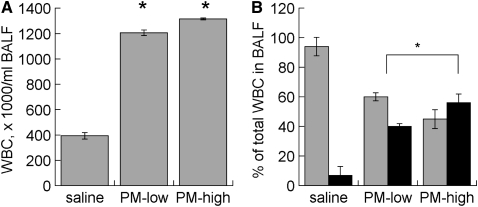
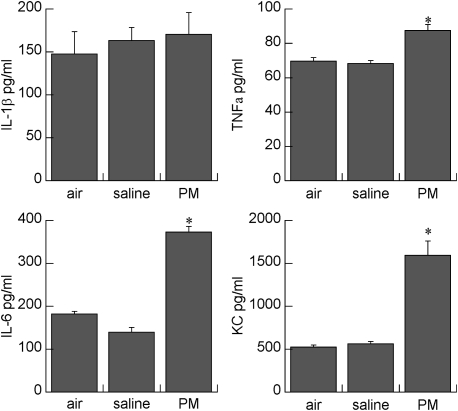
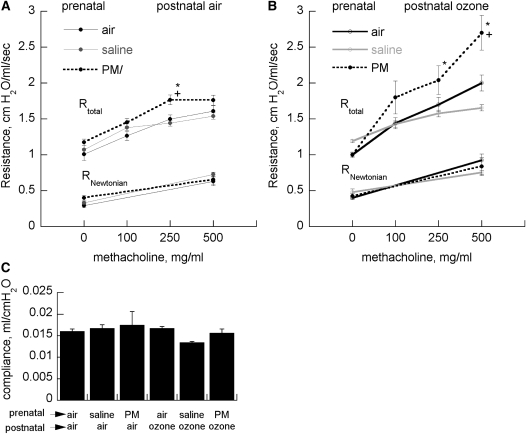
Methods: C57BL6 time-mated mice were given NIST SRM#1648 (particulate matter [PM]) 0.48 mg, saline vehicle, or no treatment by tracheal insufflation twice weekly for 3 weeks. PM exposure augmented maternal lung inflammation and placental TNF-alpha, Keratinocyte-derived cytokine (KC), and IL-6 (measured at gestation Day 18). After parturition, dams and litters were exposed to air or ozone 1 ppm 3 h/d, every other day, thrice weekly for 4 weeks. Respiratory system resistance in pups was measured at baseline and after administration of nebulized methacholine.
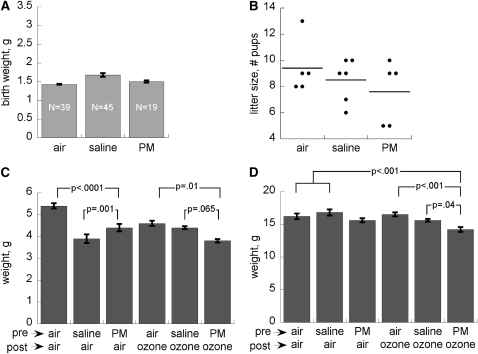
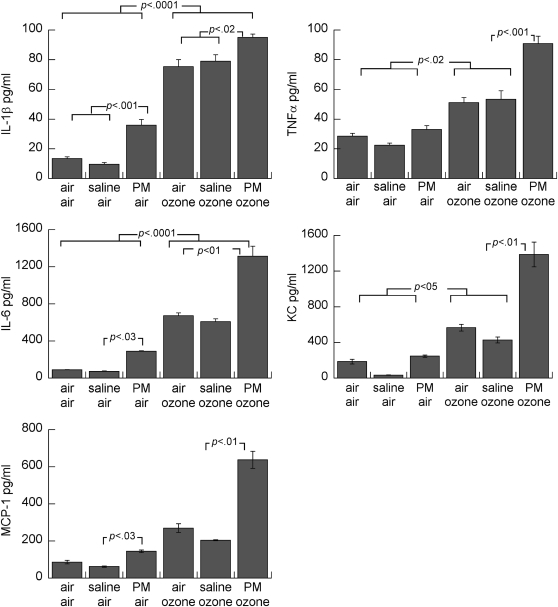
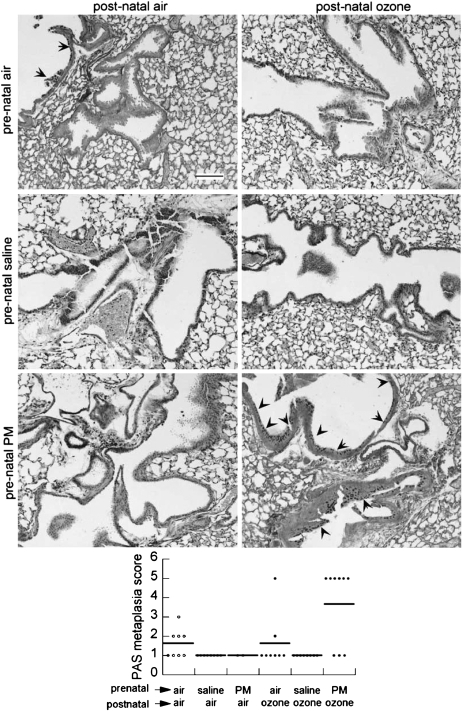
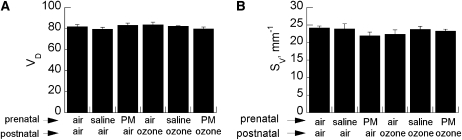
Measurements and main results: Ozone increased airway hyperresponsiveness, but the increase was greatest in pups born to PM-treated dams. Whole-lung TNF-alpha, IL-1beta, KC, IL-6, and MCP-1 were increased in ozone-treated pups, with the greatest increase in pups born to dams given PM. Airway epithelial mucous metaplasia estimated by periodic acid-Schiff Alcian blue staining was increased in ozone-exposed pups born to PM-treated dams. Alveolar development, determined by morphometry, and airway smooth muscle bulk, estimated using alpha-actin histochemistry, were unaffected by prenatal or postnatal treatment.
Conclusions: Maternal pulmonary exposure to PM during pregnancy augments placental cytokine expression and postnatal ozone-induced pulmonary inflammatory cytokine responses and ozone-induced airway hyperresponsiveness without altering airway structure.
Figures
Comment in
-
Findings of Research Misconduct.Fed Regist. 2019 Nov 7;84(216):60097-60098. Fed Regist. 2019. PMID: 37547121 Free PMC article. No abstract available.
References
-
- Kurukulaaratchy RJ, Waterhouse L, Matthews SM, Arshad SH. Are influences during pregnancy associated with wheezing phenotypes during the first decade of life? Acta Paediatr 2005;94:553–558. - PubMed
-
- Gilliland F, Avol E, Kinney P, Jerrett M, Dvonch T, Lurmann F, Buckley T, Breysse P, Keeler G, de Villiers T, et al. Air pollution exposure assessment for epidemiologic studies of pregnant women and children: lessons learned from the centers for children's environmental health and disease prevention research. Environ Health Perspect 2005;113:1447–1454. - PMC - PubMed
Publication types
MeSH terms
Substances
Grants and funding
LinkOut - more resources
Full Text Sources
Medical
Miscellaneous
