


Correlates and consequences of spanking and verbal punishment for low-income white, african american, and mexican american toddlers
- PMID: 19765008
- PMCID: PMC2987237
- DOI: 10.1111/j.1467-8624.2009.01341.x
Correlates and consequences of spanking and verbal punishment for low-income white, african american, and mexican american toddlers
Abstract
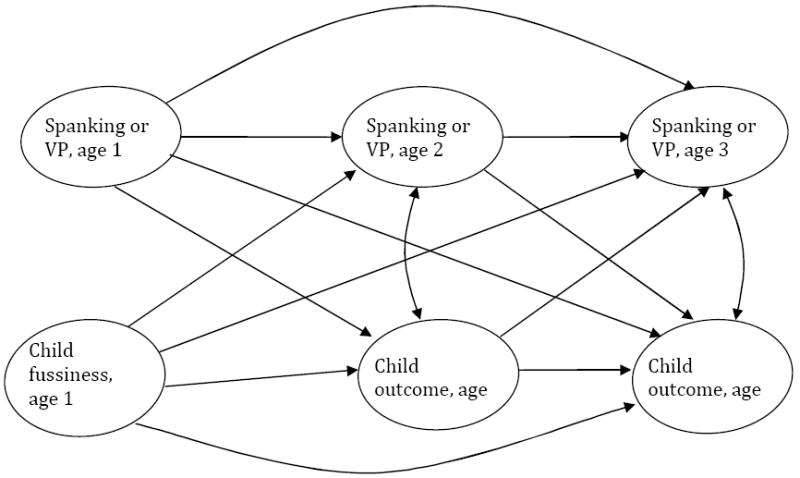
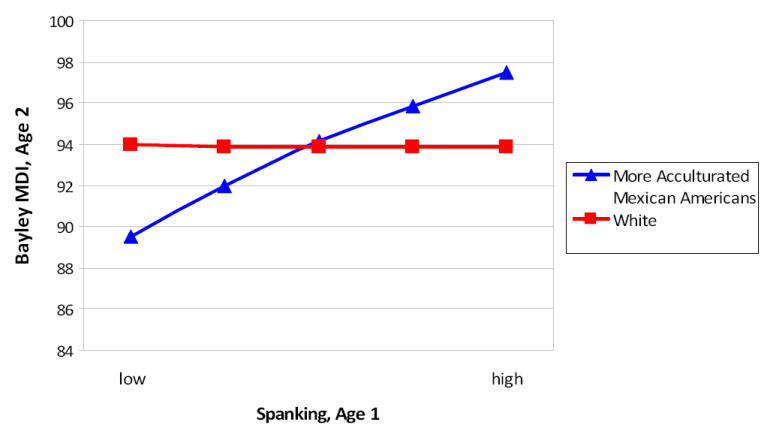
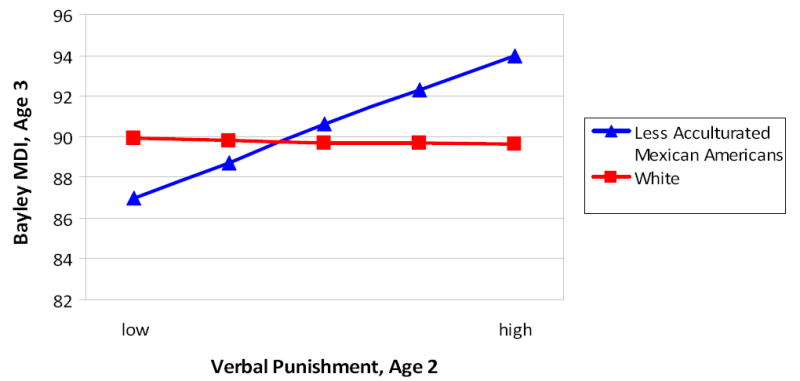
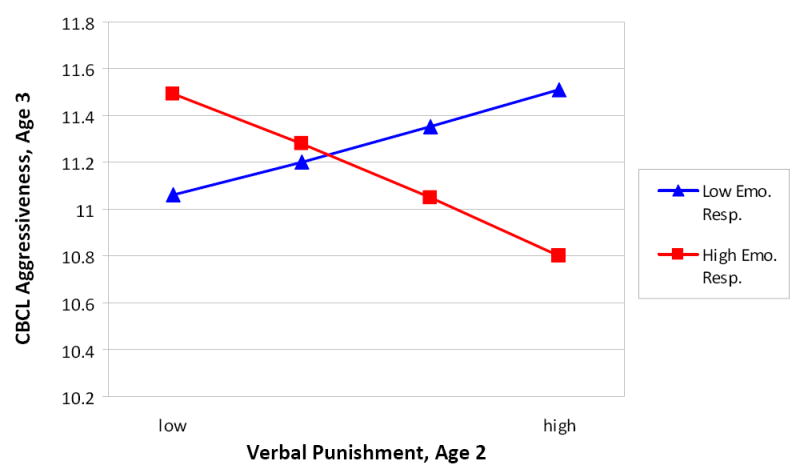
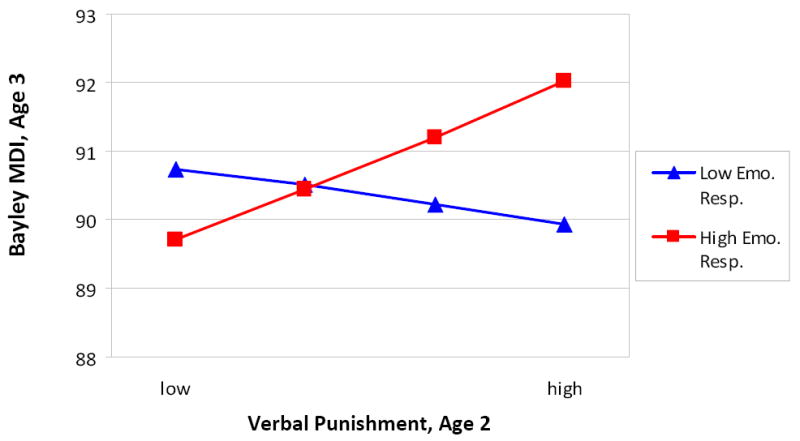
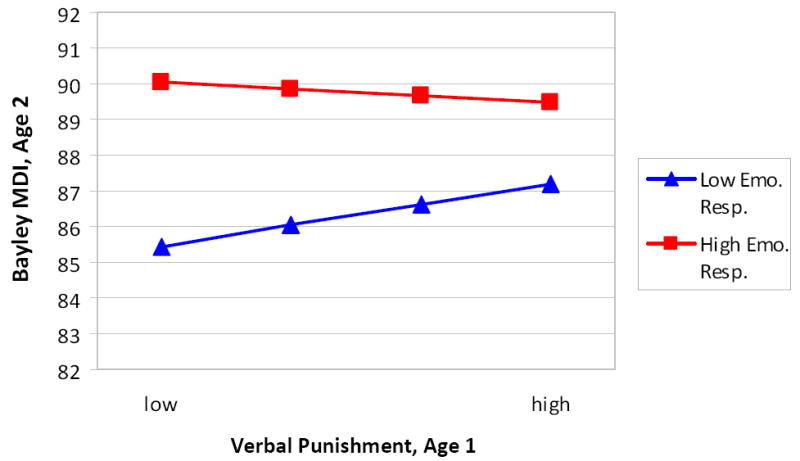
This study examined the prevalence, predictors, and outcomes of spanking and verbal punishment in 2,573 low-income White, African American, and Mexican American toddlers at ages 1, 2, and 3. Both spanking and verbal punishment varied by maternal race/ethnicity. Child fussiness at age 1 predicted spanking and verbal punishment at all 3 ages. Cross-lagged path analyses indicated that spanking (but not verbal punishment) at age 1 predicted child aggressive behavior problems at age 2 and lower Bayley mental development scores at age 3. Neither child aggressive behavior problems nor Bayley scores predicted later spanking or verbal punishment. In some instances, maternal race/ethnicity and/or emotional responsiveness moderated the effects of spanking and verbal punishment on child outcomes.
Figures
References
-
- Achenbach TM, Rescorla LA. Manual for ASEBA Preschool Forms & Profiles. Burlington, VT: University of Vermont, Research Center for Children, Youth, & Families; 2000.
-
- Administration for Children and Families. Making a difference in the lives of infants and their families: The impacts of Early Head Start. Washington, DC: U.S. Department of Health and Human Services; 2002.
-
- Aguilar B, Sroufe LA, Egeland B, Carlson E. Distinguishing the early-onset/persistent and adolescence-onset antisocial behavior types: From birth to 16 years. Development and Psychopathology. 2000;12:109–132. - PubMed
-
- Aiken LS, West SG. Multiple regression: Testing and interpreting interactions. Newbury Park, CA: Sage; 1991.
-
- Bayley N. Bayley Scales of Infant Development. 2. San Antonio, TX: The Psychological Corporation, Harcourt Brace; 1993.
